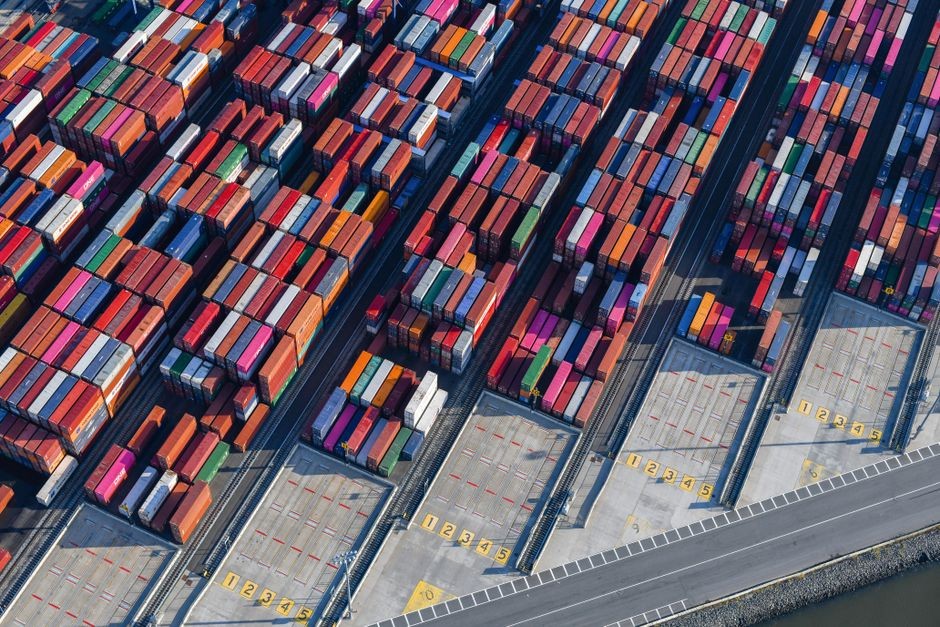
According to www.mordorintelligence.com, the Latin America Contract Logistics Market is expected to register a CAGR of greater than 3.5% during the forecast period (2025–2030). The report segments the market by type (outsourced and insourced), end user (Manufacturing and Automotive, Consumer Goods and Retail, Hi-Tech, Healthcare and Pharmaceuticals, and Other End Users), and country (Mexico, Brazil, Colombia, Chile, and Rest of Latin America).
Infrastructure Investment Driving Transformation
Latin America’s contract logistics landscape is undergoing significant transformation, driven by substantial infrastructure investments and regional economic integration initiatives. In 2023, Brazil unveiled plans to invest approximately USD 343.6 billion under the Growth Acceleration Program to enhance roadways, railways, and airport infrastructure. Complementing this, the “Routes for Integration” initiative—backed by approximately USD 50 billion from development banks—aims to establish comprehensive transportation routes across South America. These investments span infoways, hydroways, roadways, railways, ports, airports, and electricity transmission lines.
E-commerce Surge and Logistics Modernization
The region is experiencing a dramatic shift in consumer behavior and retail logistics, particularly evident in the e-commerce sector. Over 50 million Latin Americans made their first online purchases in recent years, fueling demand for sophisticated warehousing and distribution solutions. Brazil commands around 50% of the total industrial market share, followed by Mexico, Colombia, Chile, and Argentina. In March 2024, MercadoLibre announced a record investment of USD 4.6 billion in Brazil, with logistics at the core—encompassing new distribution centers and enhanced technological capabilities.
Nearshoring and Foreign Direct Investment
Nearshoring has emerged as a pivotal trend reshaping the region’s contract logistics landscape. According to industry projections, nearshoring is expected to drive demand for up to 8 million square meters of industrial space in Mexico by 2027. Foreign direct investment (FDI) flows to Latin America and the Caribbean reached a remarkable USD 208 billion in 2022, marking a 51% increase year-on-year—driven by heightened demand for commodities and essential minerals. Brazil witnessed a 70% rise in FDI, reaching USD 86 billion, while Mexico secured USD 35 billion in investments.
Technology and Sustainability Adoption
The industry is witnessing rapid technological advancement and sustainability initiatives. DHL launched its DHL Fulfillment Network (DFN) in Brazil, featuring 13 fulfillment centers, 55 transportation hubs, and 800 vehicles, supported by advanced warehouse management systems. CEVA Logistics inaugurated Colombia’s first carbon-neutral warehouse in Bogotá—equipped with solar panels, energy- and water-saving technologies, and advanced recycling programs. Meanwhile, Brazil’s chemical industry achieved sales of USD 187 billion in 2022, underscoring the need for specialized logistics solutions for complex cargo.
Practitioner Implications
For global supply chain professionals, these developments signal both opportunity and operational complexity. The expansion of multiclient fulfillment networks—like DHL’s DFN—offers scalable capacity but requires deeper integration of WMS, real-time visibility tools, and flexible last-mile delivery models. Nearshoring-driven demand for industrial space in Mexico necessitates proactive site selection, labor readiness assessments, and cross-border customs coordination—especially under USMCA frameworks. Meanwhile, sustainability mandates—evident in CEVA’s carbon-neutral facility—are no longer optional differentiators but prerequisites for major client engagements, particularly in healthcare, pharma, and consumer goods verticals. Investments in automation and big data analytics are now table stakes for maintaining service-level agreements amid rising e-commerce velocity.
Source: www.mordorintelligence.com
Compiled from international media by the SCI.AI editorial team.