Skip to content

Africa Supply Chain

AI Customs Modernisation Sweeps 5 African Nations

Customs authorities in Egypt, Kenya, Morocco, Nigeria, and South Africa are embedding AI into core border operations — from predictive risk analytics to digital surveillance and AI-powered valuation. Egypt’s air-cargo module on the Nafeza platform goes mandatory in 2026; Nigeria targets a 50% cut in physical checks via B’Odogwu; South Africa issued an RFI for AI-driven digital twinning in 2025. According to the report, these advances promise faster clearance and greater transparency but raise compliance expectations around data governance and digital readiness for global supply chain professionals.

Original source: bakermckenzie.com

AI Customs Modernisation Sweeps 5 African Nations
📋 本文要点

Customs authorities in Egypt, Kenya, Morocco, Nigeria, and South Africa are embedding AI into core border operations — from predictive risk analytics to digital surveillance and AI-powered valuation. Egypt’s air-cargo module on the Nafeza platform goes mandatory in 2026; Nigeria targets a 50% cut in physical checks via B’Odogwu; South Africa issued an RFI for AI-driven digital twinning in 2025. According to the report, these advances promise faster clearance and greater transparency but raise compliance expectations around data governance and digital readiness for global supply chain professionals.

According to www.bakermckenzie.com, customs authorities across Africa are rapidly adopting artificial intelligence (AI) to modernise border operations, accelerate cargo clearance, and strengthen enforcement — with Egypt, Kenya, Morocco, Nigeria, and South Africa leading implementation.

AI Deployment Across Key Jurisdictions

  • Egypt: Integrating AI into its Advance Cargo Information system to improve classification and targeting; the air-cargo module of the nationwide Nafeza single-window platform is expected to become compulsory from 2026.
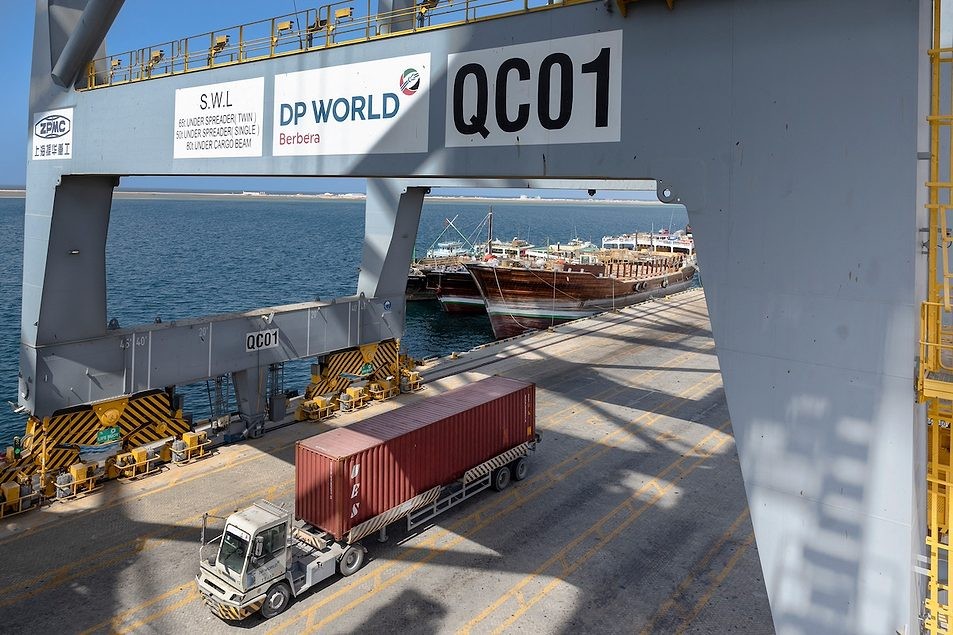
  • Kenya: Deploying AI-driven surveillance at the Port of Mombasa for real-time cargo tracking and anomaly detection; upgrading digital infrastructure as part of a broader overhaul of the Integrated Customs Management System.
  • Morocco: Implementing an AI-powered risk-management channel using predictive analytics and data-driven targeting, developed in partnership with the World Customs Organization and Switzerland’s State Secretariat for Economic Affairs.
  • Nigeria: Targeting a 50% reduction in physical cargo checks via AI-driven profiling; enabled by B’Odogwu, its new end-to-end digital clearance platform that integrates AI-supported valuation checks and machine-learning analytics.
  • South Africa: Advancing a wide-ranging Customs Modernisation Programme; issued a Request for Information in 2025 for an AI-driven digital-twinning system; launched the Guarantee Management Service in 2024 to automate customs and excise bonds via eFiling.

Operational Shifts and Compliance Implications

As AI shifts from experimentation to operational deployment, traders face heightened compliance expectations. According to the report, businesses will need stronger data governance, internal controls, and digital readiness to engage effectively with increasingly automated customs environments. The source states that non-compliance risks will surface earlier and trigger quicker intervention, while compliant taxpayers benefit from faster processing, fewer inspections, and more predictable outcomes.

The South African Revenue Service (SARS) aims to become a digitally enabled, insights-driven authority under its Modernisation 3.0 strategy — embedding AI across future workflows through initiatives like the SARS Marketplace and AI-based risk engines.

Source: www.bakermckenzie.com

Compiled from international media by the SCI.AI editorial team.
Ask SCI.AI Finished reading? Continue with SCI.AI. Explore the related policy, route, company and historical context. Continue asking
Maersk, Hapag-Lloyd resume Red Sea route amid capacity relief
Africa Supply Chain

Maersk, Hapag-Lloyd resume Red Sea route amid capacity relief

A.P. Moller-Maersk and Hapag-Lloyd announced on July 6, 2026, they are resuming Red Sea and Suez Canal transit for select Asia–Europe services — the first major carrier alliance to do so since late 2023. The move follows security reassessments and aims to alleviate vessel capacity constraints that drove spot rates up 37% in recent weeks. Maersk shares fell 9%, Hapag-Lloyd dropped 4.6%, reflecting market expectations of rate normalization. The Majestic Maersk, currently near Oman, will be the first redirected vessel. The Cape of Good Hope detour added ~14–18 days and $250,000–$350,000 in fuel costs per round trip.

DP World pledges $4B Africa expansion amid 75% fuel cost surge
Africa Supply Chain

DP World pledges $4B Africa expansion amid 75% fuel cost surge

DP World reaffirms its $4 billion investment pledge in African port and logistics infrastructure despite a 75% fuel price surge in South Africa and disruptions caused by the Strait of Hormuz closure. CEO Mohammed Akoojee confirmed ongoing projects including Maputo Port expansion and the DRC’s first deep-water port, due in Q1 next year. The company operates 7,000+ trucks across Africa and is shifting toward integrated logistics ecosystems linking Tanzania, Rwanda, Zambia, and Congo.

Global Hunger Falls to 645M in 2025 Amid Conflict Risks
Africa Supply Chain

Global Hunger Falls to 645M in 2025 Amid Conflict Risks

Global hunger fell to 645 million people (7.8% of the world population) in 2025, marking the third straight annual decline since pandemic-driven spikes. Yet conflicts — especially in the Middle East — and climate shocks threaten reversal, with the UN World Food Programme warning that 45 million more could face acute food insecurity if the Iran war continues and oil exceeds $100/barrel. Africa remains the epicenter: one in five people there were undernourished in 2025, and the UN projects 56% of the world’s hungry will live there by 2030. Supply chain professionals must now integrate humanitarian risk data into logistics planning, particularly across Red Sea and Suez Canal corridors.

Welcome Back!

Login to your account below

Create New Account!

Fill the forms below to register

Retrieve your password

Please enter your username or email address to reset your password.

Scan to share via WeChat

Open WeChat and scan the QR code to share

QR Code

Add New Playlist