Skip to content

Europe Supply Chain

EU 2026 Packaging Rules: Importers Must Ensure 100% Recyclability + PCR

According to www.dashanpacking.com, the EU’s 2026 Packaging and Packaging Waste Regulation (PPWR) mandates full recyclability and minimum post-consumer recycled (PCR) content for all food packaging. EPS (Styrofoam) is banned outright; non-recyclable plastics face a €0.80/kg tax. Customs seizures, retail rejections (e.g., Aldi, Lidl, Tesco), and EPR obligations place direct liability on importers. Required documentation includes a Declaration of Compliance, SGS/TÜV lab reports, and GRS certification for RPET. Certified bagasse and high-purity PP are recommended alternatives.

Original source: dashanpacking.com

According to www.dashanpacking.com, the European Union’s Packaging and Packaging Waste Regulation (PPWR) — effective in 2026 — will require all food packaging placed on the EU market to be fully recyclable and contain a minimum percentage of post-consumer recycled (PCR) content. Non-compliant materials including EPS (Styrofoam) are fully banned, and high taxes are being levied on non-recyclable plastics.

The High Cost of Non-Compliance

Failure to meet the new directives carries tangible operational and financial consequences for global importers:

  • Customs Seizures: Shipments lacking a proper Declaration of Compliance (DoC) or failing chemical migration tests will be destroyed at the port.
  • The “Plastic Tax”: Many EU member states now charge a levy of €0.80 per kg on non-recycled plastic packaging.
  • Retail Rejection: Major European retailers including Aldi, Lidl, and Tesco are independently enforcing “Zero Waste” policies and refusing suppliers unable to prove 100% recyclability.

SUPD vs. PPWR: Two Regulatory Pillars

Two key legal instruments govern packaging compliance:

  • The Single-Use Plastics Directive (SUPD): Already phased out problematic items such as EPS bowls and oxo-degradable plastic bags.
  • The Packaging and Packaging Waste Regulation (PPWR): Coming into force in 2025–2026, it centers on the circular economy — mandating recyclability by 2030, with infrastructure and design requirements starting in 2026, and imposing Extended Producer Responsibility (EPR) on importers for end-of-life packaging management.

Material Impact: What to Buy vs. What to Avoid

Based on the 2026 regulations, Dashan Packing identifies clear material categories:

  • ❌ BANNED: EPS (Styrofoam), oxo-degradable plastics — importation must stop immediately.
  • ⚠️ HIGH RISK: Carbon black plastic, multi-layer unrecyclable films — subject to high taxes and sorting facility rejection.
  • ✅ RECOMMENDED: RPET (Recycled PET) cups & containers — meets PCR mandates and is 100% recyclable.
  • ✅ RECOMMENDED: Certified Bagasse sugarcane containers — provided they are PFAS-free to meet EU safety standards.
  • ✅ RECOMMENDED: High-purity PP (polypropylene) — widely accepted in EU recycling streams and suitable for hot food applications.

The Importer’s Audit: 3 Documents You Must Demand

Before placing orders with overseas manufacturers — especially in China — importers must verify the following documentation:

  • Declaration of Compliance (DoC): A formal statement confirming adherence to EU Regulation (EC) No 1935/2004.
  • Lab Test Reports (SGS/TÜV): Recent reports (within 12 months) covering heavy metals and overall migration limits.
  • Recycled Content Certification: For RPET products, Global Recycled Standard (GRS) certification is required to verify PCR content.

Buyer Mistakes: The “Greenwashing” Trap

The source warns against importing so-called “biodegradable” plastics that do not meet EU recyclability or safety standards — a common misstep that exposes importers to regulatory risk and shipment rejection.

Source: www.dashanpacking.com

Compiled from international media by the SCI.AI editorial team.
Ask SCI.AI Finished reading? Continue with SCI.AI. Explore the related policy, route, company and historical context. Continue asking
Supply Chain Hiring Shrinks 12%, AI Drives Restructuring Not Replacement
Europe Supply Chain

Supply Chain Hiring Shrinks 12%, AI Drives Restructuring Not Replacement

Supply chain hiring has contracted by 12% amid AI adoption, but companies are restructuring organizations and retraining staff—not replacing them. Ryder System and BJC HealthCare completed AI-integrated workforce transformation in Q3 2025, while Robust.AI allocated $4.2M of its $7.8M Series A funding to human-AI collaboration training. Mars and CVS Health launched an 18-month upskilling initiative in 2025, and the NextGen Supply Chain Conference convenes in May 2026 with keynotes from Eli Lilly, Tractor Supply, and Wayfair. Practitioners emphasize solving complex, judgment-intensive problems—like port congestion prediction and ESG validation—rather than automating routine tasks.

UK DBT pledges £600M for aerospace freight innovation
Europe Supply Chain

UK DBT pledges £600M for aerospace freight innovation

The UK Department for Business and Trade has pledged £600 million to advance aerospace innovation, including more than £500 million for green air travel R&D and a £100 million supply chain fund. Announced by Secretary Jonathan Reynolds at the Farnborough Airshow, the plan supports freight modernisation, aims to double the sector’s market value by 2035, and responds to Prime Minister Andy Burnham’s 10-year reindustrialisation agenda. The initiative directly impacts air freight reliability, emissions reduction, and UK-wide skilled job creation.

Verdion completes €310M European Logistics Fund with Leipzig warehouse fully leased
Europe Supply Chain

Verdion completes €310M European Logistics Fund with Leipzig warehouse fully leased

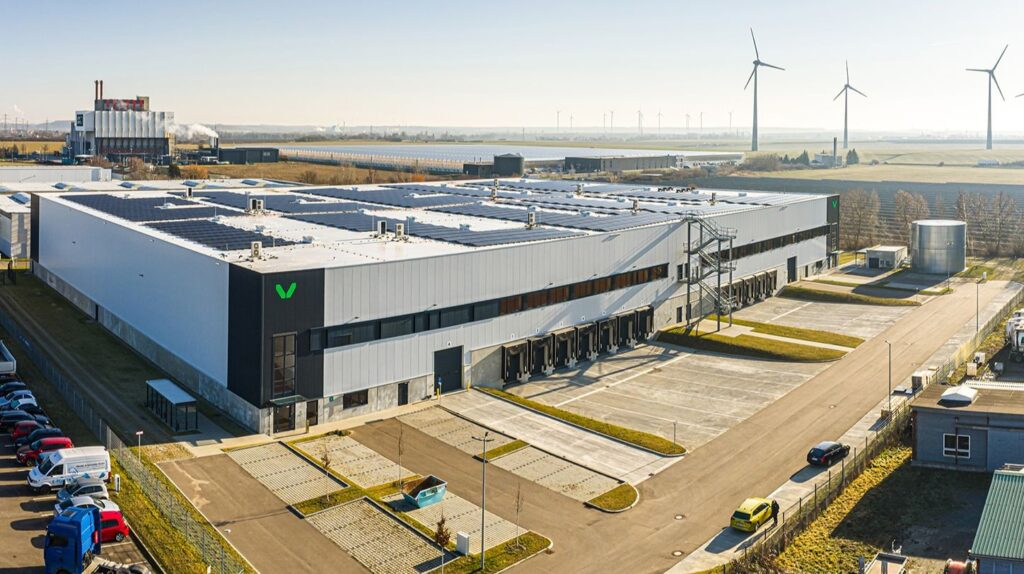
Verdion has fully leased its 11,872m² Leipzig warehouse—completing the speculative development phase of its €310 million Verdion European Logistics Fund 1 (VELF 1), launched in September 2020. The asset, certified to DGNB Gold, was acquired on a 40,000m² site in 2021 and now hosts a major textile service provider. An adjacent 8,500m² building is occupied by overnight express provider nox. Located between the A9 and A38 motorways near Leipzig/Halle Airport, the site exemplifies demand for sustainable, well-connected urban logistics infrastructure across Northern Europe.

Welcome Back!

Login to your account below

Create New Account!

Fill the forms below to register

Retrieve your password

Please enter your username or email address to reset your password.

Scan to share via WeChat

Open WeChat and scan the QR code to share

QR Code

Add New Playlist