

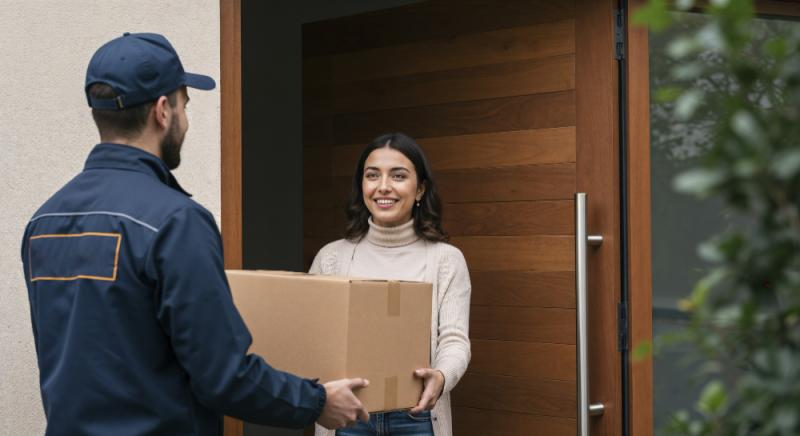
The global Last-Mile Delivery Market hit $151.87 billion in 2023 and is forecast to reach $311.31 billion by 2031, growing at a 9.62% CAGR. Key drivers include surging e-commerce demand, same-day delivery expectations, and investments in AI routing, autonomous robots, electric vehicles, and smart lockers. Recent deployments span FedEx’s urban robots (Feb 2026), UPS’s drone trials, Amazon’s electric cargo vans, Walmart’s AI bots, Yamato’s AI route planning, and Japan Post’s smart locker rollout. Major players include Amazon, UPS, FedEx, DHL, and Starship Technologies.
According to www.openpr.com, the global Last-Mile Delivery Market reached US$ 151.87 billion in 2023 and is projected to grow to US$ 311.31 billion by 2031, expanding at a CAGR of 9.62% from 2024 to 2031. Last-mile delivery—the final leg of the supply chain moving goods from distribution hubs to end customers—remains a critical performance determinant for e-commerce, retail, and logistics providers, directly influencing customer satisfaction, delivery speed, and operational cost structures.
Operational Challenges and Strategic Responses
Industry stakeholders continue to grapple with persistent challenges: urban traffic congestion, high labor and fuel costs, rising customer expectations for same-day and on-demand service, and mounting environmental pressures. In response, major logistics players are deploying scalable, technology-driven solutions—including autonomous robots, electric vehicles, AI-powered route optimization, and localized micro-fulfillment infrastructure.
Regional Innovation Rollouts (2025–2026)
In the United States,
- February 2026: FedEx deployed autonomous delivery robots in select urban areas;
- January 2026: UPS expanded drone delivery trials across rural and suburban regions;
- December 2025: Amazon Logistics introduced electric cargo vans in key metropolitan areas;
- November 2025: Walmart partnered with robotics startups to integrate AI-powered delivery bots in high-density neighborhoods.
In Japan, innovation is equally accelerated:
- February 2026: Yamato Transport scaled AI-powered route planning to reduce urban delivery times;
- January 2026: Sagawa Express piloted electric cargo bikes in congested city centers;
- December 2025: Rakuten Logistics upgraded automated sorting systems to minimize parcel processing delays;
- November 2025: Japan Post launched smart locker networks in residential complexes.
Market Structure and Coverage
The report segments the market by service type (B2B, B2C, C2C), destination (domestic, international), mode of operation (non-autonomous, autonomous), vehicle type (motorcycle, LCV, HCV, others), and application (Food & Beverages, Retail & E-commerce, Healthcare, others). Regional analysis spans North America, Europe, Asia-Pacific, South America, and Middle East & Africa—with dedicated coverage of the U.S., Japan, Germany, Brazil, Saudi Arabia, and other national markets.
Key Players and Research Methodology
Leading firms identified in the report include Amazon.com, Inc., United Parcel Service of America, Inc., FedEx, DHL International GmbH, Starship Technologies, Zipline International Inc., DPDgroup, Hermes Europe GmbH, and Continental AG. The study draws on both primary and secondary data sources, evaluating governmental regulations, technological advancements, competitive dynamics, historical trends, and market volatility. Analytical frameworks applied include SWOT, PESTEL, Porter’s Five Forces, and value chain analysis.
Source: www.openpr.com
Compiled from international media by the SCI.AI editorial team.


