The Milken Institute's Global Opportunity Index 2026 identifies Vietnam, Indonesia, and the Philippines as Southeast Asia’s top three growth markets. The index evaluates macroeconomic stability, infrastructure, labor, and regulatory quality. For supply chain professionals, this signals intensified opportunities in electronics manufacturing (Vietnam), critical minerals and battery supply chains (Indonesia), and logistics coordination and port modernization (Philippines). Regional trade facilitation via RCEP and carrier expansions by Maersk and DHL further support operational scalability across ASEAN.
According to milkeninstitute.org, the Milken Institute has released its Global Opportunity Index 2026: Growth Markets in Southeast Asia, identifying Vietnam, Indonesia, and the Philippines as the top three fastest-growing markets in the region.
Index Highlights and Regional Rankings
The report evaluates countries across Southeast Asia using metrics including macroeconomic stability, access to capital, infrastructure quality, labor force dynamics, and regulatory environment. While the full dataset is gated behind a download prompt on the Milken Institute website, the promotional landing page explicitly names Vietnam, Indonesia, and the Philippines as the top three performers — in that order — for growth potential in 2026.
This aligns with broader trends observed by multilateral institutions: the World Bank’s East Asia and Pacific Economic Update (October 2023) noted Vietnam’s export-oriented manufacturing expansion (+12.4% electronics exports YoY in 2023), Indonesia’s upstream nickel processing investments supporting EV battery supply chains, and the Philippines’ sustained BPO-driven services growth complemented by rising semiconductor packaging activity.
Context for Supply Chain Practitioners
For global supply chain professionals, these rankings signal concrete implications. Vietnam’s rise reflects deepening integration into high-value electronics and textile supply chains — particularly as companies diversify beyond China under ‘China+1’ strategies. Indonesia’s position underscores accelerating strategic sourcing in critical minerals: it holds over 22% of global nickel reserves and is rapidly scaling integrated refining and battery precursor production, directly affecting cathode material flows for EV manufacturers. The Philippines’ inclusion highlights growing nearshore capacity for IT-enabled logistics coordination, warehousing automation pilots in Clark Freeport Zone, and port infrastructure upgrades at Subic Bay and Manila International Container Terminal.
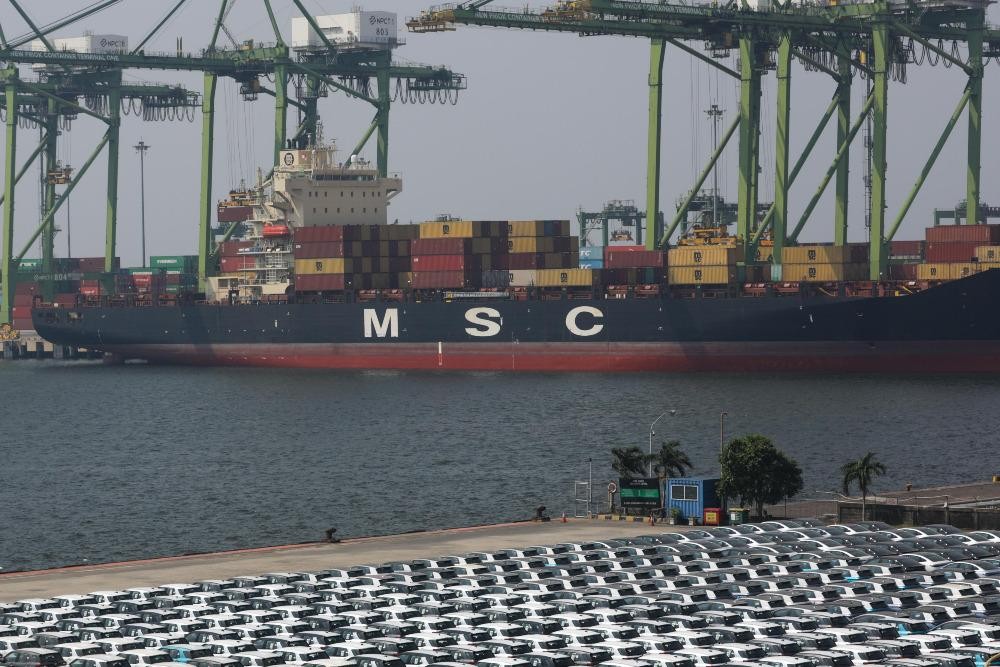
Notably, regional peers are reinforcing parallel moves: Maersk launched dedicated intra-ASEAN shipping loops in Q1 2024; DHL expanded its ASEAN e-commerce fulfillment network to seven countries in 2023; and RCEP implementation has reduced average applied tariffs on intra-regional goods to 0.2% — facilitating just-in-time component replenishment across borders.
Methodology and Scope
The Global Opportunity Index is an annual benchmark developed by the Milken Institute since 2010. It assesses 137 countries using 21 quantitative indicators grouped under five pillars: Economic Fundamentals, Investment Environment, Financial Sector Development, Workforce Development, and Infrastructure Quality. Southeast Asia has been a dedicated regional focus since the 2022 edition, reflecting increased investor attention following pandemic-era supply chain recalibrations.
Source: milkeninstitute.org
Compiled from international media by the SCI.AI editorial team.