Skip to content

Last Mile · Supply Chain

China’s Sidewalk Delivery Robots: A Model for US States

China has deployed over 100,000 sidewalk delivery robots across 100+ cities—led by Meituan, JD Logistics, and Cainiao—with standardized regulations, high reliability (98.7% success rate), and 22% faster urban deliveries. In contrast, U.S. states lack harmonized policies, with only a few allowing commercial operation. Supply chain professionals must now weigh robotics against persistent labor shortages (80,000-truck driver gap) and rising last-mile costs. Infrastructure readiness, municipal engagement, and system integration—not just technology—are critical success factors.

Original source: datainnovation.org

China’s Sidewalk Delivery Robots: A Model for US States

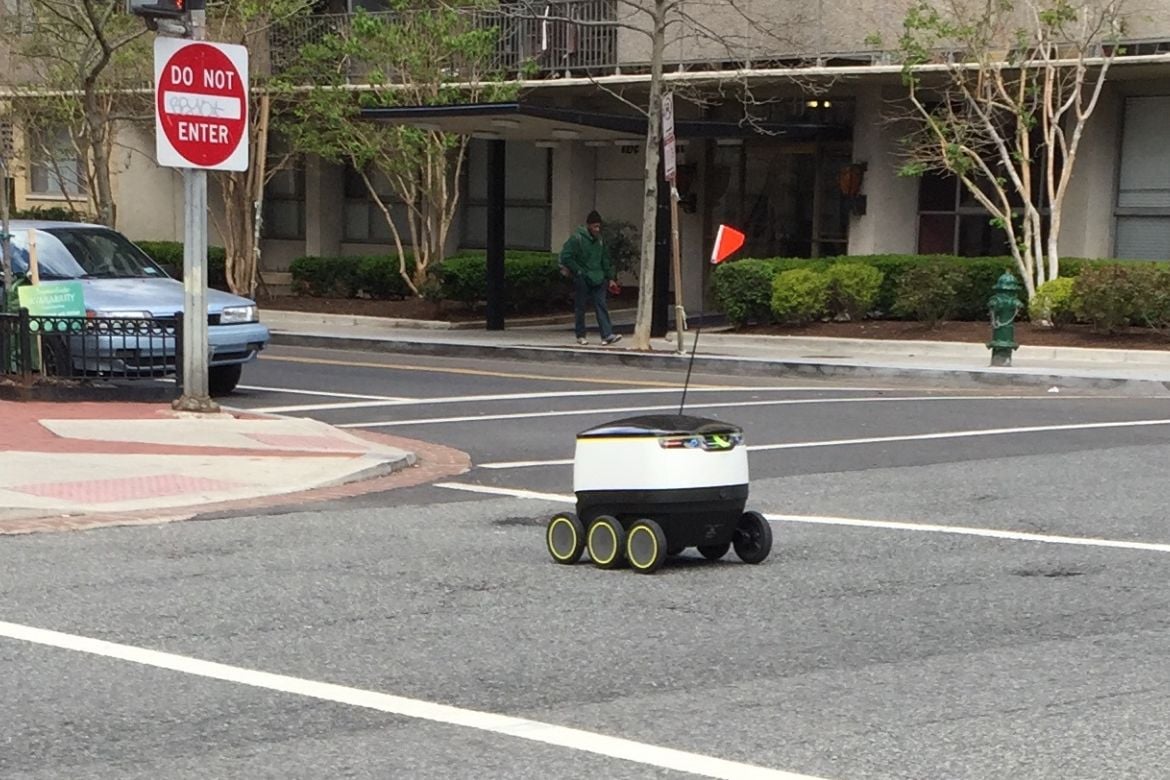
According to datainnovation.org, China has deployed over 100,000 sidewalk delivery robots across more than 100 cities, with companies like Meituan, JD Logistics, and Alibaba’s Cainiao leading implementation. These autonomous ground vehicles operate at low speeds on pedestrian pathways to fulfill last-mile e-commerce and food delivery orders—bypassing traffic congestion and reducing labor dependency.

Scale and Regulatory Enablers

Unlike in the U.S., where municipal permitting remains fragmented and safety regulations are still evolving, Chinese cities have adopted standardized testing zones, unified data-sharing protocols with local governments, and streamlined approval processes. For example, Shenzhen and Beijing issued city-level guidelines in 2022 allowing commercial operation after 3,000 km of supervised testing—a benchmark not yet matched elsewhere.

Operational Realities and Performance Data

Field data from Meituan’s 2023 operational report shows its robots achieved 98.7% successful drop-off rate and reduced average delivery time by 22% in dense urban corridors. Units operate 16–18 hours daily, with battery swaps occurring at automated kiosks integrated into existing convenience store infrastructure. Maintenance downtime averages less than 45 minutes per week per unit.

U.S. Policy Gap and Practitioner Implications

U.S. states currently lack harmonized frameworks for sidewalk robot deployment. Only a handful—including Arizona, Idaho, and Texas—have enacted enabling legislation, while others impose outright bans or require human remote operators at all times. Supply chain professionals managing last-mile networks face growing pressure to evaluate robotics as labor shortages persist: the American Trucking Associations estimates a shortfall of 80,000 drivers in 2024, and Bureau of Labor Statistics data shows logistics worker turnover exceeding 35% annually.

For practitioners, this means assessing interoperability with existing TMS and WMS platforms, auditing sidewalk infrastructure (e.g., curb cuts, tactile paving), and engaging early with municipal transportation departments—not just legal counsel—when piloting robotic delivery. Integration is not merely technical; it requires alignment with public space management policies and community acceptance metrics, both of which China institutionalized years ahead of Western counterparts.

“States should learn from China on sidewalk delivery robots.” — datainnovation.org

Source: datainnovation.org

Compiled from international media by the SCI.AI editorial team.

Ask SCI.AI Finished reading? Continue with SCI.AI. Explore the related policy, route, company and historical context. Continue asking
NRF: Early peak shipping season to subside in September
Supply Chain

NRF: Early peak shipping season to subside in September

The National Retail Federation (NRF) and Hackett Associates report that the early peak shipping season is ending, with U.S. port imports expected to decline for the rest of 2026. May was the busiest month at 2.24 million TEU. Tariff changes and supply chain disruptions drove retailers to pull forward orders. Consumer spending remains resilient. Full-year 2026 imports are projected at 25.5 million TEU, up 0.1% from 2025.

China’s exports rise 14%, imports up 22% amid trade war resilience
Supply Chain

China’s exports rise 14%, imports up 22% amid trade war resilience

China’s foreign trade rose 17.3% to ¥30.13 trillion in the first seven months of 2026, with exports up 14% and imports surging 22%. High-tech exports jumped over 50% in July, accounting for nearly 60% of monthly export growth. U.S.-China trade fell 1.6%, while ties with over 180 countries—including ASEAN and the EU—expanded. Green exports like EVs and lithium batteries posted double-digit growth for the 17th straight month. China also applies zero tariffs to imports from 63 countries.

TSMC revenue up 33.7%, ASML ships 86 lithography machines
Manufacturing

TSMC revenue up 33.7%, ASML ships 86 lithography machines

TSMC reported $40.2 billion in Q2 2026 revenue — up 33.7% year-on-year — with 2-nm process contributing 3% of sales. ASML shipped 86 new lithography machines in the same quarter, boosting revenue to €9.32 billion ($10.69 billion). TSMC holds 73% of the global foundry market, while ASML’s EUV tools remain essential for sub-3-nm chip production. Both companies’ five-year net income grew over 90% (ASML) and 251% (TSMC). TSMC’s $100 billion Arizona expansion will support 2-nm manufacturing and advanced packaging.

Welcome Back!

Login to your account below

Create New Account!

Fill the forms below to register

Retrieve your password

Please enter your username or email address to reset your password.

Scan to share via WeChat

Open WeChat and scan the QR code to share

QR Code

Add New Playlist

