

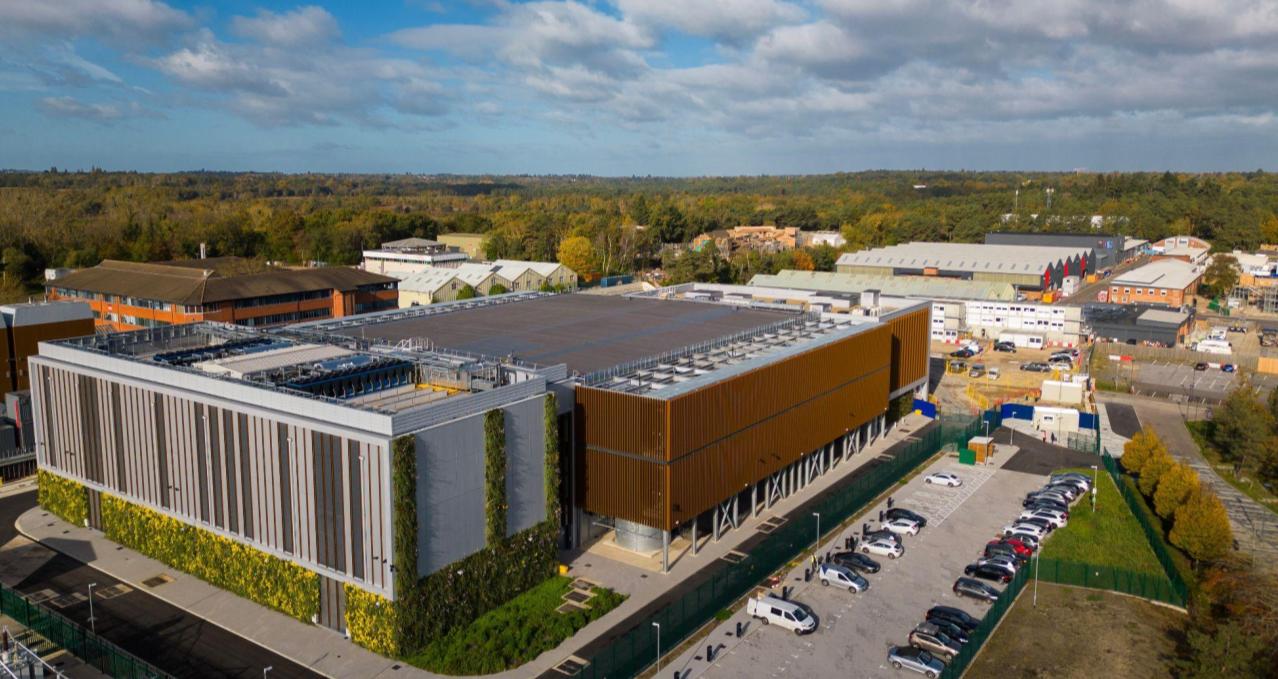
Emerald AI, NVIDIA, EPRI, and National Grid demonstrated in London that AI factories can autonomously reduce power use during grid stress events — achieving 100% alignment with over 200 grid-specified power targets. Using 96 NVIDIA Blackwell Ultra GPUs, the Nebius AI factory responded to simulated 'TV pickup' surges (like the 1 GW Euro 2020 tea-break spike) without disrupting priority AI workloads. This power-flexibility accelerates grid interconnection, avoids costly infrastructure overbuilds, and supports stable electricity pricing — critical for AI-driven supply chain operations reliant on high-availability compute.
According to blogs.nvidia.com, Emerald AI — in collaboration with NVIDIA, EPRI, National Grid, and Nebius — demonstrated that AI factories can autonomously adjust power consumption in real time to stabilize the electricity grid, achieving 100% alignment with over 200 power targets issued by grid operators during stress-testing scenarios.
From Tea Breaks to Grid Stability
The trial recreated the famous ‘TV pickup’ phenomenon observed during the UEFA EURO 2020 England–Germany match, when a national surge in kettle usage spiked U.K. electricity demand by about 1 gigawatt — equivalent to the average output of a standard nuclear reactor. In the simulation, as millions of virtual kettles were switched on, the AI factory at Nebius’ London site — powered by 96 NVIDIA Blackwell Ultra GPUs and connected via the NVIDIA Quantum-X800 InfiniBand platform — ramped down its power draw without interrupting high-priority AI workloads.
How It Works: Real-Time Telemetry & Adaptive Workload Management
The system relies on the NVIDIA System Management Interface to collect seconds-level GPU power telemetry. The Emerald AI Conductor Platform interprets signals from grid operators (e.g., EPRI and National Grid) and dynamically throttles flexible compute jobs while preserving throughput for mission-critical tasks. Unlike prior U.S. tests, the U.K. demonstration measured total IT equipment power consumption, including CPUs and supporting infrastructure — not just GPUs.
Operational and Economic Impact for Supply Chain Professionals
For supply chain professionals managing global AI infrastructure deployment, this capability directly addresses two mounting constraints: grid connection delays and energy cost volatility. Large-scale AI facilities — increasingly integral to supply chain forecasting, digital twin modeling, and real-time logistics optimization — often face multi-year waits for grid upgrades. Power-flexible operation enables faster onboarding by leveraging existing infrastructure instead of requiring new substations or transmission lines. This reduces capital lead times and mitigates exposure to rising electricity rates — a key input cost for hyperscale logistics AI platforms and cloud-based supply chain control towers.
This aligns with broader industry trends: Google and Microsoft have publicly committed to 100% carbon-free energy by 2030, and Amazon’s Project Giga includes grid-interactive data center designs. Meanwhile, the EU’s Network Code on Demand Response (effective 2024) mandates grid operators to procure flexibility services — creating regulatory tailwinds for such deployments. For practitioners, integrating power-flexibility into AI factory site selection, SLA negotiations with utilities, and workload scheduling logic is now an emerging operational requirement — not just an ESG add-on.
“With this technology, AI factories become friendly and helpful grid assets.” — Varun Sivaram, founder and CEO of Emerald AI
“We did tests that go beyond the ones that have been done so far in the U.S. because we tested not just the GPUs, but also the CPUs and everything that sits around it — as well as the total power consumption of the IT equipment.” — Steve Smith, group chief strategy officer of National Grid
Source: blogs.nvidia.com
Compiled from international media by the SCI.AI editorial team.


