

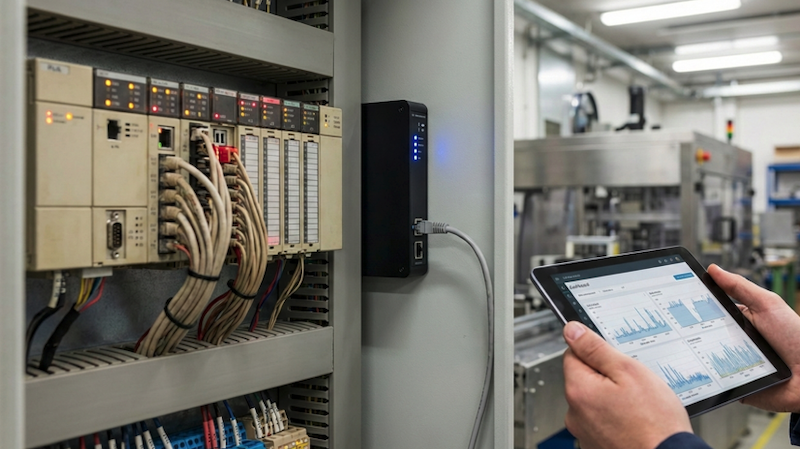
Legacy automation components—including 20-year-old PLCs—are strategic assets, not obsolescence liabilities. Proven reliability, avoidance of hidden upgrade costs (downtime, retraining, software rewrite), and access to vetted gray-market spares make them critical for uptime and sustainability. Retrofitting with IIoT edge gateways enables data collection without system overhaul, while proactive obsolescence planning reduces $thousands-per-hour downtime risk. Verified independent distributors like ChipsGate provide tested parts, 12-month warranties, and technical documentation—key enablers for supply chain resilience.
According to roboticsandautomationnews.com, legacy industrial hardware—such as 20-year-old PLCs—remains operationally critical in modern factories not out of inertia, but due to proven reliability, cost discipline, and strategic supply chain resilience.
The Obsolescence Dilemma Is Real—but Misunderstood
Manufacturers routinely issue End-of-Life (EOL) notices for hardware still central to daily production. Yet treating legacy components solely as liabilities overlooks their strategic value: they sustain uptime, reduce electronic waste, and enable incremental digitalization without system-wide capital outlays.
Why Factories Keep Running Older Systems
The push toward AI-driven robotics and IIoT often overshadows the economic reality on the shop floor. A full system migration triggers cascading hidden costs:
- Production downtime: Line shutdowns lasting days or weeks during cabinet replacement
- Software engineering: Rewriting, translating, and debugging legacy code written in older standards
- Staff retraining: Operators and maintenance teams adapting to new interfaces and logic structures
As the article notes, replacing a single failed legacy module is frequently more cost-effective than overhauling an entire PLC rack—especially when the machine remains mechanically sound and meets output targets.
Reliability Beyond the Bathtub Curve
In reliability engineering, the “Bathtub Curve” shows early failure risk (“infant mortality”) in new hardware. Legacy systems that have operated for years sit in the stable “constant failure rate” phase—delivering predictable, low-risk performance. For critical infrastructure—including water treatment, power generation, and automotive assembly—a 20-year-old PLC with zero unplanned outages is often viewed as more trustworthy than an untested new revision.
Proactive Obsolescence Management
Reactive part sourcing—scrambling after a line stops—is the most expensive approach. Downtime costs per hour in automotive or pharmaceutical manufacturing range from thousands to tens of thousands of dollars. A proactive strategy includes auditing installed equipment, identifying EOL risks early, and stockpiling critical spares. This requires trusted partners: OEMs often abandon support for discontinued families, making relationships with verified independent distributors like ChipsGate essential for insulating operations from shortages.
Gray Market ≠ Risky Market—If Vetted Rigorously
The industrial “gray market”—trade of legitimate components outside OEM-authorized channels—is a vital, functional ecosystem. But quality varies. Buyers must verify suppliers against strict criteria:
- Testing protocols: Load testing and functional verification—not just visual inspection
- Warranty: Reputable independents offer warranties comparable to, or exceeding, OEM terms (e.g., 12 months)
- Return policy: A clear, no-hassle return process signals confidence in component integrity
Retrofitting Over Replacement: The IIoT Bridge
Modern edge gateways and protocol converters can interface with legacy serial ports (RS-232/RS-485) on older PLCs. These devices extract operational data and transmit it via MQTT or OPC UA—enabling analytics on machine performance and energy use without altering control logic. This “wrap and extend” strategy delivers digitalization benefits at low risk and high ROI.
Sustainability Through Longevity
Extending machinery life directly supports circular economy goals. Manufacturing complex electronics is energy- and resource-intensive; premature disposal contributes significantly to global e-waste. Sourcing tested, refurbished components from specialists who maintain archives of datasheets, pinouts, and manuals enables responsible lifecycle extension—aligning financial prudence with ESG and CSR commitments.
“Modern manufacturing isn’t simply about acquiring the newest robot or the fastest processor; it is about executing the smartest strategy for long-term production.”
Source: Robotics & Automation News
This article is compiled from international media reports by the SCI.AI editorial team for supply chain professionals.


