

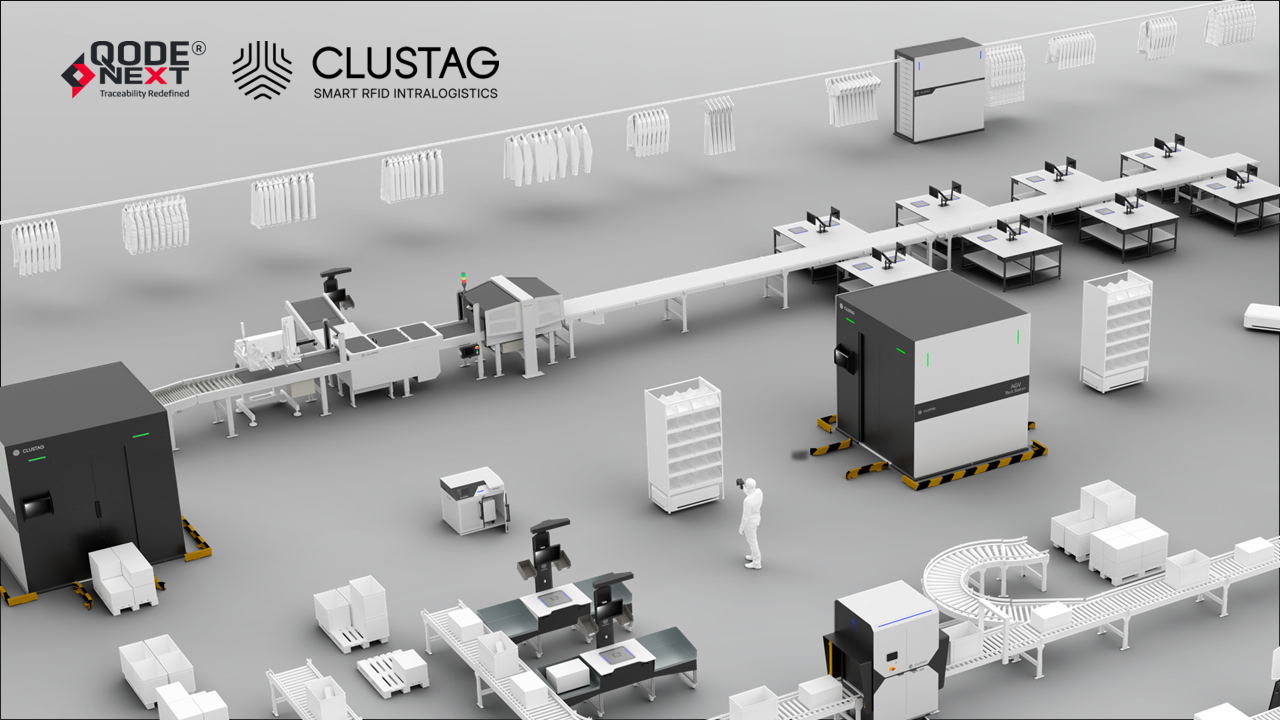
QodeNext and Clustag have partnered to scale RAIN RFID adoption at source across South Asia, targeting fashion, sportswear, and home goods exporters facing tightening global compliance mandates. The alliance integrates Clustag’s encoding workstations, RFID tunnels, and Zentup middleware with QodeNext’s 200+ technical experts and local deployment network across India. With over 35 years of automatic data capture experience, QodeNext will serve as an implementation partner across factories and distribution centers. Executives cite South Asia’s strategic role in global traceability—calling the pact vital for meeting brand-mandated RFID requirements and accelerating digital transformation in regional manufacturing hubs.
According to indiashippingnews.com, QodeNext, one of India’s fastest-growing supply chain traceability and automation service providers, has formed a strategic collaboration with Clustag to integrate advanced RAIN RFID intralogistics solutions into its technology portfolio—specifically to accelerate at-source RFID adoption across South Asia.
Strategic Integration for Compliance & Visibility
The partnership combines QodeNext’s regional integration capabilities—with a presence in major Indian cities and more than 200 technical experts—with Clustag’s expertise in item-level RFID encoding, verification, and content control. Together, they will support manufacturers in deploying accurate RFID tagging directly at the point of manufacture. This capability is increasingly critical for exporters in fashion, sportswear, and home goods sectors seeking to meet compliance mandates from major global brands.
Solution Scope and Deployment Support
Under the alliance, manufacturers gain access to:
- Integrated RAIN RFID solutions for encoding and verification at source
- Advanced hardware and software integration, including Clustag’s encoding workstations, RFID tunnels for cartons and pallets, and its Zentup middleware platform
- Turnkey factory implementations
- Real-time supply chain visibility
- Local deployment support via QodeNext’s service network across India
Leveraging more than 35 years of experience in automatic data capture technologies, QodeNext will act as a key implementation partner for factories, distribution centers, and retail networks across India and Southeast Asia. Clustag identifies South Asia as a strategic market where accurate at-source encoding is becoming essential for participation in global supply chains.
Executive Perspectives
“The Asian region is fundamental to ensuring reliable traceability at source. QodeNext shares our technological vision and brings exceptional integration and support capability. Together, we will accelerate RFID adoption in the world’s main manufacturing hubs.” — Manolo Reguart, Strategy & Business Development Director at Clustag
“Adding Clustag’s advanced solutions to our portfolio enables us to offer a more robust and specialized RFID ecosystem for manufacturers, retailers and logistics operators in India. It is a partnership set to grow.” — Mr. Alok Mishra, Vice President-Sales, QodeNext
This collaboration arrives amid rapid RFID growth across the Asia Pacific region—driven by regulatory pressures, supply chain modernization, and the global shift toward traceable production models. The move bolsters South Asia’s traceability infrastructure, helping exporters adapt to evolving global compliance demands while enhancing operational efficiency and end-to-end visibility. With RFID now a mandatory requirement at source for many international brands, the partnership signals a tangible acceleration in digital transformation across regional production centers.
Source: indiashippingnews.com
Compiled from international media by the SCI.AI editorial team.


