

Amazon’s last-mile delivery system serves 310 million active users as of 2025, anchored by over hundreds of strategically placed delivery stations — each located under 20 miles from customers. The network integrates Amazon Logistics, Flex, Prime Now (in 110 US metros), Amazon Fresh, Lockers, and the Delivery Service Partner (DSP) program, which requires ~$10,000 startup capital. Innovations include Rivian electric vans, Prime Air drones, Scout robots, and rural Hub Delivery partnerships generating up to $27,000 annually for small businesses.
According to www.upperinc.com, Amazon’s last-mile delivery system — the final leg from delivery station to customer doorstep — powers one of the world’s most responsive e-commerce logistics ecosystems, serving 310 million active users as of 2025.
How Amazon Structures Its Final-Leg Infrastructure
Last-mile delivery is operationally distinct from upstream logistics: while fulfillment centers store millions of items and sortation centers organize regionally (typically 50–100 miles from customers), Amazon’s delivery stations are smaller, hyper-local facilities positioned under 20 miles from end consumers. These stations receive pre-sorted packages by ZIP code, assign them to dynamically optimized routes, and load vehicles in sequence matching delivery order — enabling precise time windows and real-time tracking.
- Fulfillment Center: Storage & picking; distance to customer typically 100+ miles
- Sortation Center: Regional organization; distance 50–100 miles
- Delivery Station: Final route sorting; distance under 20 miles
When a tracking status reads “Package arrived at delivery station,” the package is usually hours away from delivery — a direct outcome of this geographically compressed network design.
Evolution and Key Initiatives (2009–2025)
Amazon’s last-mile strategy has evolved across three phases:
- 2009–2015: Launched same-day delivery (local express), Amazon Locker, Prime Now, Amazon Flex, and Operation Dragon Boat; acquired 25% stakes in Colis Privé and 4.2% of Yodel
- 2016–2019: Fully acquired Colis Privé; introduced Amazon Logistics; launched free one-day delivery; began large-scale deployment of electric delivery vans via partnership with Rivian
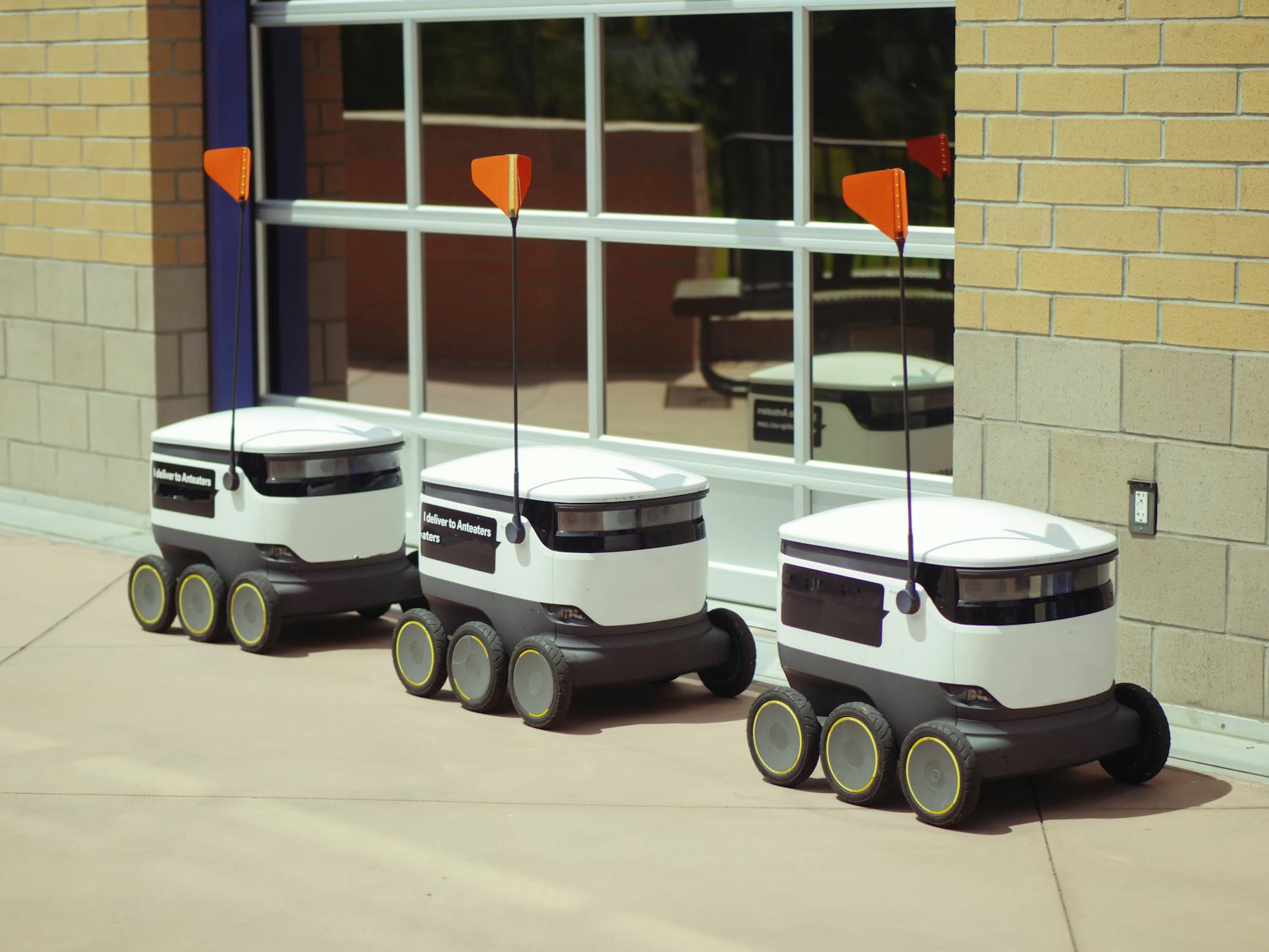
- 2020–present: Accelerated automation and robotics in fulfillment centers; advanced drone-delivery via Amazon Prime Air; tested autonomous ground robots (e.g., Amazon Scout); optimized facility placement to reduce average travel distance; announced major expansion into rural delivery networks
Core Delivery Programs and Partnerships
Amazon operates multiple complementary last-mile services:
- Amazon Flex: Gig-economy program where independent contractors use personal vehicles; drivers earn $18–$25/hour, selected for peak demand (e.g., Prime Day)
- Amazon Fresh: Dedicated grocery and perishable delivery with temperature-controlled storage and tight time windows
- Amazon Logistics: Proprietary network using Amazon-employed drivers and contracted Delivery Service Partners (DSPs), handling the majority of U.S. deliveries
- Prime Now / Same-Day Delivery: Available in 110 US metro areas; some orders delivered in 1–2 hours via urban micro-fulfillment centers
- Amazon Lockers & Hub Counters: Secure pickup options in public locations or local businesses
- Hub Delivery Program: Enables small businesses to deliver 20–50 packages daily, earning up to $27,000 annually — critical for rural coverage where dedicated stations are uneconomical
The Delivery Service Partner (DSP) Program
The DSP program empowers entrepreneurs to launch Amazon-branded delivery businesses. Partners begin with an initial investment of approximately $10,000, complete Amazon’s vetting and training, and gain access to Amazon-branded delivery vehicles, routing software, and operational support. The model provides flexibility and improved work-life balance for drivers while offering financial opportunity — described in the source as “financially rewarding” for qualified partners.
Source: www.upperinc.com
Compiled from international media by the SCI.AI editorial team.


