

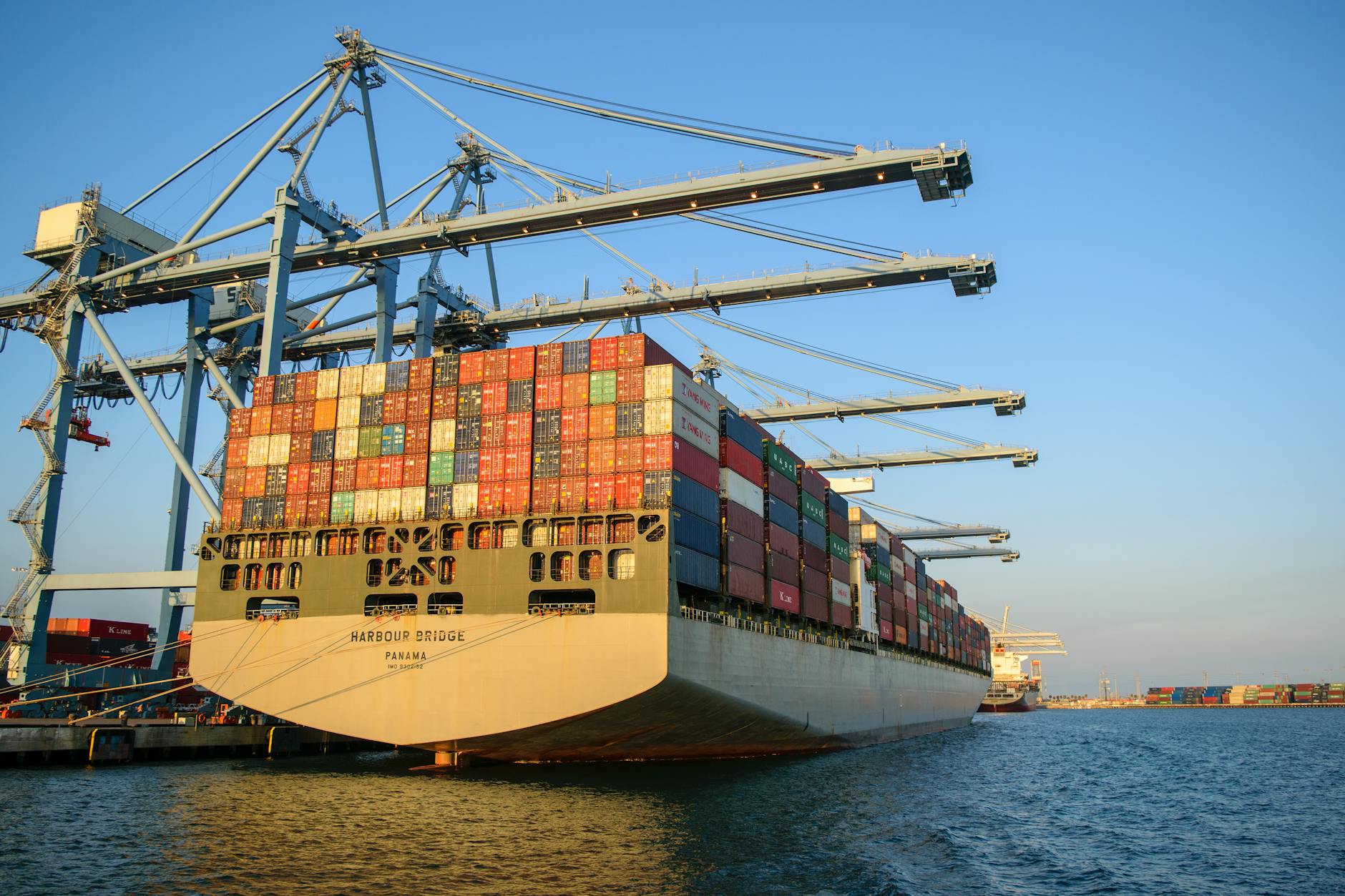
Multilateral development banks now fund over half of Africa’s net financial flows — a 124% increase fueling massive infrastructure growth. Yet more than half of the 49 AfCFTA Party States cannot trade preferentially due to unfinished tariff schedules and weak soft infrastructure. Non-integrated customs, missing rules-of-origin databases, and undertrained border agents create bottlenecks equal to physical breakdowns. Ghana’s Deputy Minister for Energy identifies efficient trade systems — digital platforms, harmonized docs, trained agents — as a foundational pillar of industrialization. Border unpredictability collapses livelihoods, especially for women traders and transporters, and fuels instability. Sustainable integration demands joint border management, digital customs terminals, and direct investment in border economies.
According to www.thehabarinetwork.com, multilateral development banks now account for more than half of Africa’s net financial flows — a 124 percent increase driving one of the continent’s most consequential infrastructure buildouts. Yet, as Ziad Hamoui underscores in his March 23, 2026 analysis, physical infrastructure alone cannot deliver economic returns without parallel investment in trade facilitation systems.
The Soft Infrastructure Deficit
The Trade Law Centre’s latest AfCFTA ratification update reveals a critical operational gap: more than half of the 49 Party States cannot yet trade preferentially, because their tariff schedules remain unfinished. This is not a failure of political will at the treaty level, but a systemic shortfall in soft infrastructure — including non-integrated customs systems, absent rules-of-origin databases, and undertrained border agents. As Hamoui observes, these gaps create chokepoints “with far less public urgency attached to fixing them” — even though their impact rivals that of a collapsed bridge.
Three Pillars of Industrialization
Ghana’s Deputy Minister for Energy, Richard Gyan-Mensah, articulated a framework at the recent Africa Trade Summit that centers industrialization on three pillars: reliable energy, resilient physical infrastructure, and efficient trade systems. The third pillar — encompassing digital trade platforms, harmonized documentation, border-agent training, and collaborative bodies such as National Trade Facilitation Committees — remains consistently underfunded and underappreciated.
“Industrialization, he argued, rests on three pillars: reliable energy, resilient physical infrastructure, and efficient trade systems.” — Richard Gyan-Mensah, Deputy Minister for Energy, Ghana
Border Instability and Livelihood Collapse
Rising tensions along the Guinea-Liberia-Sierra Leone border triangle — recently flagged by the ECOWAS Commission — expose how quickly administrative dysfunction translates into human crisis. When borders close unpredictably, perishable goods spoil, women traders (who form the backbone of cross-border commerce across much of West Africa) lose income overnight, and transport operators face paralyzing uncertainty. Local economies in border towns — which exist solely because of trade — begin to collapse inward.
As Hamoui stated at the Africa Resilience Forum in Abidjan: “The relationship between economic hardship and instability is not theoretical — it is operational.” When livelihoods disappear at border communities, those communities become recruiting grounds for armed groups and pressure valves for smuggling networks and irregular migration.
Toward Integrated Action
Sustainable peace in border zones requires three simultaneous commitments:
- Ensuring trade and transport continue uninterrupted while diplomatic tensions are managed
- Establishing joint border management structures to build institutional trust between neighboring states
- Investing directly in border infrastructure — warehouses, digital customs terminals, trader associations — that creates tangible economic interdependence
The Mano River Union and the AfCFTA framework already contain the necessary legal protocols. The gap lies in political will and targeted investment to make them operational on the ground. Every warehouse built at a border crossing is a peace dividend. Every customs process digitized reduces a friction point that, left unaddressed, becomes a flashpoint. Every women’s trader association strengthened is a constituency for stability that no armed group can easily displace.
For global supply chain professionals, this signals an urgent recalibration: trade facilitation is not ancillary to infrastructure delivery — it is its functional prerequisite. Supply chain resilience in Africa hinges not only on road length or port capacity, but on the interoperability of customs systems, the speed of document clearance, and the predictability of border operations. Multilateral financing packages must embed trade facilitation benchmarks alongside physical construction targets. Border community investment — from cold-chain warehousing to digital single-window platforms — must shift from CSR footnote to core infrastructure thesis.
Source: www.thehabarinetwork.com
Compiled from international media by the SCI.AI editorial team.


