

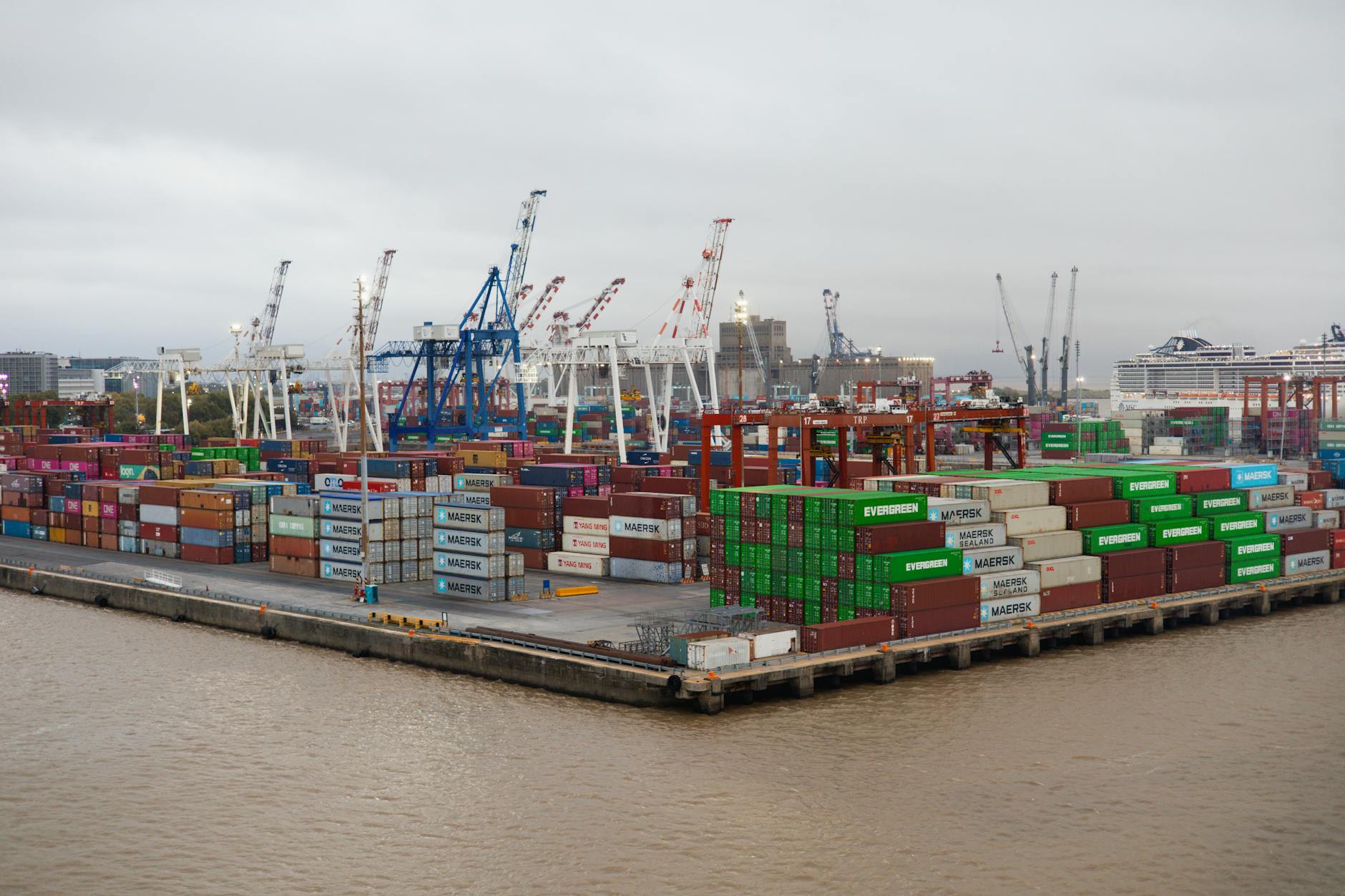
China’s MOFCOM warned it may retaliate against Mexico’s 5–50% tariffs on 1,463 product categories, affecting $30B in exports and causing $9.4B losses to Chinese mechanical/electrical industries. Mexico’s Economy Secretary Marcelo Ebrard defended the duties as necessary to counter state-subsidized Chinese imports—citing steel priced at $150/tonne—as part of broader efforts to level the playing field. The dispute coincides with USMCA’s 2026 review and intensifies scrutiny of nearshoring routes. Mexico was China’s top vehicle export destination in 2025.
According to www.scmp.com, China’s Ministry of Commerce (MOFCOM) announced on Thursday it may impose retaliatory trade measures against Mexico following a formal investigation into Mexican import duties that range from 5 to 50 per cent on 1,463 product categories, effective since January 1.
Scope and Impact of Mexico’s Tariffs
The tariffs target goods from countries without a free-trade agreement with Mexico—including China, South Korea, India, Vietnam, and Thailand—and were authorized after the Mexico Senate approved reforms to the General Import and Export Tax Law in December, with 76 votes in favour, five against, and 35 abstentions. MOFCOM stated the measures restrict Chinese goods, services, and investment, affecting over US$30 billion in Chinese exports and inflicting estimated losses of US$9.4 billion on China’s mechanical and electrical industries.
Beijing emphasized the tariffs particularly harm its automotive sector: Mexico was the top destination for Chinese vehicle exports in 2025, according to MOFCOM. The ministry warned the duties raise costs for Mexican consumers and undermine fair market access.
Mexico’s Defense and Industrial Concerns
Mexico’s Economy Secretary Marcelo Ebrard rejected Beijing’s claims, asserting Mexico’s sovereign right to protect domestic industry from what he called state-subsidized unfair competition. Speaking at the annual assembly of Caintra—a major industrial chamber in Monterrey—he cited specific pricing disparities:
- Chinese metal products selling in Mexico at US$150 per tonne, a level Ebrard attributed to government support
- Textiles, footwear, and steel as sectors facing “severely unequal” conditions
- A broader concern that “your exit price is lower than what it costs the other guy to open his shop. You are going to bankrupt any company.”
“The playing field is very uneven. With the tariffs, it starts to level out.” — Marcelo Ebrard, Mexico’s Economy Secretary
Geopolitical Timing and USMCA Context
The dispute unfolds amid high-stakes negotiations over the US-Mexico-Canada Agreement (USMCA), whose mandatory review begins in 2026 with a July deadline for extension or renegotiation. Mexico has prioritized removing U.S. tariffs on Mexican steel—some reaching 50 per cent—in bilateral talks already underway. Ebrard described early progress as “grounds for cautious optimism.”
Meanwhile, U.S. administrations—both Biden and Trump—have consistently pressured Mexico to prevent Chinese manufacturers from using the country as an export platform to circumvent U.S. tariffs. Former President Trump warned earlier this year that Mexico and Canada should not serve as conduits for Chinese or other Asian goods seeking preferential U.S. market access under USMCA rules.
Practical Implications for Supply Chain Professionals
For global supply chain professionals, this escalation signals acute risk in nearshoring strategies reliant on Mexico. Companies leveraging Mexican manufacturing or distribution hubs for North American market access must now assess dual exposure: potential Chinese retaliation disrupting inbound component flows (e.g., auto parts, electronics), and possible U.S. scrutiny over origin-of-goods compliance. The 1,463 affected product categories span mechanical, electrical, textile, and metal goods—core inputs across automotive, consumer electronics, and industrial equipment value chains. Given Mexico’s role as a top destination for Chinese vehicle exports in 2025, Tier 1 and Tier 2 suppliers face urgent need to validate bill-of-materials sourcing, reassess landed cost models inclusive of new tariff layers, and stress-test customs documentation for origin tracing. The Senate-approved tax law also introduces complexity for non-FTA partners beyond China—requiring real-time monitoring of duty applicability across South Korea, India, Vietnam, and Thailand.
Source: South China Morning Post
Compiled from international media by the SCI.AI editorial team.


