

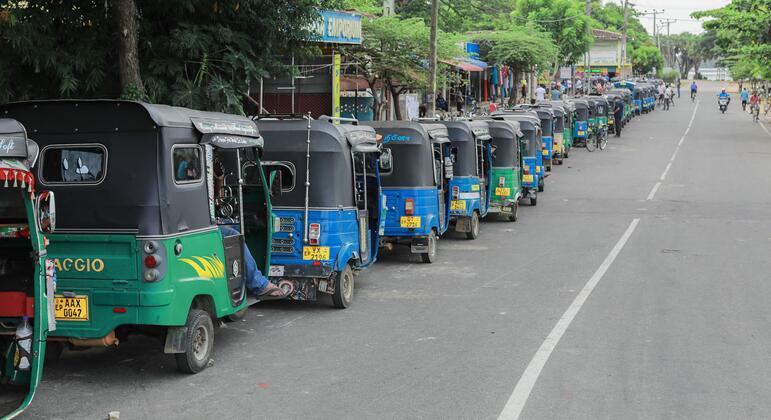
Escalating hostilities near the Strait of Hormuz — carrying ~25% of global seaborne oil trade — have triggered sharp transport cost hikes, energy and fertilizer price spikes, and currency volatility across Asia-Pacific. Helium and specialty gas shortages threaten semiconductor production; fertilizer shortfalls imperil South Asian crop yields. Sri Lanka imposed fuel rationing and a four-day school week; Pakistan enacted a four-day work week and school closures; Nepal faces severe remittance disruption, as Gulf-based migrants (1.7M, >65% of overseas labor) support 60% of households. ESCAP forecasts regional growth slowing to 4.0% in 2026 from 4.6% in 2025.
According to news.un.org, escalating hostilities near the Strait of Hormuz — a maritime chokepoint carrying around a quarter of global seaborne oil trade — have triggered immediate, cascading disruptions across Asia-Pacific supply chains, with sharp increases in transport costs, energy and fertilizer prices, currency pressures, and financial market volatility.
Chokepoint Closure and Energy Market Fallout
The Strait of Hormuz remains central to the crisis. Its constrained transit capacity has pushed Brent Crude oil prices well above $100 per barrel, while elevated marine insurance premiums and rerouted shipping lanes are inflating freight costs across container, bulk, and tanker segments. These cost surges directly impact landed costs for imported feedstocks, finished goods, and raw materials throughout the region.
Critical Input Shortages Threaten High-Tech & Agri-Production
Supply chain professionals face acute material constraints beyond fuel. Shortages of helium and specialised gases from the Gulf have created a ‘near-immediate crisis’ for semiconductor and advanced electronics production. Simultaneously, disruptions to petrochemical feedstocks threaten manufacturing in major Asian economies including South Korea, Japan, Vietnam, and India. Fertilizer shortages are raising urgent concerns about future crop yields across South Asia — home to nearly two billion people — with ripple effects on food security and import dependency.
National-Level Responses Across the Region
Several Asia-Pacific governments have implemented emergency measures:
- In Sri Lanka, where petroleum accounts for about a quarter of total imports, authorities introduced fuel rationing, cut back public events, shifted schools to a four-day week, and scaled down public sector operations.
- In Pakistan, fuel and grocery prices surged overnight; long queues formed at petrol stations, prompting a four-day work week, school closures, and mandatory work-from-home policies.
- In Nepal, over 1.7 million migrant workers — more than 65% of overseas labour migration — are employed in the Gulf. Remittances from the region constitute more than a quarter of Nepal’s GDP and support nearly 6 in 10 households. At least one migrant worker has been killed and dozens injured, with tens of thousands stranded.
Economic Forecasts and Humanitarian Risks
The UN Economic and Social Commission for Asia and the Pacific (ESCAP) warns that growth across developing Asia-Pacific economies could slow to around 4.0 per cent in 2026, down from 4.6 per cent in 2025. This deceleration risks exacerbating poverty, food insecurity, inequality, job losses, and possible displacement of migrant workers. The disruptions also impair delivery of humanitarian assistance and essential goods — a concern amplified by concurrent Red Sea shipping challenges and overlapping climate-related port congestion.
Source: news.un.org
This article was AI-assisted and reviewed by our editorial team.


