Skip to content

Coverage desk

Mexico

150 published stories

NAM urges USMCA upgrades as 15 of 18 U.S. manufacturing sectors boost exports
Latin America Supply Chain

NAM urges USMCA upgrades as 15 of 18 U.S. manufacturing sectors boost exports

The National Association of Manufacturers (NAM) is urging policymakers to strengthen the United States–Mexico–Canada Agreement (USMCA) during its May 2026 six-year review. According to a NAM report released May 13, 2026, 15 of 18 U.S. manufacturing sectors increased exports to Canada and Mexico since USMCA took effect in 2018. NAM proposes updates to rules of origin for EV batteries, customs digitization, AI-enabled trade tools, and labor enforcement. USMCA’s auto regional value content requirement stands at 75%, up from NAFTA’s 62.5%. U.S. automotive parts exports to Mexico rose 18.3% since 2018.

Apparel Sourcing Nearshores, AI Use Triples by 2028
Procurement

Apparel Sourcing Nearshores, AI Use Triples by 2028

A new USFIA Fashion Benchmark Study, co-developed with Dr. Sheng Lu and Emilie Delaye, identifies four key apparel sourcing trends through 2028: accelerated nearshoring (with India’s U.S. import share rising to 12.4% in 2025), AI adoption tripling to 89% by 2028, India becoming the top beneficiary of sourcing reallocation (41% YoY UK export growth in Q1 2026), and ESG metrics transforming supplier selection (76% of managers now require verified water-use data). The report also highlights $30 million in Lululemon-MAS-backed funding for nylon recycling and a 37% reduction in audit cycle times using blockchain traceability.

Brazilian exports to Mexico drop 42.5% amid new tariffs
Latin America Supply Chain

Brazilian exports to Mexico drop 42.5% amid new tariffs

Brazilian industrial exports hit by Mexico’s January 2026 tariff hike fell 42.5% in H1 2026 versus the prior three-year average—equivalent to US$91.5 million. The policy affects 171 products, including pipeline-grade steel pipes whose exports collapsed 100% in Q1 2026. With US$665 million in exports at risk and 90.3% of 474 identified trade opportunities subject to tariffs, CNI urges tariff exemption and fast-tracked free trade talks. A potential agreement could lift joint GDP by US$13.8 billion and draw US$8 billion in investment.

US Tariffs Hamper Onshoring: Only 10% Boost US Sourcing
Geopolitics

US Tariffs Hamper Onshoring: Only 10% Boost US Sourcing

U.S. protectionist trade policy is hindering fashion industry onshoring efforts, with only 10% of respondents in the 13th USFIA Fashion Benchmarking Study citing increased U.S. sourcing as a tariff-response strategy. Released in July 2026, the report identifies tariff uncertainty — including a recent 50% levy on apparel — as a top concern for sourcing executives in 2026. Exempting CAFTA-DR and USMCA-qualified apparel from policy volatility is deemed essential for nearshoring. Structural constraints persist: U.S. apparel production accounts for under 2% of global output, and domestic lead times (12–16 weeks) lag far behind offshore alternatives (6–8 weeks). Industry responses include EU-aligned traceability support in India and the ALADIN circular textile initiative across France, Germany, and Italy.

Tariffs raise apparel costs 37% as 46% of fashion execs foresee 2026 downturn
Europe Supply Chain

Tariffs raise apparel costs 37% as 46% of fashion execs foresee 2026 downturn

Forty-six percent of fashion executives anticipate worsening industry conditions in 2026, up from 39% in 2025, as tariff-driven cost pressures mount — with apparel sourcing prices projected to rise 35% and leather goods 37%. USMCA’s summer 2026 review, the September 2025 expiration of AGOA and Haiti HELP/HOPE, and the Supreme Court’s pending IEEPA ruling compound uncertainty. Forty percent of leaders rank U.S. trade policy among their top three risks — up from 25% last year — while Gap targets Q2 2026 for tariff strategy benefits.

Mexico heavy-duty truck production rises 7.6% in June
Manufacturing

Mexico heavy-duty truck production rises 7.6% in June

Mexico’s heavy-duty truck production rose 7.6% year over year to 15,262 units in June 2026 — its first broad monthly recovery since August 2024. Exports to the U.S. climbed 3.2% to 12,730 units. Freightliner led production with 9,379 units (+9.6%), while International Trucks produced 4,181 units (+11.6%). First-half totals remained weak: production fell 13% and exports dropped 14.5% versus 2025. Anpact cited USMCA stability and used-truck import distortions as critical challenges.

U.S.-Mexico Cross-Border Trade Hits $87.23B in May
Geopolitics

U.S.-Mexico Cross-Border Trade Hits $87.23B in May

U.S.-Mexico cross-border trade reached $87.23 billion in May 2026 — up 17.06% year-over-year and representing 16.77% of total U.S. international commerce. Laredo, Texas handled $36.33 billion in trade, reinforcing its status as the nation’s busiest land gateway. Key imports included computers ($13.52B) and passenger vehicles ($3.57B); top exports were gasoline ($3.28B) and computer parts ($2.30B). Germany’s Döhler Group invested $64M in a new Mexico plant, while an Otay Mesa industrial property sold for $8.824M.

Mexico Rail Freight Jumps Amid Cargo Theft Surge
North America Supply Chain

Mexico Rail Freight Jumps Amid Cargo Theft Surge

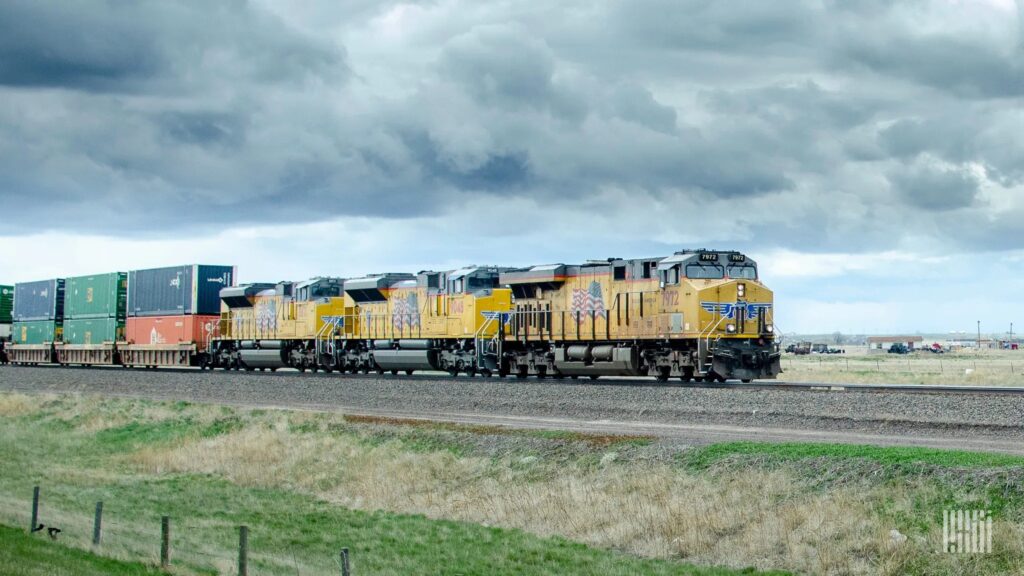
Mexico’s rail freight volume rose 14.3% year-on-year in Q2 2026 amid accelerating intermodal traffic, even as cargo theft surged 7% YoY along major corridors like Guadalajara–Mexico City–Monterrey. The CIIT is investigating another Line Z rail incident, prompting renewed safety suspensions. New nuclear material transport rules took effect July 1, 2026, mandating GPS tracking and biannual audits. DHL ranked Mexico 78th globally for connectedness, highlighting heavy US export dependence (81%). FedEx launched a dedicated life sciences logistics unit with three hubs, including Querétaro.

Toyota shifts Tacoma production to San Antonio with $3.6B expansion
AI & Automation

Toyota shifts Tacoma production to San Antonio with $3.6B expansion

Toyota is relocating Tacoma pickup production from Baja California, Mexico, to San Antonio, Texas, as part of a $3.6 billion expansion that doubles the plant’s size and creates 2,000 jobs. The transition will unfold over four years, with full completion targeted for 2030. The upgraded campus will reach $8.3 billion in total investment since 2003 and employ 6,000 workers. Meanwhile, Mexico confirms continued operations in Guanajuato—employing 2,800—and expects another automaker to announce a $500 million+ investment. Cross-border freight demand is projected to grow from $91.1 billion in 2025 to $119.4 billion by 2031.

USMCA Renewal Looms as Apparel Tariff Uncertainty Grows
Geopolitics

USMCA Renewal Looms as Apparel Tariff Uncertainty Grows

The US-Mexico-Canada Agreement (USMCA) faces a critical 2026 review, creating tariff uncertainty for apparel importers. With renewal in limbo, nearshoring strategies are strained, and the Dominican Republic-Central America Free Trade Agreement (DR-CAFTA) is seeing rising use—apparel exports up 19% since Q3 2024. Compliance audits rose 47% year-on-year, and 68% of Tier-1 buyers revised 2027 sourcing maps to include DR-CAFTA contingencies. USMCA entered force July 1, 2020; DR-CAFTA’s automatic termination looms January 1, 2027.

Toyota to build Tacoma in Texas with $3.6B expansion
Manufacturing

Toyota to build Tacoma in Texas with $3.6B expansion

Toyota Motor North America will invest $3.6 billion to expand its San Antonio, Texas, plant — more than doubling its size and adding a second assembly line to produce the Tacoma pickup alongside the Tundra and Sequoia. The project creates over 2,000 jobs and shifts some U.S.-market Tacoma production from Baja California, Mexico. An adjacent rear axle plant, announced in 2024, nears startup. Completion is targeted for 2026, supporting nearshoring goals and reducing transit time by three days.

USMCA Not Extended Amid Retail, Manufacturing Push to Preserve Pact
South Asia Supply Chain

USMCA Not Extended Amid Retail, Manufacturing Push to Preserve Pact

The United States, Mexico, and Canada declined to immediately extend the USMCA on July 1, 2026, initiating its mandatory annual review instead of a planned 16-year renewal. Retail, manufacturing, and apparel trade groups—including the NRF, AAFA, and NAM—strongly urged preservation, citing $1.3 trillion in annual trilateral trade, $2.1 billion in annual duty savings, and critical supply chain integration. Key provisions like the 70% regional value content rule for textiles and the $16/hour labor value content threshold for autos underpin operational stability. Industry data shows USMCA boosted U.S. GDP by 0.35% and supports 12 million jobs.

Welcome Back!

Login to your account below

Create New Account!

Fill the forms below to register

Retrieve your password

Please enter your username or email address to reset your password.

Add New Playlist