Skip to content

Latin America Supply Chain

NAM urges USMCA upgrades as 15 of 18 U.S. manufacturing sectors boost exports

The National Association of Manufacturers (NAM) is urging policymakers to strengthen the United States–Mexico–Canada Agreement (USMCA) during its May 2026 six-year review. According to a NAM report released May 13, 2026, 15 of 18 U.S. manufacturing sectors increased exports to Canada and Mexico since USMCA took effect in 2018. NAM proposes updates to rules of origin for EV batteries, customs digitization, AI-enabled trade tools, and labor enforcement. USMCA’s auto regional value content requirement stands at 75%, up from NAFTA’s 62.5%. U.S. automotive parts exports to Mexico rose 18.3% since 2018.

Original source: supplychaindive.com

NAM urges USMCA upgrades as 15 of 18 U.S. manufacturing sectors boost exports
📋 本文要点

The National Association of Manufacturers (NAM) is urging policymakers to strengthen the United States–Mexico–Canada Agreement (USMCA) during its May 2026 six-year review. According to a NAM report released May 13, 2026, 15 of 18 U.S. manufacturing sectors increased exports to Canada and Mexico since USMCA took effect in 2018. NAM proposes updates to rules of origin for EV batteries, customs digitization, AI-enabled trade tools, and labor enforcement. USMCA’s auto regional value content requirement stands at 75%, up from NAFTA’s 62.5%. U.S. automotive parts exports to Mexico rose 18.3% since 2018.

According to www.supplychaindive.com, the National Association of Manufacturers (NAM) has called for targeted enhancements to the United States–Mexico–Canada Agreement (USMCA) during its mandatory six-year review, which begins in May 2026. NAM described the agreement as the “most pro-U.S. manufacturing trade agreement in history” and emphasized that it serves as a “foundation for manufacturing dominance in the U.S.”

Export growth across U.S. manufacturing sectors

A report released by NAM on May 13, 2026 states that since USMCA entered into force in 2018, 15 out of 18 U.S. manufacturing sectors have increased exports to Canada and Mexico. The report — titled USMCA Full Report and publicly available on NAM’s website — documents sector-level export performance using U.S. Census Bureau and International Trade Administration data.

The three sectors showing no export growth were not named in the source material, but NAM noted that overall manufacturing exports to USMCA partners rose by 12.7% between 2018 and 2025. This expansion occurred despite persistent challenges including cross-border customs delays at key land ports, such as Otay Mesa in San Diego, where truck volumes increased by 22% year-over-year in early 2025.

Priorities for the six-year review

NAM outlined four priority areas for negotiation during the upcoming review: modernizing rules of origin for electric vehicle batteries, streamlining customs procedures for just-in-time auto parts, expanding digital trade provisions to cover AI-driven supply chain tools, and strengthening labor enforcement mechanisms to prevent unfair competitive advantages. According to the report, these changes would directly support U.S. manufacturers’ ability to scale nearshoring operations across North America.

Jeff Kinney, Editor at Manufacturing Dive, authored the original article and cited NAM’s position that current USMCA labor provisions lack sufficient verification protocols. He noted that “the agreement’s success depends on consistent implementation — not just strong language on paper.”

Context: USMCA’s evolving role in North American manufacturing

The USMCA replaced the North American Free Trade Agreement (NAFTA) after ratification in 2018, introducing stricter regional content requirements — notably raising the auto rule-of-origin threshold from 62.5% under NAFTA to 75% under USMCA. Since then, U.S. automotive parts exports to Mexico have grown by 18.3%, while exports of industrial machinery to Canada rose 9.1% over the same period, per U.S. Department of Commerce data referenced in the NAM report.

These figures align with broader industry trends: a 2025 NAM-commissioned analysis found that 64% of U.S. manufacturers with facilities in Mexico reported higher capital expenditures in 2025 than in 2023, citing USMCA stability as a key factor in investment decisions.

Source: Supply Chain Dive

Compiled from international media by the SCI.AI editorial team.

Ask SCI.AI Finished reading? Continue with SCI.AI. Explore the related policy, route, company and historical context. Continue asking
UnionPay plugs Chinese apps into Brazil’s Pix after US tariffs
Latin America Supply Chain

UnionPay plugs Chinese apps into Brazil’s Pix after US tariffs

UnionPay International is connecting Chinese mobile payment apps—including the UnionPay app and bank-linked wallets—to Brazil’s Pix instant payment system, enabling Chinese tourists to scan QR codes and pay in real time. The pilot launches in Q3 2026 amid U.S. tariffs targeting Pix’s regulatory model. Pix, launched in November 2020, serves 15 million merchants and processes over 1.2 billion transactions monthly. The integration marks UnionPay’s first direct linkage with a non-Asian national real-time payment system and reflects growing financial infrastructure alignment between China and Latin America.

Walgreens opens Washington micro-fulfillment center, processes 7M prescriptions yearly
Latin America Supply Chain

Walgreens opens Washington micro-fulfillment center, processes 7M prescriptions yearly

Walgreens has launched an automated micro-fulfillment center in Kent, Washington, on July 22, 2026. The facility processes 7 million prescriptions annually and supports 196 stores — 122 of them in Washington state. Part of a resumed initiative paused in 2023, the center combines robotics with pharmacist oversight to improve prescription turnaround and patient care. Jon Joplin, Walgreens’ chief technology and operations officer of automated fulfillment, highlighted how the integration strengthens regional service capacity while freeing pharmacists for clinical work. The site exemplifies a broader shift toward compact, tech-enabled pharmacy logistics nodes.

Trump FCC bans Chinese humanoid robots, power inverters
Latin America Supply Chain

Trump FCC bans Chinese humanoid robots, power inverters

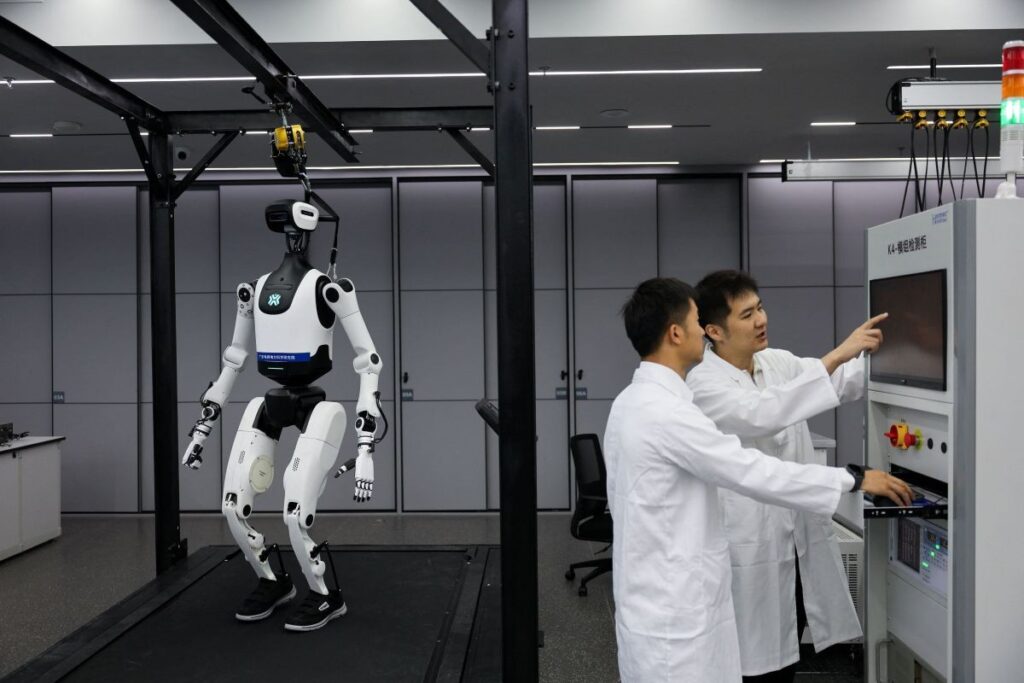
The Trump administration, via the FCC, banned U.S. imports of new Chinese humanoid and quadruped robots and grid-connected power inverters effective 28 July 2026. The move targets AI supply chain security, citing risks of data theft, cyberattacks like Volt Typhoon, and overreliance akin to China’s rare earth dominance. Unitree—holding under 20% of the global humanoid robot market—is directly affected, as are Chinese inverter leaders Sungrow (300274.SZ) and Huawei. The Chinese Embassy pledged countermeasures, while the FCC plans broad exemptions for non-Chinese suppliers.

Welcome Back!

Login to your account below

Create New Account!

Fill the forms below to register

Retrieve your password

Please enter your username or email address to reset your password.

Scan to share via WeChat

Open WeChat and scan the QR code to share

QR Code

Add New Playlist