

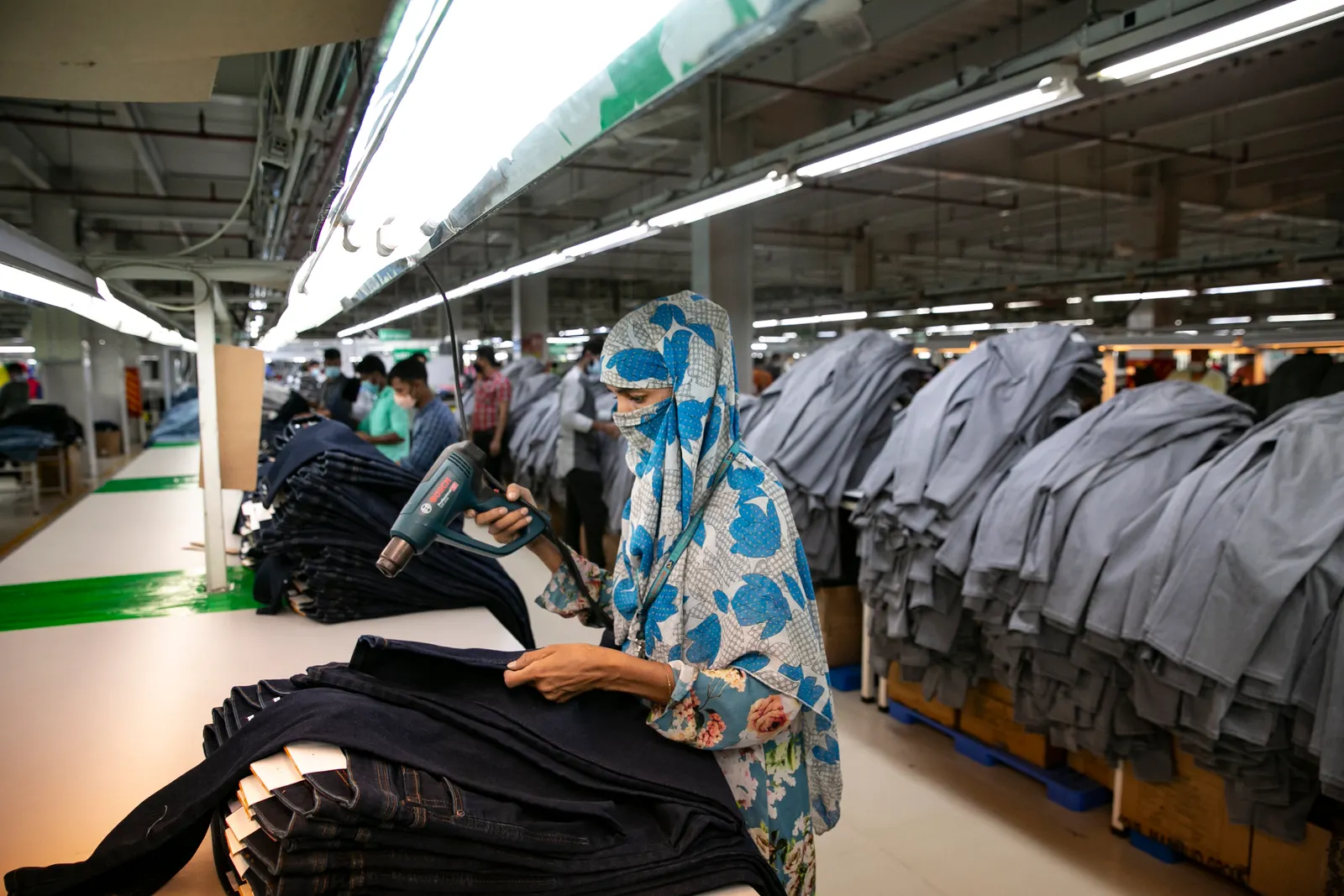
46% of fashion leaders expect conditions to worsen in 2026, with 76% saying tariffs will reshape the industry. McKinsey projects 35% apparel price increases from tariff pressure. This deep dive analyzes four key sourcing shifts — trade agreement volatility, persistent tariff headwinds, aggressive cost management, and AI-powered procurement transformation — offering scenario analysis for supply chain practitioners navigating unprecedented uncertainty.
The global fashion supply chain stands at a critical inflection point in 2026. According to the BoF-McKinsey State of Fashion 2026 Executive Survey, 46% of fashion industry leaders expect conditions to worsen this year, up sharply from 39% the previous year. Trade agreement volatility, persistent tariff headwinds, mounting cost pressures, and rapid AI adoption are fundamentally reshaping how apparel brands approach strategic sourcing and supply chain design.
The survey, conducted in August and September 2025 and published in November 2025, found that 25% of fashion leaders expect conditions to improve in 2026, up from 20% the year prior.
This bifurcation of expectations reflects the profound uncertainty gripping global apparel supply chains. As the report notes: “The industry’s main agenda in 2026 will be adapting to this new environment where trade, consumer behaviour and technology remain in rapid flux. Agile brands that can adapt quickly are likely to emerge as the winners.”

Trade Agreement Volatility: Four-Front Sourcing Uncertainty
Among all risk factors, trade policy uncertainty is rising fastest in executive consciousness. The survey found that 40% of fashion leaders named trade policy as one of their top three risks, up sharply from 25% the prior year. Sheng Lu, professor and director of graduate studies at the University of Delaware’s department of fashion and apparel studies, told Supply Chain Dive that negotiations are on the horizon for several trade agreements, the outcomes of which could create new uncertainties for brands sourcing from specific regions.
The United States-Mexico-Canada Agreement (USMCA) is perhaps the most consequential near-term factor. The agreement, enacted in 2020, includes a clause requiring a joint review every six years — and USMCA’s joint review process is set to begin this summer.
Lu noted that despite broad industry support for upholding the existing agreement, the possibility that the Trump administration might seek significant renegotiation or even replace USMCA with bilateral deals cannot be ruled out. This uncertainty directly affects Mexico’s attractiveness as a nearshoring destination, which many brands have invested heavily in over the past several years.
Meanwhile, the African Growth and Opportunity Act (AGOA) and the Haiti HELP/HOPE program both expired in September 2025 with uncertain renewal prospects. Their fate will directly shape fashion companies’ sourcing decisions and long-term competitiveness assessments for those regions.
A further complication: apparel exports from Vietnam and Cambodia often contain 20% to 30% of value created in China, according to the OECD’s Trade in Value Added database. Simple country-of-origin shifts may not fully resolve China-content concerns, particularly if the Trump administration tightens rules of origin.
“Despite broad industry support for upholding the existing agreement and calls to ‘do no harm,’ we cannot rule out the possibility that the Trump administration might seek significant renegotiation or even replace the USMCA with separate bilateral trade deals.” — Sheng Lu, University of Delaware
Tariff Headwinds Persist: 35% Apparel Price Surge Projected
Even as trade negotiations evolve, the tariff environment will continue to weigh heavily on fashion supply chains in 2026. 76% of fashion executives believe that higher levies and trade disruptions will shape the year ahead, according to McKinsey’s survey. Retailers and brand manufacturers have implemented various strategies to shield against tariff exposure over the past year, with some network adjustments stretching back to the first Trump administration.
McKinsey estimates that tariffs will drive short-term sourcing price increases of 35% for apparel and 37% for leather goods — a cost surge that cannot be fully absorbed without either supplier pressure or consumer price increases. Angela Santos, co-leader of ArentFox Schiff’s customs practice, noted that companies have generally adjusted their strategies to the current tariff regime, whether by absorbing duties or hiking prices, adding that firms are “finally able to start making decisions, placing orders, et cetera.” Gap has reported it expects to begin reaping the benefits of its tariff strategy starting in fiscal Q2 2026.
A major wildcard remains: the U.S. Supreme Court’s pending decision on Trump’s interpretation of the 1977 International Emergency Economic Powers Act (IEEPA). If IEEPA tariffs are invalidated, importers would receive refunds, but Trump retains other mechanisms to reimpose duties.
Santos emphasized that companies “are just finally able to start making decisions” under the current tariff regime, and would face significant disruption if forced to reset their entire sourcing strategy mid-stream with a new set of tariff parameters.
Cost Management Becomes the Core Sourcing Strategy
45% of fashion executives say sourcing costs are most pressured under their current economic model, followed by pricing and inventory management concerns. This data point crystallizes the central challenge of strategic sourcing in 2026: how to manage cost inflation while maintaining supply chain agility and resilience. The strategies brands are deploying range from supplier cost-sharing to portfolio rationalization to nearshoring investments.
Many apparel retailers and manufacturers are asking suppliers to absorb increased cost burdens, while larger firms are renegotiating contracts to add volume buffers, including capacity commitments and minimum order requirements.
Lu noted the escalating demands on suppliers: “Fashion companies increasingly expect suppliers to accommodate last-minute order changes, accept low MOQs, arrange raw material sourcing, and offer other value-added services.” This effectively transfers supply chain risk down the value chain.
Sourcing diversification remains the most recommended structural response. Santos advised companies broadly that they “need to diversify their supply chains” and “can’t rely on one country only because you don’t know when that country could be impacted by a new tariff regime.” In practice, brands are reassessing their SKU mix and considering whether to shift production toward certain product categories. McKinsey’s report recommends that suppliers prioritize productivity gains through lean manufacturing and technology investments to maintain competitiveness while managing cost pressures.
Supply Chain Diversification: The Resilience Imperative
The 2026 fashion supply chain is undergoing a fundamental strategic paradigm shift — from efficiency-first, concentrated sourcing models toward resilience-first, diversified supply network architectures. This transformation goes far deeper than simple geographic rebalancing; it represents a wholesale reconstruction of the underlying sourcing logic that governed global apparel supply chains for decades.
The China-content challenge illustrates the complexity. With 20% to 30% of value in Vietnam’s and Cambodia’s apparel exports originating in China, a simple production relocation doesn’t resolve tariff exposure under tightening rules of origin.
True supply chain diversification requires building out raw material sourcing, component supply, and manufacturing capabilities across multiple geographies simultaneously — a process that typically takes 12 to 24 months and carries significant quality and efficiency risks during transition.
Three strategic scenarios are emerging for 2026. In the optimistic scenario, IEEPA tariffs are upheld, USMCA review passes cleanly, and trade agreements are finalized — enabling confident sourcing decisions with brands that have diversified supply bases reaping early benefits.
In the baseline scenario, tariffs persist and negotiations drag, with the 35% apparel price inflation materializing and suppressing consumer demand. In the pessimistic scenario, IEEPA is overturned, AGOA remains lapsed, and new tariff mechanisms introduce yet another reset in sourcing strategy within a single year.

AI Tools Transform Procurement: From Linear Process to Agile Orchestration
Against the backdrop of persistent trade volatility, AI technology is becoming a critical enabler for fashion procurement teams. Nordstrom has started using AI “quite heavily” within its procurement spend analytics software — through the Suplari platform — building sourcing category strategies and gaining spend visibility.
VP and Chief Procurement Officer Karoline Dygas shared at Manifest 2026 that AI “spits out so much information that it would really take me hours to compile,” with its core value measured in speed and time saved.
The procurement AI evolution path is becoming clearer: from descriptive analytics (what happened) to predictive AI (what will happen) to prescriptive AI (what to do next). Dygas expressed particular interest in prescriptive capabilities: “I want AI to tell me what I need to know. Right now, we’re telling it what we need to know. That defeats the purpose.”
This represents a shift from AI as a research accelerator to AI as a true decision-intelligence engine embedded in the sourcing workflow.
Data governance remains the critical selection criterion for AI procurement tools. Dygas was explicit: “Make sure your tool is focused on really, really being good with the data and allowing for really good inputs, and there’s no hallucinations.”
Despite early limitations, she warned procurement leaders against waiting: “If you’re not embracing AI, you’re a little late, because that train has left the station.” For supply chain practitioners globally, AI procurement adoption signals a shift in brand interface requirements — from pure price competition toward digital capability assessments including data standardization and ERP integration.
Related Reading
- Tariff Volatility and the Irreversible Regionalization of Global Supply Chains in 2026
- Thomson Reuters 2026 Global Trade Report: 72% of Trade Professionals Name U.S. Tariffs Top Risk
Source: supplychaindive.com
This article was AI-assisted and reviewed by our editorial team.


