Supreme Court Ruling Reshapes Tariff Policy Landscape
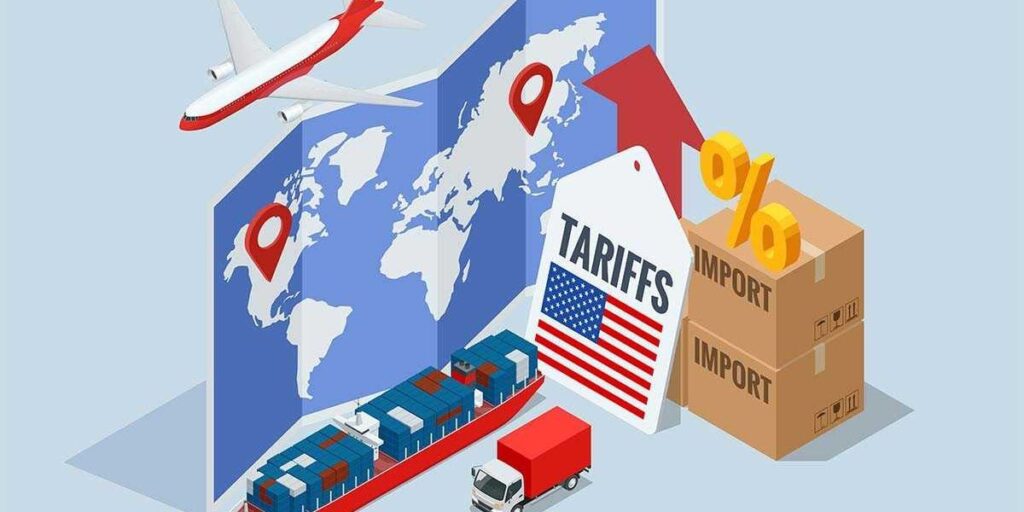
In February 2026, the U.S. Supreme Court delivered a landmark 6-3 ruling in Learning Resources Inc. v. Trump, determining that the International Emergency Economic Powers Act (IEEPA) does not authorize the president to impose tariffs. This decision directly overturned tariff measures previously imposed by the Trump administration on Canada, Mexico, China, and other countries under IEEPA, triggering major upheaval in global trade policy.
The Supreme Court emphasized in its ruling that the power to tax belongs to Congress under the Constitution, and the president cannot unilaterally impose tariffs through executive orders bypassing the legislature. This judgment is seen as an important check on executive power, but it has also brought new uncertainty to global supply chains. Following the ruling, the Trump administration quickly pivoted to other legal avenues, signing an executive order under Section 122 of the Trade Act of 1974 to impose a 10% temporary tariff on all countries effective February 24, 2026.
New Tariff Measures Affect Broad Range of Imports
According to analysis by the Tax Foundation, the new Section 122 tariffs will apply to approximately $1.2 trillion in annual imports, representing 34% of total U.S. imports. The tariff is scheduled to expire after 150 days, but will have profound impacts on the U.S. economy and global supply chains during this period.
The Tax Foundation estimates that Trump tariff policies in 2025 increased the average tax burden on U.S. households by $1,000. After the IEEPA tariffs were struck down, remaining Section 232 tariffs will increase household taxes by about $400 in 2026, while the new Section 122 tariffs will add approximately $200 more, totaling $600 per household. This tax burden increase will directly affect consumer purchasing power and corporate cost structures.
Tariff Rates Rise to Historic Highs
Data shows that in 2022, the U.S. weighted average applied tariff rate was only 1.5%. Before the IEEPA tariffs were implemented in 2025, this rate surged to 13.8%. After the Supreme Court ruling, Section 232 tariffs brought the weighted average rate down to 6.7% in 2026, but with the addition of Section 122 temporary tariffs, the rate rose again to 10.3%.
More noteworthy is the effective tariff rate—the ratio of actual tariff revenue to total goods imports. In 2025, this rate reached 7.7%, the highest level since 1947. If Section 122 tariffs expire after 150 days, the effective tariff rate for 2026 is projected at 5.6%, still the highest since 1972. This indicates that U.S. trade protectionist policies have entered a new phase.
UNCTAD Warns Tariff Volatility Reshaping Global Trade
The United Nations Conference on Trade and Development (UNCTAD) warned in its January 2026 Global Trade Update report that rising tariffs and policy volatility will be one of the ten defining trends for global trade in 2026. UNCTAD noted that governments will continue to use tariffs as protectionist and strategic tools, and frequent policy changes will discourage investment and complicate supply chain planning.
UNCTAD estimates that global economic growth will remain subdued in 2025 and 2026, with an annual growth rate of only 2.6%. U.S. growth is projected at 1.5% for 2026, while China is expected at 4.6%. This weak macroeconomic environment will weaken demand and tighten financial conditions for developing economies, further exacerbating trade tensions.
Supply Chain Restructuring Accelerates Nearshoring Trend
Facing tariff uncertainty, global companies are accelerating supply chain restructuring. The UNCTAD report points out that value chains continue to reconfigure as firms diversify suppliers and “near-shore” production closer to consumers. This trend reinforces Mexico position in North American manufacturing networks while also placing greater pressure on infrastructure, customs performance, and supply reliability.
Since 2020, approximately 18,000 new discriminatory trade measures have been recorded globally, with technical rules and standards affecting a large share of world trade, raising the compliance bar for exporters. Companies must invest more resources in compliance management while adjusting supply chain layouts to respond to tariff policy differences across markets.
Implications and Responses for Chinese Supply Chain Enterprises
For Chinese supply chain enterprises, U.S. tariff policy volatility presents both challenges and opportunities. On one hand, the high tariff environment increases cost pressures for Chinese products entering the U.S. market; on the other hand, the supply chain regionalization trend offers opportunities for Chinese companies to establish operations in Southeast Asia, Mexico, and other locations.
Chinese enterprises should closely monitor legal developments in U.S. tariff policy, particularly the policy direction after the 150-day expiration of Section 122 tariffs. Meanwhile, they should accelerate supply chain diversification strategies, reducing tariff impacts by establishing production bases in third countries, optimizing product classification and origin planning. Additionally, companies should strengthen research on international trade rules and fully utilize WTO dispute settlement mechanisms and bilateral trade agreements to protect their rights.
Source: mexicobusiness.news + taxfoundation.org