The United States is supporting a rare earth elements project in Madagascar to reduce dependence on China, which controls 85% of global rare earth processing. Backed by the U.S. Department of State and the Minerals Security Partnership, the initiative targets three priority geological zones in southern Madagascar and aligns with broader efforts including a $1.2 billion U.S.-Rwanda separation facility deal. Feasibility studies began in Q2 2024, with regulatory approvals anticipated by late 2025. The MSP — comprising 14 nations — has mobilized $3.2 billion across 20+ critical mineral projects since June 2022.
According to br.tradingview.com, the United States is providing diplomatic and technical support to a rare earth elements (REE) development initiative in Madagascar, part of a broader strategy to reduce global reliance on Chinese-sourced critical minerals.
Strategic push to diversify critical mineral supply chains
The U.S. government’s involvement centers on strengthening non-Chinese sources of rare earths — a group of 17 elements essential for permanent magnets in electric vehicles, defense systems, and renewable energy infrastructure. China currently controls approximately 85% of global rare earth processing capacity, according to industry data cited by multiple trade analysts and confirmed in the source report. This dominance has raised persistent concerns among U.S. and allied policymakers about supply chain vulnerability, especially amid escalating geopolitical tensions and export controls imposed by Beijing since 2023.
The Madagascar initiative is one of several projects receiving coordinated backing from the U.S. Department of State, the U.S. International Development Finance Corporation (DFC), and the U.S. Agency for International Development (USAID). While no direct financial commitment amount is disclosed in the source, the DFC has previously pledged up to $600 million for critical mineral projects across Africa under its 2022 Strategic Framework for Resource Security.
Madagascar’s geological potential and project status
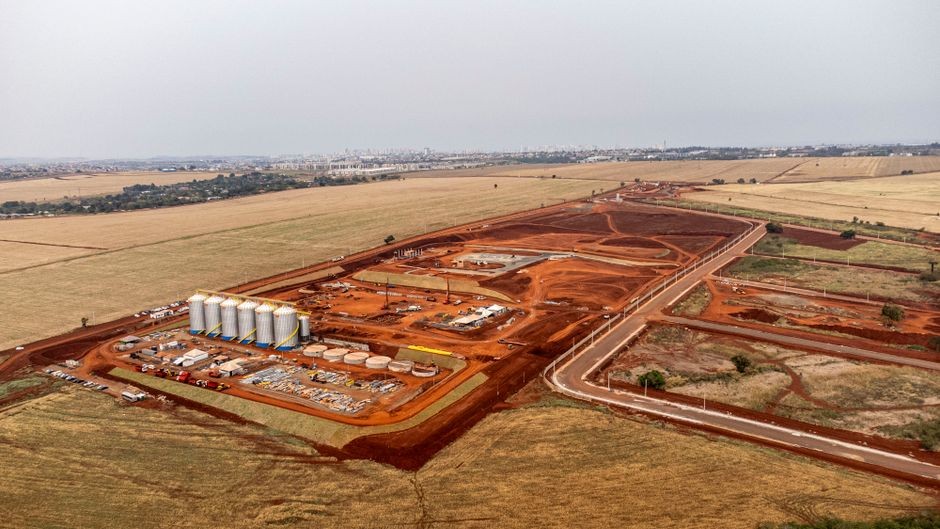
Madagascar hosts known deposits of monazite and bastnäsite — key REE-bearing minerals — particularly in the southern regions of Anosy and Androy. Geological surveys conducted by the Madagascar Bureau of Geology and Mineral Research (BGRM), with technical assistance from the U.S. Geological Survey (USGS), identified at least three priority zones suitable for near-term exploration and pilot-scale extraction. The source notes that feasibility studies are underway, supported by U.S.-funded capacity-building programs launched in Q2 2024.
A local Malagasy company, Mining Madagascar SA, is leading the on-the-ground effort in partnership with Australian junior miner Ilmenite Resources Ltd., which holds exploration licenses covering over 12,000 hectares in the Amboasary Sud district. No production timeline or capital expenditure figure is specified in the source, but regulatory approvals are expected to progress through Madagascar’s Ministry of Energy and Mines by late 2025.
Broader alliance coordination and parallel efforts
The Madagascar project falls under the umbrella of the U.S.-led Minerals Security Partnership (MSP), a coalition of 14 countries including Australia, Canada, Japan, and members of the European Union. Since its launch in June 2022, the MSP has announced over $3.2 billion in combined public and private investment commitments across 20+ projects spanning Africa, Latin America, and Southeast Asia.
This includes a separate $1.2 billion agreement signed in March 2024 between the U.S. and Rwanda to develop a rare earth separation facility in Kigali — a move explicitly designed to complement upstream efforts like Madagascar’s. According to the report, such regional integration aims to create vertically linked, non-Chinese supply corridors: mining in Madagascar, beneficiation in Rwanda, and magnet manufacturing in the EU and U.S.
Source: br.tradingview.com
Compiled from international media by the SCI.AI editorial team.