

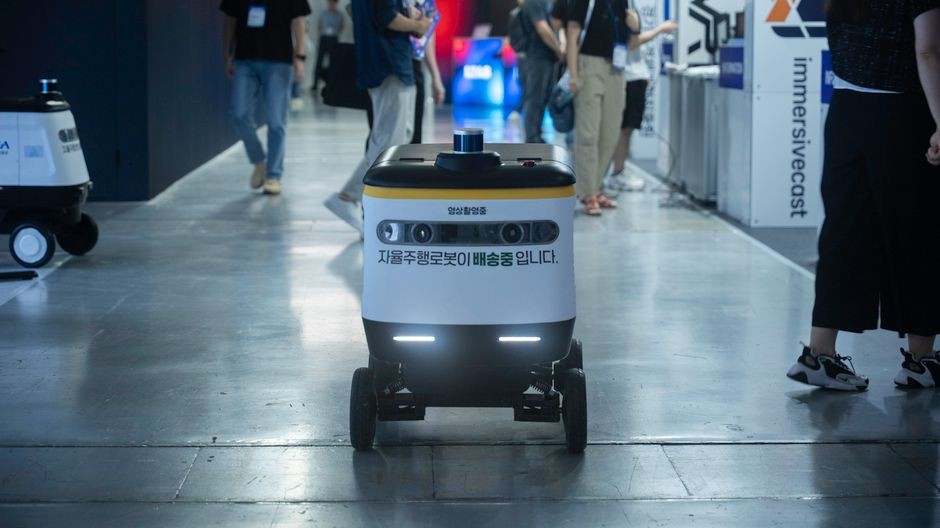
The automotive industry is rapidly pivoting toward humanoid robotics, leveraging autonomous vehicle expertise to address acute labor shortages and manufacturing inefficiencies. Market forecasts project the robotics industry will reach $111 billion by 2030, with humanoid-specific demand hitting $38 billion by 2035. Key moves include Tesla’s plan to produce 1 million Optimus units annually in Fremont, CA; Mobileye’s $900 million acquisition of Mentee Robotics; and Boston Dynamics’ 2028 deployment target at Hyundai plants. Challenges persist — including a 2–3-year cultural adoption cycle, 40% warehouse turnover, and a projected 1.9 million U.S. factory worker shortfall by 2033.
According to www.wardsauto.com, advances in autonomous vehicle technology are accelerating automotive companies’ entry into humanoid robotics — a sector projected to reach $111 billion globally by 2030.
Market Momentum and Labor Imperatives
Industry executives estimate the humanoid robotics market alone could hit $38 billion by 2035, according to Goldman Sachs. This growth is driven by acute labor shortages: the U.S. faces a projected deficit of 1.9 million factory workers by 2033, while warehouse employee turnover stands at 40%. Alex Panas, senior partner and global leader of industry sectors at McKinsey & Co., noted at CES 2026 that Chinese factories are automating at 10 times the rate of their U.S. counterparts — a disparity threatening global competitiveness.
“Automation is back on the CEO agenda,” Panas said during a panel on “Physical AI” at CES 2026 in Las Vegas. He emphasized that enterprises now view automation not as a capital expense but as a catalyst for organizational transformation — citing a more than doubling of robotics-related mentions in public filings over the past 18 months.
Automotive Players Lead Robotics Deployment
Boston Dynamics, now part of Hyundai Motor Group, will begin testing humanoid robots this year inside Hyundai manufacturing plants, with full deployment targeted for 2028. Meanwhile, Tesla confirmed it will end production of its Model S sedan and Model X SUV this year and repurpose capacity at its Fremont, CA, facility to produce up to 1 million Optimus humanoid robots annually.
Mobileye acquired Mentee Robotics for $900 million in January — a move executives say establishes the Israeli chipmaker as a global leader in Physical AI. Mobileye has signed a manufacturing deal with Aumovio (formerly Continental Automotive) to begin production in 2027, with industrial deployment slated for 2028 and in-home applications starting in 2030.
Technology Bridges and Strategic Partnerships
Qualcomm launched its Dragonwing IQ10 processor specifically for robotics and placed both automotive and robotics operations under executive vice president Nakul Duggal. Nvidia president and CEO Jensen Huang stated the company will apply the development process behind its Alpamayo open-source platform — used in automated-driving stacks — to humanoid development. In partnership with Siemens, Nvidia plans to convert a Siemens Electronics factory in Germany into the world’s first AI-driven adaptive manufacturing site later this year.
Bosch, the world’s largest automotive supplier, is collaborating with Microsoft on Agentic AI factory systems. These co-intelligence robotics platforms will leverage lifecycle data from over 1 billion products and 700 million digital twins across Bosch’s AI-enabled factories. Similarly, Schaeffler Group supplies actuators and batteries to multiple humanoid projects expected to reach production later this year — noting that each humanoid requires about 28 actuators, positioning the supplier for significant robotics-related revenue growth.
Cultural Adoption Remains a Critical Hurdle
Despite technical progress, adoption timelines remain constrained by human factors. Robert Playter, CEO of Boston Dynamics, observed that customers typically require two to three years to become comfortable deploying robots before expanding applications. “There’s almost this cultural piece: ‘Am I going to trust this technology?’ We’ve got to get better at that,” he said.
ABI Research forecasts the broader robotics industry will grow from $50 billion today to $111 billion by 2030, when an estimated 13 million robots will be deployed worldwide. Yet industry insiders caution that high initial costs, limited production-grade components, and unresolved cultural resistance mean real-world scaling may lag behind optimistic projections.
Source: wardsauto.com
Compiled from international media by the SCI.AI editorial team.


