

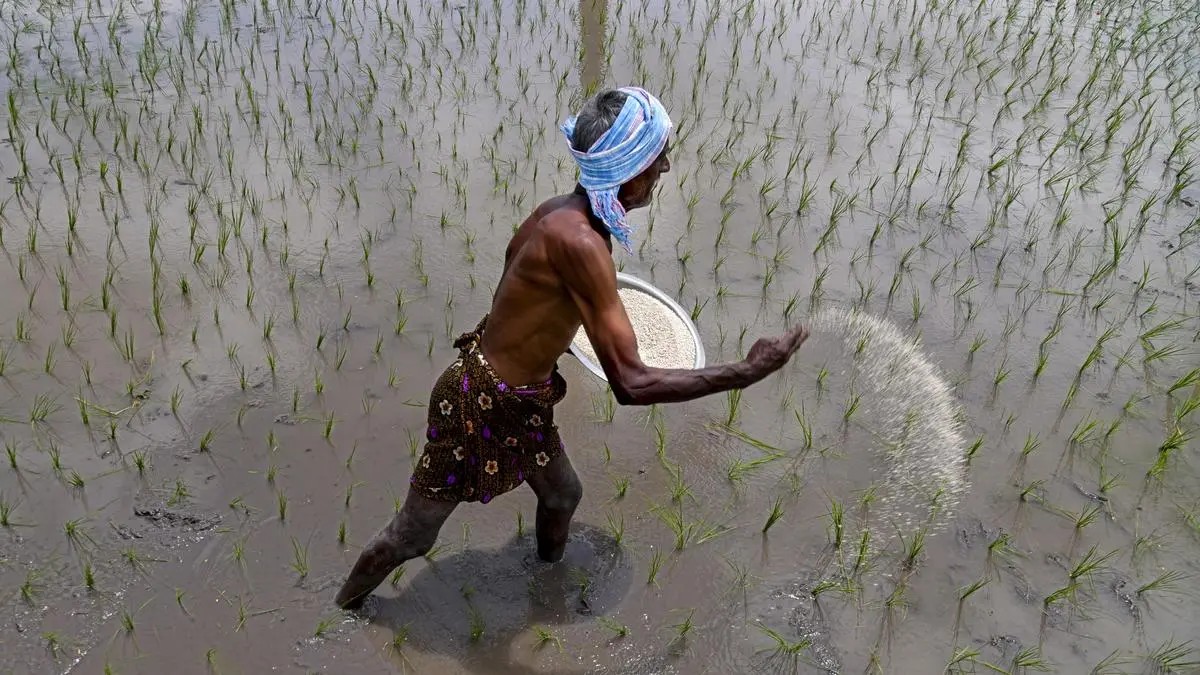
According to www.thehindubusinessline.com, India’s soluble fertilizer import prices have surged 60–100% over the past year, with monoammonium phosphate (MAP) now trading at $1,500–1,600 per tonne — up from $1,000 per tonne in recent years — amid China’s export curbs and West Asia supply disruptions.
Price spike threatens farmer adoption
Rajib Chakraborty, President of the Soluble Fertilizer Association of India (SFAI), told PTI that the $600-per-tonne increase represents a material cost shock for Indian agriculture. He emphasized that affordability — not availability — is the dominant constraint this season:
“The moment it becomes very expensive, farmers stop using it.” — Rajib Chakraborty, President, Soluble Fertilizer Association of India
Price control, he noted, lies outside industry influence, and domestic manufacturing capacity remains minimal, leaving India heavily reliant on imports.
Import dependency deepens amid geopolitical strain
India imports approximately 4 lakh tonnes of soluble fertilizers annually — a figure rising year-on-year. For the current fiscal year, total imports are estimated at 2–2.5 lakh tonnes, with roughly 1 lakh tonne landed by June. The bulk of consumption occurs between September and March, creating tight timing windows for supply replenishment. Due to China’s export restrictions and shipping disruptions linked to West Asia tensions, importers have shifted sourcing toward Russia and the CIS region — but supplies from those sources remain constrained, according to Chakraborty.
Monsoon uncertainty creates dual demand pressure
Although the southwest monsoon has covered the entire country, the India Meteorological Department (IMD) forecasts below-normal rainfall from mid-July onward. This patchy rainfall pattern could boost demand for water-soluble fertilizers, which require significantly less water than conventional fertigation methods. Crops such as cotton — typically receiving two soluble-fertilizer sprays per season — may see higher uptake under dry conditions. As Chakraborty explained:
“If there is no rain, there will be yellow leaves. So, they will tend to use more.” — Rajib Chakraborty, President, Soluble Fertilizer Association of India
Adoption of specialty fertilizers historically rises during agricultural stress periods.
Substitution risk and subsidy implications
High MAP prices are already prompting farmers to switch to cheaper phosphatic alternatives like single superphosphate (SSP), which contains 20–22% phosphorus versus MAP’s 61%. A broader shift back to conventional fertilizers — including urea and diammonium phosphate (DAP) — would increase pressure on India’s fertilizer subsidy program. Chakraborty warned this could materially raise the government’s fiscal burden. Meanwhile, consignments arriving at Indian ports are expected to ease price pressures, as current levels are believed to represent a peak before distribution-driven stabilization.
Carryover stocks buffer near-term supply
A stock carryover from last year — resulting from excess rainfall and flooding in key farming regions that suppressed consumption — has prevented immediate supply shortages. Chakraborty stated, “So far, I don’t see much of a problem,” though he cautioned that a sharp uptick in demand during the Kharif season could strain subsequent supply cycles. With India’s soluble fertilizer import dependence entrenched and domestic production negligible, supply chain resilience hinges on timely port clearance, alternative sourcing viability, and calibrated policy responses to price volatility.
Source: thehindubusinessline.com
Compiled from international media by the SCI.AI editorial team.


