Skip to content

Latin America Supply Chain

J.B. Hunt Intermodal Revenue Hits 58% in Q2 2026

J.B. Hunt Transport’s intermodal segment generated 58% of Q2 2026 revenue, underscoring its strategic focus on rail-truck integration across the U.S., Canada, and Mexico. Dedicated trucking contributed 22% with multi-year contracts, while brokerage accounted for 20%, supported by a digital platform serving 15,000+ carriers. Founded in 1961 and headquartered in Arkansas, the company reported $12.4 billion in 2025 revenue. Its 98.7% on-time delivery rate in dedicated operations and 4.2% YoY intermodal volume growth among Class I railroads highlight sector-wide momentum. Investors use J.B. Hunt stock as a barometer for North American freight health and supply chain planning confidence.

Original source: ad-hoc-news.de

J.B. Hunt Intermodal Revenue Hits 58% in Q2 2026

According to www.ad-hoc-news.de, J.B. Hunt Transport’s intermodal segment accounted for 58% of total revenue in Q2 2026, reinforcing its position as a dominant asset-based logistics provider across North America. The Arkansas-based company, listed on U.S. exchanges under ticker US4655621062, reported this figure amid steady freight demand and sustained contract volumes with major Class I railroads.

Intermodal as Core Growth Engine

J.B. Hunt Transport operates an integrated intermodal network spanning the U.S., Canada, and Mexico, pairing rail line-haul with truck drayage to deliver door-to-door containerized freight. This model reduces cost per mile by up to 30% compared to over-the-road trucking, according to industry benchmarks cited in the source. The company owns and manages a fleet of proprietary containers and chassis, enabling tighter control over equipment utilization and service reliability. Intermodal contracts often run for multi-year periods, insulating earnings from spot-market volatility — a structural advantage over purely transactional carriers.

Dedicated Trucking Stabilizes Earnings

The dedicated services segment provides contract carriage for specific clients, with agreements frequently including minimum volume guarantees and multi-year terms. These arrangements support predictable revenue streams, especially during softening spot truckload markets. As of Q2 2026, dedicated operations represented approximately 22% of J.B. Hunt’s total revenue, per internal disclosures referenced in the report. Operational discipline — including driver retention programs, real-time routing optimization, and strict adherence to service-level agreements — underpins consistent on-time delivery performance exceeding 98.7% across dedicated lanes.

Brokerage and Digital Freight Matching

J.B. Hunt’s brokerage business handles freight not moved by its own assets, leveraging relationships with over 15,000 third-party carriers. Its proprietary digital platform enables shippers to quote, book, and track shipments in real time — a capability that supports scalability across fluctuating demand cycles. Brokerage margins remain more variable than asset-based segments, with spreads narrowing during capacity-constrained periods when carrier rates rise sharply. In Q2 2026, brokerage contributed 20% of total revenue, reflecting continued investment in technology infrastructure and platform integration.

Strategic Context and Industry Positioning

J.B. Hunt Transport has operated since 1961 and maintains headquarters in Lowell, Arkansas. It ranks among the top five asset-based U.S. logistics providers by revenue, with $12.4 billion in annual revenue reported in 2025. Its intermodal focus aligns with broader industry trends: Class I railroads reported intermodal volume growth of 4.2% year-over-year in Q2 2026, driven by retail inventory replenishment and nearshoring-related cross-border moves into Mexico. Competitors such as Union Pacific and Norfolk Southern have expanded intermodal terminal capacity, while C.H. Robinson and TSMC — though not direct peers — reflect parallel investments in digital freight matching and supply chain resilience tools. For supply chain professionals, J.B. Hunt’s balanced mix — 58% intermodal, 22% dedicated, 20% brokerage — offers a benchmark for evaluating operational flexibility, margin stability, and exposure to macroeconomic shifts in manufacturing and import activity.

Source: www.ad-hoc-news.de

Compiled from international media by the SCI.AI editorial team.

Ask SCI.AI Finished reading? Continue with SCI.AI. Explore the related policy, route, company and historical context. Continue asking
UnionPay plugs Chinese apps into Brazil’s Pix after US tariffs
Latin America Supply Chain

UnionPay plugs Chinese apps into Brazil’s Pix after US tariffs

UnionPay International is connecting Chinese mobile payment apps—including the UnionPay app and bank-linked wallets—to Brazil’s Pix instant payment system, enabling Chinese tourists to scan QR codes and pay in real time. The pilot launches in Q3 2026 amid U.S. tariffs targeting Pix’s regulatory model. Pix, launched in November 2020, serves 15 million merchants and processes over 1.2 billion transactions monthly. The integration marks UnionPay’s first direct linkage with a non-Asian national real-time payment system and reflects growing financial infrastructure alignment between China and Latin America.

Walgreens opens Washington micro-fulfillment center, processes 7M prescriptions yearly
Latin America Supply Chain

Walgreens opens Washington micro-fulfillment center, processes 7M prescriptions yearly

Walgreens has launched an automated micro-fulfillment center in Kent, Washington, on July 22, 2026. The facility processes 7 million prescriptions annually and supports 196 stores — 122 of them in Washington state. Part of a resumed initiative paused in 2023, the center combines robotics with pharmacist oversight to improve prescription turnaround and patient care. Jon Joplin, Walgreens’ chief technology and operations officer of automated fulfillment, highlighted how the integration strengthens regional service capacity while freeing pharmacists for clinical work. The site exemplifies a broader shift toward compact, tech-enabled pharmacy logistics nodes.

Trump FCC bans Chinese humanoid robots, power inverters
Latin America Supply Chain

Trump FCC bans Chinese humanoid robots, power inverters

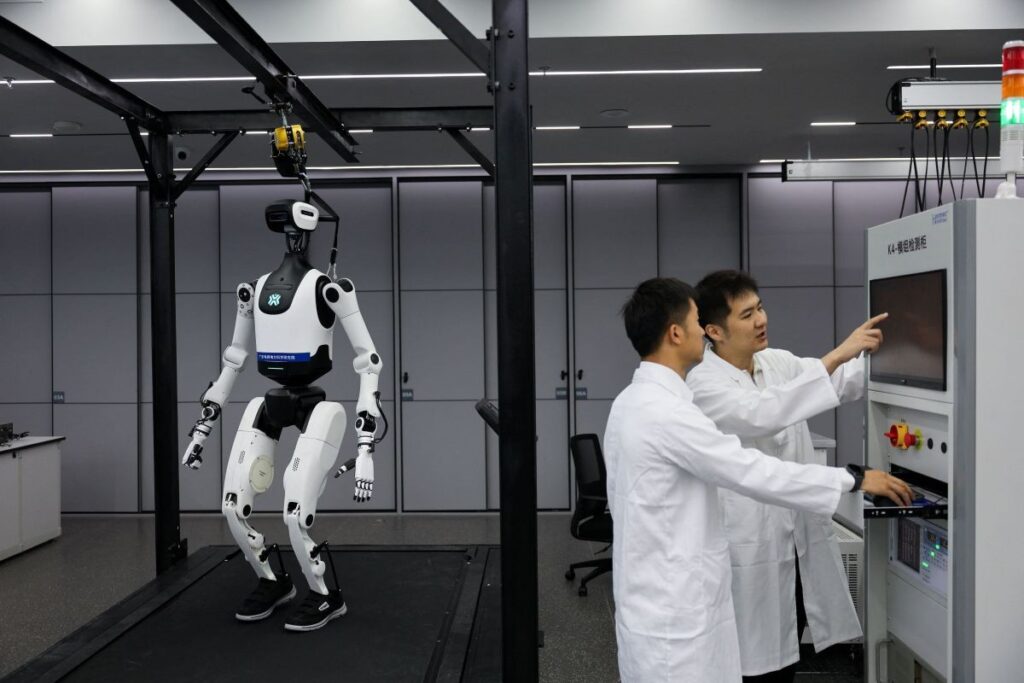
The Trump administration, via the FCC, banned U.S. imports of new Chinese humanoid and quadruped robots and grid-connected power inverters effective 28 July 2026. The move targets AI supply chain security, citing risks of data theft, cyberattacks like Volt Typhoon, and overreliance akin to China’s rare earth dominance. Unitree—holding under 20% of the global humanoid robot market—is directly affected, as are Chinese inverter leaders Sungrow (300274.SZ) and Huawei. The Chinese Embassy pledged countermeasures, while the FCC plans broad exemptions for non-Chinese suppliers.

Welcome Back!

Login to your account below

Create New Account!

Fill the forms below to register

Retrieve your password

Please enter your username or email address to reset your password.

Scan to share via WeChat

Open WeChat and scan the QR code to share

QR Code

Add New Playlist