Former U.S. President Donald Trump announced plans to raise tariffs on South Korean imports—including cars, lumber, and pharmaceuticals—to 25%, up from the 15% rate set in November 2025 under a framework trade pact. The hike hinges on South Korea’s National Assembly failing to enact the agreement’s terms. No effective date or official White House documentation has been issued as of January 27, 2026. The framework was first struck in July 2025 and formalized in Gyeongju on October 29, 2025, during a meeting between Trump and South Korean President Lee Jae Myung.
According to www.supplychaindive.com, former U.S. President Donald Trump announced plans to raise tariffs on imports from South Korea to 25%, citing non-implementation of a framework trade agreement by South Korea’s National Assembly.
Tariff hike targets key export sectors
The proposed increase would apply to multiple high-volume U.S. import categories from South Korea, specifically naming cars, lumber, and pharmaceuticals. The current rate of 15% was established in November 2025 as part of a formalized framework pact between the two nations. Trump stated the new levy would take effect unless South Korea enacts the agreed-upon terms into domestic law — a step that has not yet occurred, according to the report.
No official implementation timeline or documentation
Trump made the announcement via a Truth Social post on Monday, January 27, 2026. However, the post did not specify an effective date for the tariff increase. Further, the White House has not released any official regulatory notice, executive order, or Federal Register publication outlining the proposed change. As of publication, no implementing rulemaking has been initiated, and U.S. Customs and Border Protection has not updated its tariff classification database to reflect the potential adjustment.
Framework deal timeline and diplomatic context
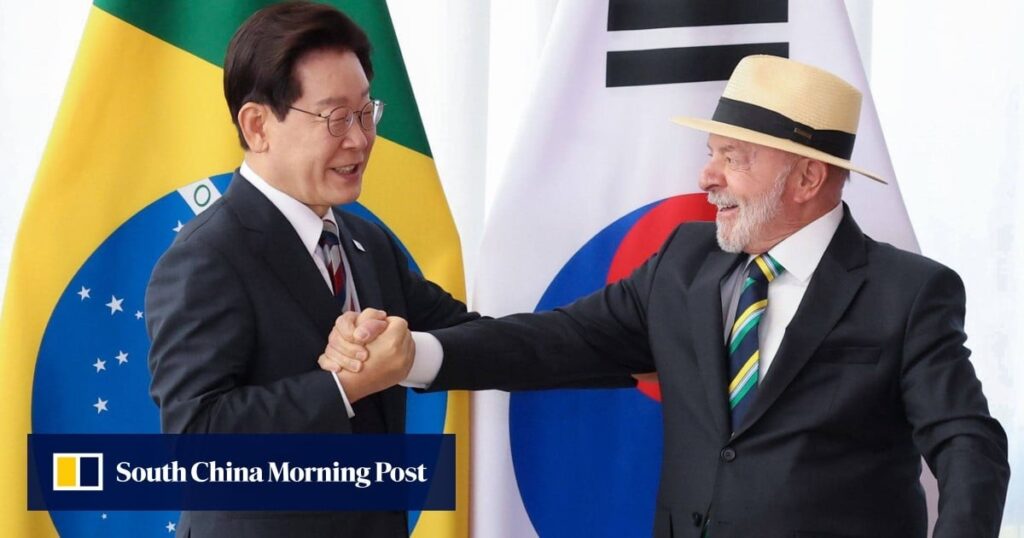
The U.S. and South Korea first reached a preliminary framework tariff agreement in July 2025. That agreement was later formalized in November 2025 during a bilateral meeting in Gyeongju, South Korea, where Donald Trump and Lee Jae Myung, President of South Korea, appeared together at a dinner on October 29, 2025. The pact capped duties on covered goods at 15% — a reduction from previous ad hoc rates — but required ratification by South Korea’s National Assembly to enter full force. According to the source, that legislative action remains pending.
Supply chain implications for U.S. importers
For supply chain professionals, the proposed tariff shift introduces near-term uncertainty for procurement planning across three strategically sensitive sectors. Automotive importers — including U.S. dealerships and parts distributors — face potential cost increases on vehicles and components sourced from South Korea, where major OEMs such as Hyundai and Kia maintain significant export capacity. Lumber importers, particularly those sourcing Korean-sawn softwood for construction applications, may need to reassess landed-cost models. Similarly, pharmaceutical distributors importing finished dosage forms or active pharmaceutical ingredients (APIs) from South Korean manufacturers could see margin compression if the 25% rate is enforced without exemptions or phase-in periods.
Broader trade policy precedent
This move echoes earlier unilateral tariff actions taken during Trump’s prior administration, including the 25% steel and aluminum duties imposed under Section 232 in 2018. Unlike those measures, however, this proposal targets a U.S. treaty ally with whom the U.S. already maintains a free trade agreement — the United States–Korea Free Trade Agreement (KORUS), which entered into force in 2012. KORUS eliminated most tariffs on industrial goods, but allowed certain safeguards and exclusions. The new framework pact was intended to supplement, not replace, KORUS — focusing narrowly on tariff ceilings for specific products outside existing FTA coverage.
Source: Supply Chain Dive
Compiled from international media by the SCI.AI editorial team.