Skip to content

Latin America Supply Chain

Toyota invests $3.6B to shift Tacoma production to Texas

Toyota is investing $3.6 billion to move Tacoma pickup truck production from Tijuana, Mexico, to its San Antonio, Texas, plant — expanding capacity from 200,000 to 350,000 units annually by 2030 and adding 2,000 U.S. jobs. The project forms part of Toyota’s $10 billion incremental U.S. investment pledge through 2030 and reverses a six-year-old decision to shift Tacoma production to Mexico. The automaker continues Tacoma output in Guanajuato while strengthening its North American manufacturing network.

Original source: cnbc.com

Toyota invests $3.6B to shift Tacoma production to Texas
📋 本文要点

Toyota is investing $3.6 billion to move Tacoma pickup truck production from Tijuana, Mexico, to its San Antonio, Texas, plant — expanding capacity from 200,000 to 350,000 units annually by 2030 and adding 2,000 U.S. jobs. The project forms part of Toyota’s $10 billion incremental U.S. investment pledge through 2030 and reverses a six-year-old decision to shift Tacoma production to Mexico. The automaker continues Tacoma output in Guanajuato while strengthening its North American manufacturing network.

According to www.cnbc.com, Toyota Motor is investing $3.6 billion to relocate production of its Tacoma midsize pickup truck from a plant in Tijuana, Mexico, to its manufacturing campus in San Antonio, Texas.

Plant expansion and capacity increase

The investment will expand the San Antonio facility’s annual production capacity from roughly 200,000 to 350,000 units by 2030. The plant — currently 2.7 million square feet — will be nearly doubled in size, and a second vehicle assembly line will be added. Toyota expects the project to create 2,000 U.S. jobs at the site.

The San Antonio plant already produces the Tundra full-size pickup (including a hybrid variant) and the Sequoia SUV hybrid. Toyota previously committed $531 million to build a rear axle plant on the same campus, scheduled to begin production in the fall.

Strategic North American realignment

This move is part of Toyota’s broader commitment to increase domestic U.S. investment by up to $10 billion more than previously expected through 2030. Since the plant’s groundbreaking in 2003, Toyota has invested $8.3 billion in the San Antonio campus alone.

A Toyota spokeswoman confirmed the company is “maintaining its operations in Mexico” while shifting Tacoma production over the next four years. She clarified that Tacoma production will continue at Toyota’s plant in Guanajuato, Mexico, and emphasized:

“This investment expands Toyota’s manufacturing capacity and complements our broader North American production network.”

The relocation reverses a decision made more than six years ago, when Toyota moved Tacoma production from Texas to Guanajuato. The new initiative, internally codenamed Project Orca, was first reported by Automotive News in May.

Market context and competitive positioning

Toyota Motor North America CEO Ted Ogawa stated:

“Toyota’s continued investment in North America is a testament to our confidence in the region’s workforce, innovation and long-term growth potential. By expanding our San Antonio plant, we are deepening our commitment to American manufacturing, creating meaningful and sustainable jobs, while advancing our mission to deliver high-quality vehicles that meet the changing needs of customers today and into the future.”

The automaker employs 48,000 people in the United States. Its U.S. sales rose 0.5% in the first half of 2026, reaching 1.24 million vehicles — narrowing the gap with General Motors, which sold 1.34 million vehicles during the same period, a 6.8% decline year-over-year. This shift reflects Toyota’s sustained emphasis on hybrid vehicles amid slower-than-expected adoption of all-electric models.

Source: CNBC

Compiled from international media by the SCI.AI editorial team.

Ask SCI.AI Finished reading? Continue with SCI.AI. Explore the related policy, route, company and historical context. Continue asking
UnionPay plugs Chinese apps into Brazil’s Pix after US tariffs
Latin America Supply Chain

UnionPay plugs Chinese apps into Brazil’s Pix after US tariffs

UnionPay International is connecting Chinese mobile payment apps—including the UnionPay app and bank-linked wallets—to Brazil’s Pix instant payment system, enabling Chinese tourists to scan QR codes and pay in real time. The pilot launches in Q3 2026 amid U.S. tariffs targeting Pix’s regulatory model. Pix, launched in November 2020, serves 15 million merchants and processes over 1.2 billion transactions monthly. The integration marks UnionPay’s first direct linkage with a non-Asian national real-time payment system and reflects growing financial infrastructure alignment between China and Latin America.

Walgreens opens Washington micro-fulfillment center, processes 7M prescriptions yearly
Latin America Supply Chain

Walgreens opens Washington micro-fulfillment center, processes 7M prescriptions yearly

Walgreens has launched an automated micro-fulfillment center in Kent, Washington, on July 22, 2026. The facility processes 7 million prescriptions annually and supports 196 stores — 122 of them in Washington state. Part of a resumed initiative paused in 2023, the center combines robotics with pharmacist oversight to improve prescription turnaround and patient care. Jon Joplin, Walgreens’ chief technology and operations officer of automated fulfillment, highlighted how the integration strengthens regional service capacity while freeing pharmacists for clinical work. The site exemplifies a broader shift toward compact, tech-enabled pharmacy logistics nodes.

Trump FCC bans Chinese humanoid robots, power inverters
Latin America Supply Chain

Trump FCC bans Chinese humanoid robots, power inverters

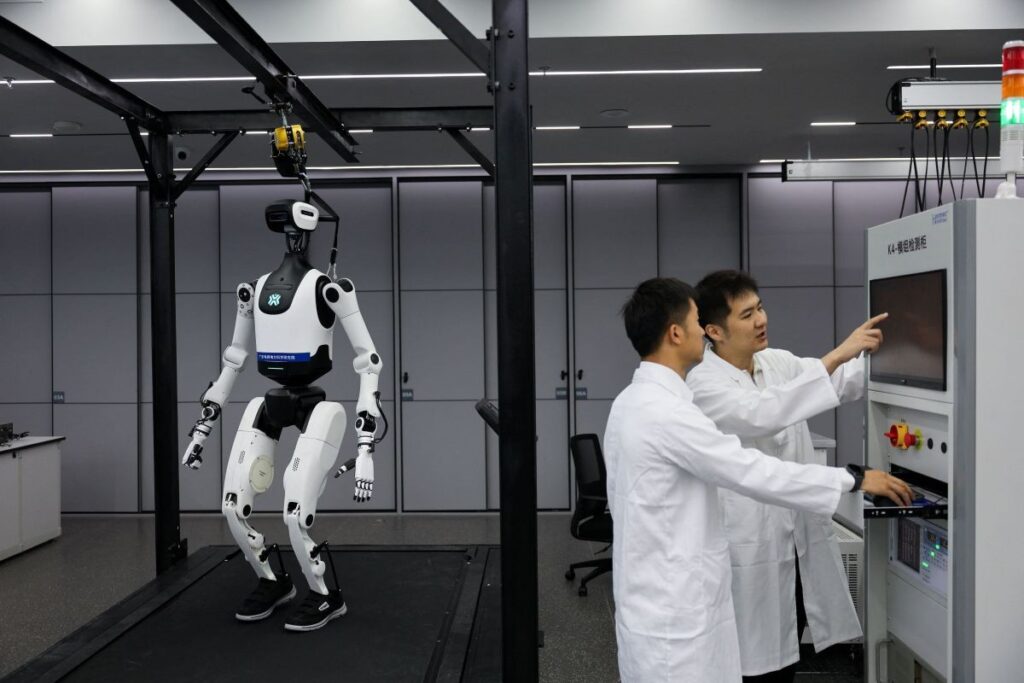
The Trump administration, via the FCC, banned U.S. imports of new Chinese humanoid and quadruped robots and grid-connected power inverters effective 28 July 2026. The move targets AI supply chain security, citing risks of data theft, cyberattacks like Volt Typhoon, and overreliance akin to China’s rare earth dominance. Unitree—holding under 20% of the global humanoid robot market—is directly affected, as are Chinese inverter leaders Sungrow (300274.SZ) and Huawei. The Chinese Embassy pledged countermeasures, while the FCC plans broad exemptions for non-Chinese suppliers.

Welcome Back!

Login to your account below

Create New Account!

Fill the forms below to register

Retrieve your password

Please enter your username or email address to reset your password.

Scan to share via WeChat

Open WeChat and scan the QR code to share

QR Code

Add New Playlist