Ho Chi Minh City hosted a supply chain and logistics summit on 26 June 2026 targeting textile, footwear, and wood processing exporters. Logistics costs consume 15–30% of wood product value, while sectoral export revenues hit $4.09B (textiles), $3.93B (wood), and $2.22B (footwear) in early 2026. Vietnam’s textile exports reached $46B in 2025; footwear is projected at $28.67B for the same year. The U.S. accounts for 55% of wood exports, and compliance with the EU Deforestation-Free Regulation adds new traceability pressures. The event aligns with Vietnam’s national logistics strategy through 2035.
According to www.vietnam.vn, the Ho Chi Minh City Department of Industry and Trade hosted a supply chain and logistics connectivity conference on 26 June 2026 targeting the textile, footwear, and wood processing sectors — with logistics costs consuming up to 30% of product value in the wood industry.
Conference Details and Strategic Alignment
The event took place from 13:30 to 17:00 at Kim Đô Hotel (Royal Hotel Saigon), located at 133 Nguyễn Huệ Street, District 1, Ho Chi Minh City. It drew approximately 150 delegates, including representatives from government agencies, sectoral associations, exporters, manufacturers, and logistics service providers. The conference was co-organized by five key associations: the Ho Chi Minh City Logistics and Port Association (HLA), the Ho Chi Minh City Textile and Fashion Association (AGTEK), the Ho Chi Minh City Leather and Bag Association (SLA), the Ho Chi Minh City Handicrafts and Wood Processing Association (HAWA), and the Ho Chi Minh City Import-Export Association (HIEA).
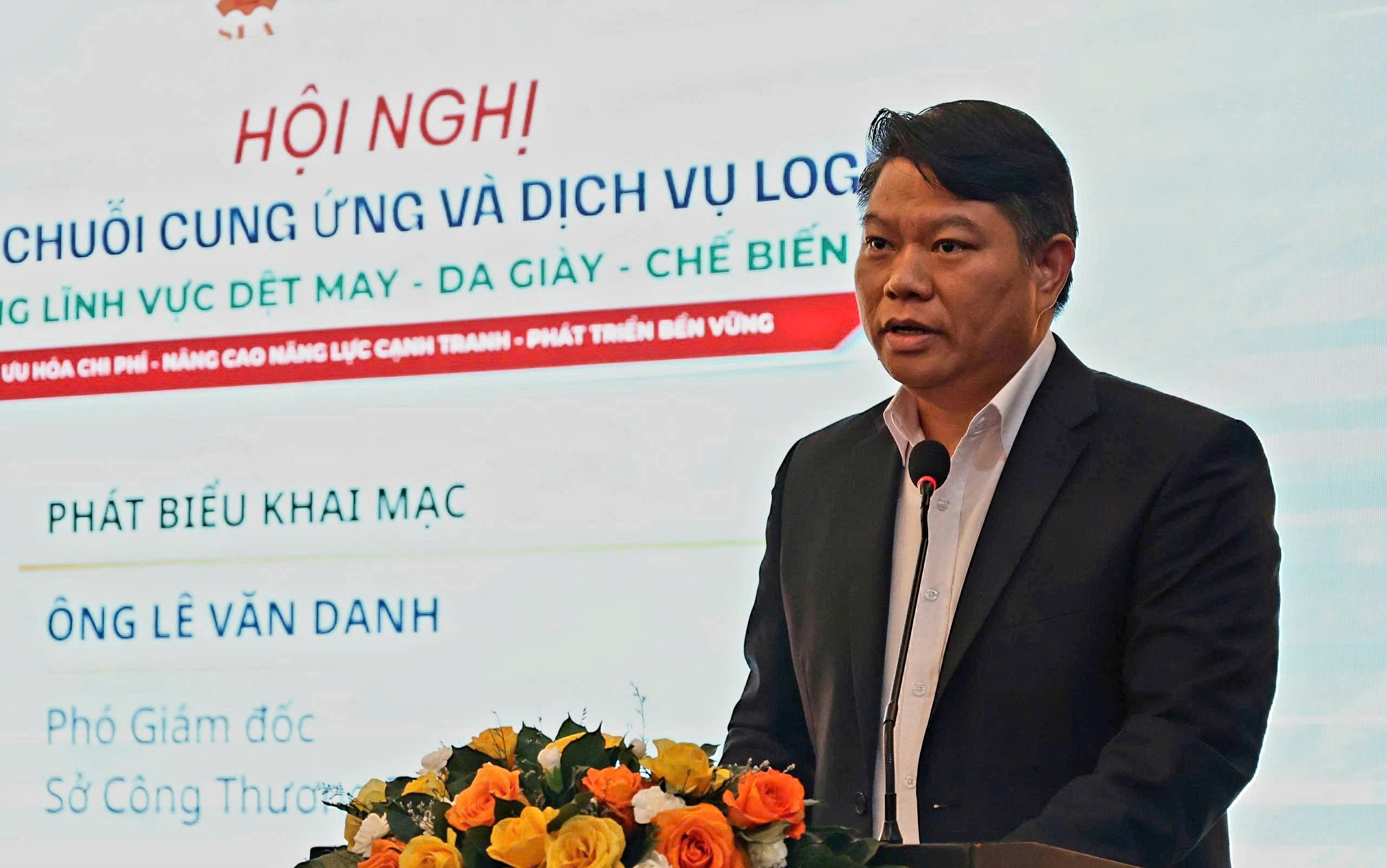
The initiative aligns with Resolution No. 68-NQ/TW of the Politburo on developing the private economy and implements Vietnam’s National Logistics Service Development Strategy for the period 2025–2035, with a vision to 2050. Deputy Director Lê Văn Danh of the Ho Chi Minh City Department of Industry and Trade delivered opening remarks, emphasizing the need for concrete, operational linkages between users and providers of logistics services.
Export Performance and Cost Pressures
Vietnam’s three export-intensive sectors — textiles, footwear, and wood products — collectively generated over $10.24 billion in export revenue during the first half of 2026: textiles reached $4.09 billion, wood and wood products totaled $3.93 billion, and footwear exports amounted to $2.22 billion. According to AGTEK, Vietnam ranked among the world’s top three textile exporters in 2025, with annual textile export revenue of approximately $46 billion.
The footwear and leather goods sector is projected to achieve $28.67 billion in export revenue for 2025, with products distributed across more than 150 countries and territories. Meanwhile, wood and wood products exported $17.2 billion in 2025, marking a near 6% year-on-year increase — with the United States accounting for roughly 55% of that total.
Logistics as a Competitive Determinant
Per HAWA, logistics expenses represent 15% to 30% of total production costs in the wood processing industry — making cost optimization a direct lever for competitiveness. This burden is compounded by rising compliance demands, including traceability requirements, carbon emission reporting, and international regulations such as the European Union’s Deforestation-Free Regulation (EUDR).
HLA’s presentation underscored that logistics has evolved beyond ancillary transport support into a core strategic function. In the context of green transition, digital transformation, AI adoption, and shared-economy models, efficient logistics now directly determines export competitiveness. As one expert noted:
“Logistics is no longer just about moving goods — it’s about enabling visibility, sustainability, and speed across global supply chains.” — HLA technical team, Ho Chi Minh City Logistics and Port Association
The conference specifically focused on actionable integration — matching textile exporters needing bonded warehousing solutions with cold-chain-capable freight forwarders, connecting footwear manufacturers requiring last-mile flexibility in ASEAN markets with multimodal carriers, and supporting wood processors navigating EUDR documentation through certified digital platforms.
Operational Implications for Supply Chain Professionals
For supply chain practitioners operating in Southeast Asia, the event signals a regional pivot toward structured, association-led matchmaking — not just ad hoc vendor selection. With Ho Chi Minh City aiming to meet its 2026 logistics development targets, professionals must prioritize interoperable data systems, standardized sustainability reporting formats, and pre-vetted third-party logistics partners aligned with EU and U.S. regulatory timelines.
Notably, the 30% logistics cost ceiling identified by HAWA serves as both a benchmark and a warning: without digitized route planning, consolidated inland transport, and real-time customs clearance tools, margins erode faster than tariff adjustments can offset. As AGTEK emphasized, “Tracing raw cotton to finished garment isn’t optional anymore — it’s the entry ticket to premium retail shelves.”
Source: vietnam.vn
Compiled from international media by the SCI.AI editorial team.