Skip to content

North America Supply Chain

China’s World Cup Absence, Quad Critical Minerals at Risk

Chinese fans flooded North America for the 2026 FIFA World Cup despite their national team’s third straight absence since 2002. A U.S. strike in the Gulf of Oman killed three Indian sailors in June 2026, straining Quad unity and jeopardizing its critical minerals agenda targeting 40% non-China processing by 2028. In Japan and South Korea, nuclear weapon support remains low (12% and 19%) but rises sharply if either nation acts first. The EU’s CBAM entered full enforcement on 1 July 2026, while Shein was ousted from Paris retail in late June 2026.

Original source: scmp.com

China’s World Cup Absence, Quad Critical Minerals at Risk
📋 本文要点

Chinese fans flooded North America for the 2026 FIFA World Cup despite their national team’s third straight absence since 2002. A U.S. strike in the Gulf of Oman killed three Indian sailors in June 2026, straining Quad unity and jeopardizing its critical minerals agenda targeting 40% non-China processing by 2028. In Japan and South Korea, nuclear weapon support remains low (12% and 19%) but rises sharply if either nation acts first. The EU’s CBAM entered full enforcement on 1 July 2026, while Shein was ousted from Paris retail in late June 2026.

According to www.scmp.com, Chinese fans traveled en masse to North America for the 2026 FIFA World Cup, despite China’s national team failing to qualify — marking the country’s third consecutive World Cup absence.

Chinese Fans Fill Stands Amid National Team Absence

Hundreds of thousands of Chinese supporters attended matches across North America, turning stadiums into de facto extensions of domestic football culture. Though China remains one of the world’s largest football markets by commercial scale and fan engagement, its on-field representation remains absent: the national team has not qualified for the World Cup since 2002. As a result, many fans rooted for global stars — including Lionel Messi and Cristiano Ronaldo — and even expressed vocal support for referees perceived as enforcing fair play. One fan in Toronto told reporters,

“We don’t have our own team, so we cheer for justice — and for the best players who still show heart.”

US Strike Undermines Quad Critical Minerals Coordination

A U.S. military strike on an oil tanker in the Gulf of Oman in June 2026 killed three Indian sailors, severely straining bilateral relations. The incident directly challenged the cohesion of the Quad — the strategic grouping comprising the United States, India, Japan, and Australia — whose joint initiative to diversify global supply chains for critical minerals now faces renewed uncertainty. According to the report, the Quad had pledged to collectively reduce reliance on Chinese-sourced cobalt, lithium, and rare earth elements by 2030, with an interim target of securing 40% of processing capacity outside China by 2028.

Nuclear Posture Shifts Loom in Northeast Asia

A joint survey conducted in Japan and South Korea revealed that strategic elites in both countries remain opposed to unilateral nuclear weapons development. However, the report states that support would rise rapidly in one country if the other pursued such a path — indicating a potential cascade effect. The poll, fielded in May 2026, showed only 12% of Japanese respondents and 19% of South Korean respondents currently favored domestic nuclear armament. Yet over 68% of respondents in each nation said they would back their government’s decision to pursue nuclear capability if the neighboring state moved first.

Broader Geopolitical Context

These developments intersect with broader trade and security dynamics. The European Union’s carbon border adjustment mechanism (CBAM) entered full enforcement phase on 1 July 2026, coinciding with the SCMP’s publication date — adding regulatory pressure on Chinese exporters. Meanwhile, Shein was formally excluded from retail operations in Paris following a city council vote in late June 2026, citing labor and environmental compliance concerns. These events reflect mounting scrutiny of cross-border supply chain practices amid tightening geopolitical guardrails.

Source: South China Morning Post

Compiled from international media by the SCI.AI editorial team.

Ask SCI.AI Finished reading? Continue with SCI.AI. Explore the related policy, route, company and historical context. Continue asking
Dachser acquires 10% stake in Synergie Canada to expand airfreight
North America Supply Chain

Dachser acquires 10% stake in Synergie Canada to expand airfreight

German logistics firm Dachser has acquired a 10% minority stake in Synergie Canada, a Montreal-based air and sea freight forwarder founded in 2008. The investment strengthens Dachser’s North American presence and supports expansion beyond Europe. Synergie Canada generated €60 million in revenue in 2025 and employs around 100 people. CEO Tobias Burger called Canada 'a highly attractive market' due to its economic links across the Americas and Europe. President Marc-André Guindon noted the partnership will improve customer access to European markets. The deal follows similar moves by Atlas Air Worldwide and Air Charter Service in 2026.

Toyota opens $100M Indiana forklift plant, targets 80% electric by 2035
North America Supply Chain

Toyota opens $100M Indiana forklift plant, targets 80% electric by 2035

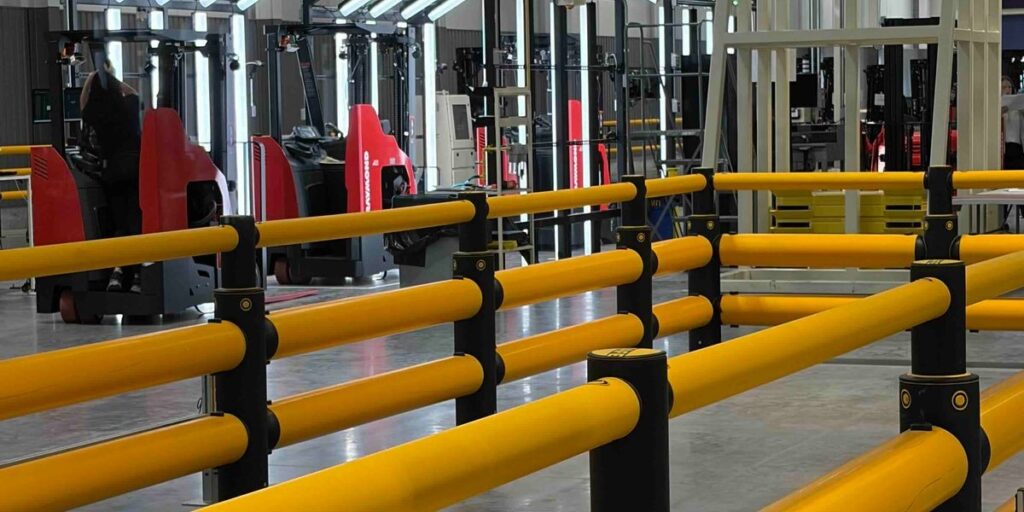
Toyota Material Handling North America (TMHNA) opened a $100 million electric forklift plant in Columbus, Indiana, on August 6, 2026. The 295,000-square-foot facility will produce Class 1 stand-up counterbalanced forklifts for Toyota and Raymond brands, enabling its Greene, N.Y., factory to pivot to reach trucks and automation. Production starts at eight units daily, scaling to 24 by September. TMHNA reports 70% of North American lift truck sales are now electric — projected to hit 80% by 2035. Seventy-five percent of output is custom-built, with 14 seat options available. Sixty percent of parts are sourced in North America, while Japan supplies key components; a new foreign trade zone helps bypass customs bottlenecks.

US lifts Mexico cattle ban Aug. 24 to curb beef prices
North America Supply Chain

US lifts Mexico cattle ban Aug. 24 to curb beef prices

The U.S. Department of Agriculture will lift its ban on Mexican cattle imports starting Aug. 24, 2026 — a restriction in place since November 2024 — to help curb record-high beef prices. The phased reopening affects three southern border ports and responds to a 22.7% year-over-year retail beef price surge. The move follows White House pressure on grocers and an antitrust probe into top beef processors ahead of the November 2026 elections. U.S. cattle inventories have fallen 12.3% since 2022, intensifying reliance on Mexican feeder cattle, which could supply up to 8% of domestic needs within a year.

Welcome Back!

Login to your account below

Create New Account!

Fill the forms below to register

Retrieve your password

Please enter your username or email address to reset your password.

Scan to share via WeChat

Open WeChat and scan the QR code to share

QR Code

Add New Playlist