Skip to content

South Asia Supply Chain

MSC raises South Asia–Europe freight rates to $4,450/40ft

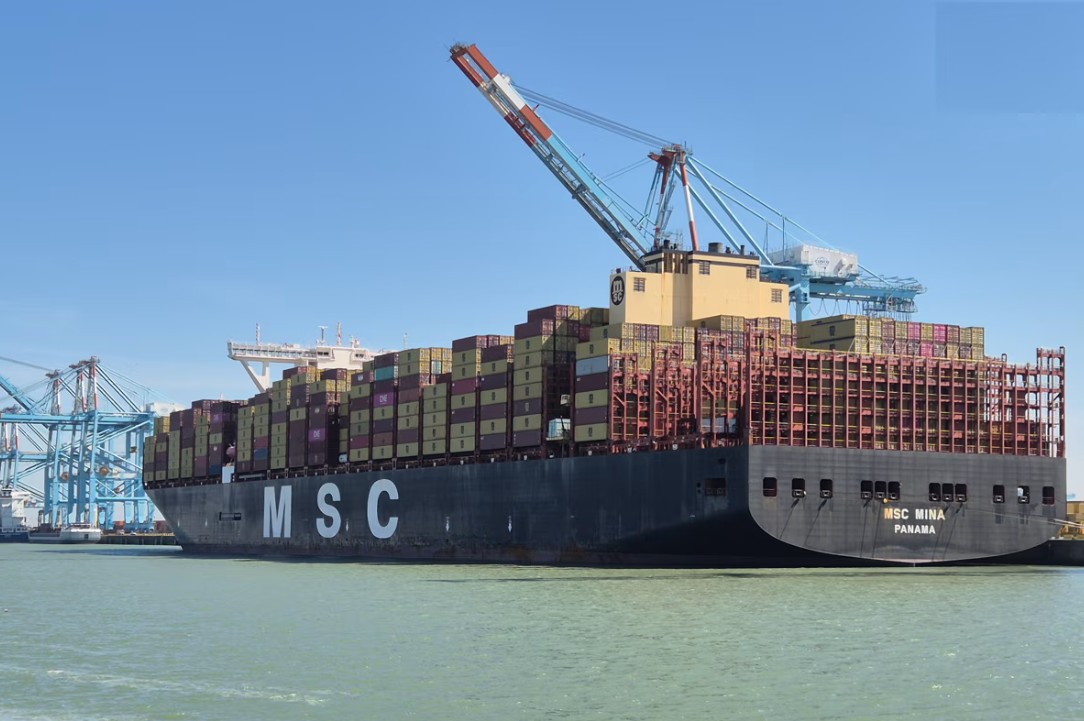
Mediterranean Shipping Company (MSC) has raised freight rates for container shipments from South Asia to Europe, effective 15 July 2026 through 31 July 2026. Rates from Kolkata to Antwerp reach $4,450 per 40ft container—the highest in the revised schedule—while Colombo and Chattogram shipments start at $2,550 per 20ft. The FAK rates include base freight and key regulatory surcharges but exclude bunker recovery, ETS, FuelEU, and terminal handling fees. This move follows broader industry trends, including Hapag-Lloyd’s GRI for Indian Subcontinent–North America lanes and COSCO SHIPPING Ports’ terminal win in Tarragona.

Original source: container-news.com

MSC raises South Asia–Europe freight rates to $4,450/40ft

According to container-news.com, Mediterranean Shipping Company (MSC) has announced revised Freight All Kinds (FAK) rates for containerized shipments from South Asia to Europe, effective 15 July 2026 and valid until 31 July 2026.

Rate Adjustments by Origin Port

MSC’s new rate structure applies to exports from Sri Lanka, Bangladesh, India, and Pakistan. For shipments originating in Colombo, the carrier set rates at US$2,550 per 20DV and US$2,850 per 40DV/HC for destinations including Antwerp and Valencia. From Chattogram, the corresponding charges are US$2,550 per 20DV and US$3,350 per 40DV/HC.

For Indian ports, MSC introduced higher tiers: shipments from Nhava Sheva and Port Qasim to Antwerp are priced at US$4,150 per container; those from Ennore and Kolkata carry rates of US$4,350 and US$4,450, respectively. To Valencia, rates range from US$4,250 to US$4,550, varying by port of loading.

Included and Excluded Surcharges

The published FAK rates incorporate base ocean freight, contingency adjustment charge, piracy risk surcharge, and emission control area charges. However, several additional fees apply separately depending on origin and destination. These include bunker recovery charge, EU Emissions Trading System (ETS) levy, FuelEU Maritime surcharge, emergency fuel surcharge, terminal handling charges, and security-related fees.

This layered surcharge model reflects ongoing cost volatility across regulatory, environmental, and security domains — a pattern increasingly common among major carriers serving high-risk or environmentally regulated corridors such as the Red Sea and North Sea routes.

Operational Context and Market Implications

The timing coincides with sustained capacity constraints following the Red Sea rerouting crisis and tightening EU decarbonization mandates. According to the report, MSC’s move aligns with recent actions by other global carriers: Hapag-Lloyd recently announced a General Rate Increase (GRI) for shipments from the Indian Subcontinent and Pakistan to North America, while COSCO SHIPPING Ports-led consortium secured a terminal concession at the port of Tarragona in Spain — signaling continued infrastructure investment amid shifting trade flows.

For supply chain professionals, these revisions mean tighter budgeting windows and heightened need for real-time rate benchmarking. The 31 July 2026 expiry date implies a likely reassessment cycle tied to summer peak season demand and Q3 2026 regulatory developments under FuelEU and ETS frameworks. Shippers sourcing from Kolkata now face the highest published rate in the region — US$4,450 per 40ft container to Antwerp — underscoring port-specific cost differentials that influence inland logistics planning and multimodal routing decisions.

Source: container-news.com

Compiled from international media by the SCI.AI editorial team.

Ask SCI.AI Finished reading? Continue with SCI.AI. Explore the related policy, route, company and historical context. Continue asking
India launches polysilicon incentive scheme targeting 10 GW capacity
South Asia Supply Chain

India launches polysilicon incentive scheme targeting 10 GW capacity

India is launching a new production-linked incentive scheme targeting more than 10 GW of domestic polysilicon capacity to break its 100% reliance on Chinese imports. The move extends ₹240 billion ($2.52 billion) in existing solar manufacturing incentives upstream, complementing over 200 GW of module capacity and a June 2028 target of 80 GW for ingots and wafers. With polysilicon also vital for semiconductors, the policy supports dual industrial goals. However, capital intensity and Chinese scale dominance pose major competitiveness hurdles.

Japan’s 7.1-magnitude quake halts Toyota, Renesas, TSMC plants in Kumamoto
South Asia Supply Chain

Japan’s 7.1-magnitude quake halts Toyota, Renesas, TSMC plants in Kumamoto

A 7.1-magnitude earthquake hit Kumamoto Prefecture in Japan on July 28, 2026, forcing Toyota to halt production at three Kyushu plants — Miyata, Kanda, and Kokura — through July 31. The Miyata plant alone produces 430,000 vehicles annually. Renesas suspended operations at two Kumamoto fabs due to structural damage, while TSMC evacuated staff at its JASM facility before confirming structural safety and beginning gradual restart. Honda extended its Kumamoto motorcycle plant suspension to July 31; Sony halted semiconductor operations in Kumamoto but found no major damage in Nagasaki, Oita, or Kagoshima. Nissan kept its Fukuoka plant running but is closely monitoring supplier networks. Kyushu accounts for ~12% of Japan’s auto component output and >30% of domestic semiconductor wafer production.

India-US ink $20B critical minerals pact amid China dominance concerns
South Asia Supply Chain

India-US ink $20B critical minerals pact amid China dominance concerns

India and the U.S. signed a critical minerals framework on May 26, 2026, paving the way for a $20 billion Quad-led investment initiative. While India holds vast reserves—including the world’s third-largest ilmenite deposits—it processes less than 5% of its rare earth output domestically. Analysts stress India is unlikely to challenge China’s dominance—accounting for over 60% of global rare earth processing—anytime soon due to infrastructure gaps and regulatory delays averaging 7–10 years for new mining approvals.

Welcome Back!

Login to your account below

Create New Account!

Fill the forms below to register

Retrieve your password

Please enter your username or email address to reset your password.

Scan to share via WeChat

Open WeChat and scan the QR code to share

QR Code

Add New Playlist