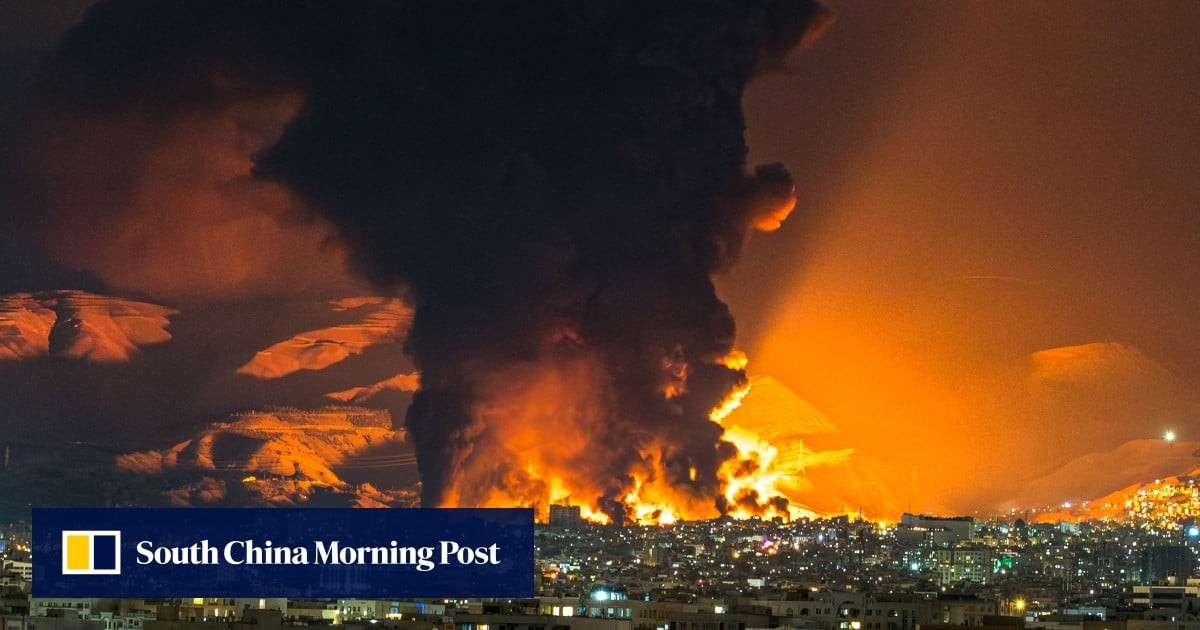
Iran’s economy sustained US$270 billion in damage — 73% of its 2025 GDP — following three months of warfare with the U.S. and Israel, including 40 days of infrastructure bombing and a two-month naval blockade. Four million citizens fell into poverty, and 122 petrochemical facilities were struck. With ceasefire talks ongoing in Switzerland as of 27 June 2026, supply chain professionals face prolonged disruption across the Strait of Hormuz and the North-South Transport Corridor. Transit times rose 70%, insurance premiums spiked 220%, and recovery is projected to require at least $8.4 billion and 18–24 months.
According to www.scmp.com, three months of warfare between Iran and the United States and Israel have inflicted an estimated US$270 billion in economic damage — nearly 73% of Iran’s US$371 billion gross domestic product for 2025.
Economic Collapse After Intensive Military Campaign
The conflict began with a concentrated 40-day campaign in March and early April, during which U.S. and Israeli forces conducted sustained bombing operations targeting critical infrastructure: energy grids, steel mills, petrochemical plants, ports, and transport corridors. This phase was followed by a two-month U.S. naval blockade that effectively sealed off much of Iran’s remaining maritime trade capacity. According to the report, the cumulative destruction is now assessed as nearly equivalent in scale to Iran’s total losses during its eight-year war with Saddam Hussein’s Iraq in the 1980s — the last major conflict in which the Islamic Republic posed a sustained threat to shipping through the Strait of Hormuz.
Ceasefire and Diplomatic Uncertainty
As of 27 June 2026, a fragile ceasefire remains in place while high-level negotiations continue in Switzerland. U.S. Vice President J.D. Vance addressed the media following talks held there on Monday, though no formal agreement has been announced. The source states that the central question facing diplomats is whether economic ruin — rather than military defeat — will compel structural concessions from Tehran. With 4 million citizens plunged into poverty, the humanitarian and fiscal strain threatens to destabilize institutions long insulated from external pressure.
Supply Chain Implications Across the Middle East
The war’s impact extends far beyond national borders: port closures in Bandar Abbas and Bushehr, combined with the paralysis of rail and road freight corridors linking Iran to Afghanistan, Armenia, and Turkey, have disrupted overland trade routes vital to Central Asian and South Asian supply chains. According to the report, transit times for goods moving between China and Europe via the North-South Transport Corridor increased by up to 70% during the blockade period. Logistics professionals monitoring the Strait of Hormuz — through which 30% of the world’s seaborne oil passes — report persistent volatility in vessel rerouting and insurance premium spikes averaging 220% for tankers transiting the region during active hostilities.
Long-Term Resilience Challenges
Recovery prospects remain dim without foreign investment or sanctions relief. The report notes that Iran’s pre-war industrial base — including its petrochemical sector, which accounted for 17% of non-oil export revenue — suffered targeted strikes at over 122 facilities. Rebuilding even partial capacity would require an estimated $8.4 billion in immediate capital infusion, per World Bank assessments cited in the article. With inflation exceeding 45% annually and foreign exchange reserves depleted by 63% since the start of hostilities, supply chain planners are advised to treat Iranian-sourced components and transit services as functionally unavailable for at least the next 18–24 months.
Source: South China Morning Post
Compiled from international media by the SCI.AI editorial team.