

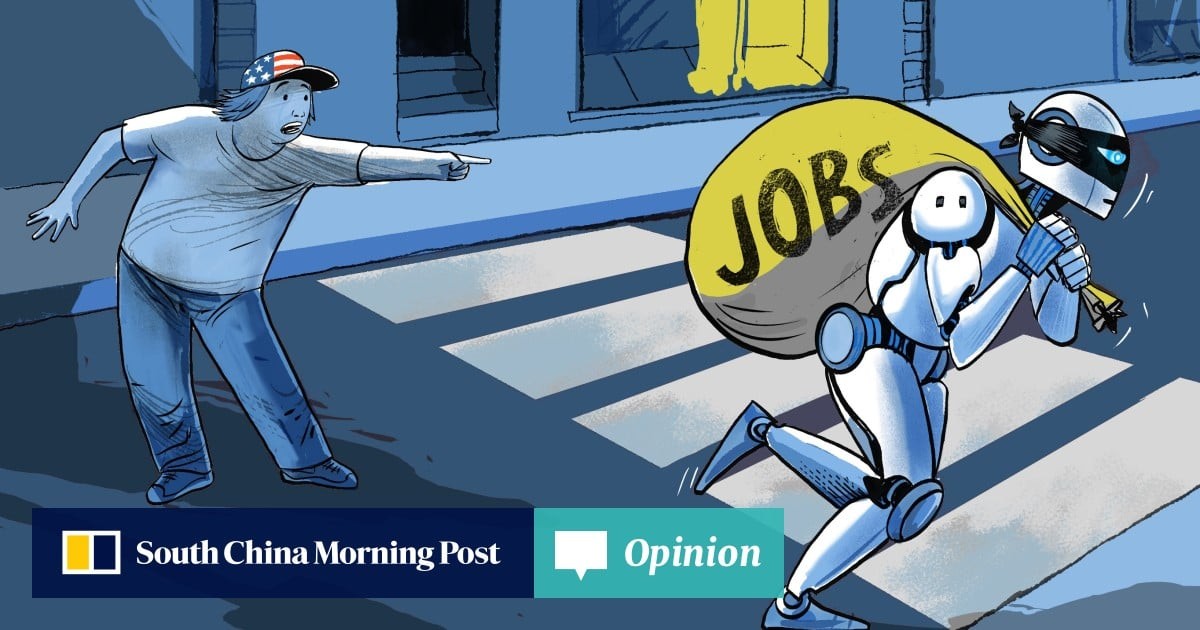
A comparative analysis reveals that 87% of Chinese respondents trust AI, versus 32% in the U.S.; 59% of American 18–29-year-olds fear job displacement from AI, while only 39.44% of Chinese respondents share that concern — down from 60.5% the prior year. Over 96% of 7,000+ surveyed Chinese citizens are AI-aware, and more than 40% use it in work or study — significantly exceeding U.S. adoption rates. Chinese anxiety centers instead on cognitive atrophy from overuse (45.79%), reflecting divergent socioeconomic contexts shaping youth attitudes.
According to www.scmp.com, a comparative analysis of youth attitudes toward artificial intelligence reveals stark contrasts between China and the United States — with 87% of Chinese respondents expressing trust in AI, compared to just 32% in the U.S., while 59% of American 18–29-year-olds believe AI threatens their job prospects.
Evidence from Nationwide Surveys
A recent Chinese survey of more than 7,000 people found that over 96% report awareness of AI, and over 54% actively use it. Of those users, more than 40% integrate AI into work, study, or daily life — a rate significantly higher than in the United States and other developed countries. These findings are corroborated by the Edelman Trust Barometer, which recorded 87% AI trust in China versus 32% in the U.S. The divergence reflects not just technological adoption but deeply rooted socioeconomic contexts.
U.S. Youth: Rising Anxiety Amid Workplace Integration
In contrast, U.S. data signals growing apprehension. The Harvard Youth Poll reported that 59% of 18–29-year-olds in the U.S. perceive AI as a threat to their employment. Gallup’s tracking shows 48% of Gen Z workers now believe workplace AI risks outweigh benefits — an increase of 11 percentage points year-over-year. Simultaneously, the share reporting excitement about AI dropped by 14 points. A Harris Poll survey added further nuance: nearly half of Gen Z respondents stated AI had rendered their college degrees “irrelevant” — underscoring how perceptions of credential value intersect with automation fears.
Divergent Concerns, Shared Engagement
While Chinese respondents express greater optimism, they are not without concerns — only of a different kind. The proportion worried about AI-driven job displacement declined to 39.44% in the latest survey, down from 60.5% the prior year. Instead, the top concern emerged as AI overuse leading to atrophy of personal capabilities — cited by 45.79% of surveyed Chinese respondents. This shift suggests a maturing public discourse focused less on existential labor threats and more on cognitive and behavioral impacts of prolonged AI interaction.
Everyday Experience Shapes Perception
Personal experience plays a critical role in framing these attitudes. Wei Wei, former chief correspondent of the Eurasian bureau of China Central Television based in Moscow, describes her four-year-old son’s engagement with Doubao, one of China’s most popular AI applications. She allows supervised interaction — pausing low-quality or inaccurate space-related videos to explain reliability limits — while affirming AI’s role as a foundational tool, akin to the internet or smartphone.
“I see AI primarily as a tool; like the internet or smartphone, it will become an important part of everyday life, so learning to use it matters.” — Wei Wei, former chief correspondent, China Central Television
This pragmatic, pedagogical framing mirrors broader societal normalization — where AI is embedded not as a disruptor but as infrastructure.
Source: South China Morning Post
Compiled from international media by the SCI.AI editorial team.


