The US and India have aligned under the Pax Silica initiative to reduce single-point failures in AI supply chains, focusing on semiconductor manufacturing and critical minerals processing. US Under Secretary Jacob Helberg affirmed shared concerns about supply chain fragility during the second Pax Silica Summit in Washington on Jun 26, 2026, where 35 nations signed the Joint Statement on AI Opportunity. India’s delegation included S Krishnan, Secretary of MeitY, and Nagraj Naidu, Additional Secretary (Americas) at MEA. Six new countries joined Pax Silica: Kazakhstan, Panama, Chile, Argentina, Costa Rica, and El Salvador. The framework prioritizes structural redundancy over geographic decoupling, with implications for dual-sourcing mandates, mineral traceability, and sovereign chip capacity.
According to www.indiatoday.in, the United States and India have aligned on reducing single-point failures in artificial intelligence supply chains through the US-led Pax Silica initiative, with emphasis on semiconductor manufacturing and critical minerals processing.
Shared Strategic Concerns on Supply Chain Fragility
US Under Secretary of State for Economic Affairs Jacob Helberg stated that Washington and New Delhi ‘fundamentally share the exact same concerns about the fragility of the status quo in our supply chains’. Speaking on the sidelines of an event in Washington on Jun 26, 2026, Helberg emphasized that current global AI technology supply chains are dangerously reliant on single points of failure — whether logistical or industrial. He noted that over-concentration issues ‘are not unique to China’, underscoring a broader systemic vulnerability affecting the health of the global economy.
The official confirmed that the US sees India as having ‘the potential to become a comprehensive partner’ and highlighted existing bilateral cooperation across multiple domains. This alignment was formalized during the second Pax Silica Summit, held over two days in Washington on Thursday, Jun 26, 2026. At the summit, 35 nations signed the Joint Statement on AI Opportunity — a pro-growth, pro-innovation regulatory framework for the AI era.
Indian Delegation and Concrete Collaboration Areas
India was represented at the summit by S Krishnan, Secretary in the Ministry of Electronics and Information Technology, and Nagraj Naidu, Additional Secretary (Americas) in the Ministry of External Affairs, alongside representatives from Indian industry. The delegation held structured discussions with governments and industry experts from multiple countries focused explicitly on advancing collaboration in three priority areas: semiconductors, artificial intelligence, and resilient technology supply chains.
Helberg identified two high-leverage pathways for deepened cooperation: semiconductor manufacturing and critical minerals processing. He also pointed to India’s demographic advantage — noting it is home to ‘one of the largest youth populations in the world’ — as a strategic asset for scaling developer ecosystems, entrepreneurship, and cross-border job creation. ‘So we’re very excited to work with it,’ he said.
Global Expansion of Pax Silica Framework
The Pax Silica initiative expanded significantly during the summit, welcoming six new member nations: Kazakhstan, Panama, Chile, Argentina, Costa Rica, and El Salvador. This brings the total number of participating countries to 35, reflecting coordinated multilateral action beyond traditional alliances. The framework explicitly targets de-risking by diversifying sources, building redundant capacity, and promoting trusted technology partnerships — not decoupling, but deliberate redundancy.
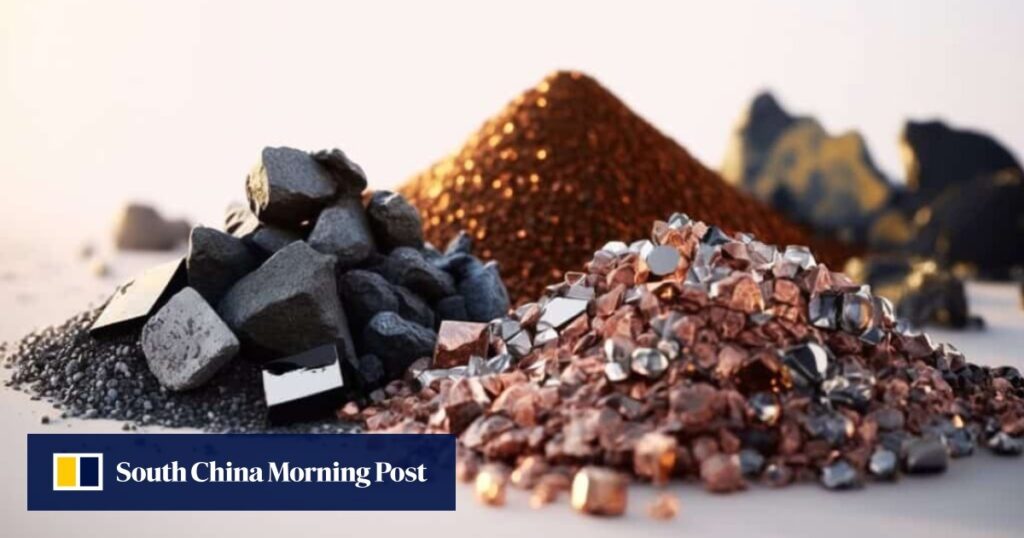
The initiative’s name — Pax Silica — signals its foundational focus on silicon-based technologies, particularly semiconductors, while extending to the full upstream ecosystem, including raw material sourcing and refining. Critical minerals such as cobalt, lithium, and rare earth elements — essential for AI hardware, data centers, and advanced chips — are central to this agenda. As Helberg clarified, the goal is not merely geographic redistribution but structural resilience: eliminating dependencies where a single facility, port, or nation could halt production across continents.
Industry Implications for Supply Chain Professionals
For supply chain professionals, the Pax Silica–India alignment signals a tangible shift toward dual-sourcing mandates, joint investment in sovereign foundry capacity, and harmonized export control frameworks for sensitive materials. Unlike previous regional trade pacts, Pax Silica embeds technical standards and interoperability protocols directly into its governance — a departure from purely tariff-focused agreements. Early indicators suggest India may accelerate its $10 billion semiconductor incentive program, launched in 2023, to attract integrated device manufacturers (IDMs) and OSAT (outsourced semiconductor assembly and test) facilities aligned with US design and security requirements.
This development also reinforces a growing industry trend: major economies are no longer treating semiconductors as commoditized components but as strategic infrastructure. TSMC’s $40 billion Arizona fab, Intel’s $20 billion Ohio campus, and India’s recent $1.3 billion chip packaging plant in Gujarat — all announced between 2023 and 2025 — demonstrate parallel national investments now being synchronized under Pax Silica’s coordination mechanism. For procurement teams, this means stricter vendor qualification for mineral traceability, mandatory dual-sourcing clauses for AI accelerators, and increased audit frequency for Tier-2 and Tier-3 suppliers in Southeast Asia and Latin America.
Source: indiatoday.in
Compiled from international media by the SCI.AI editorial team.