

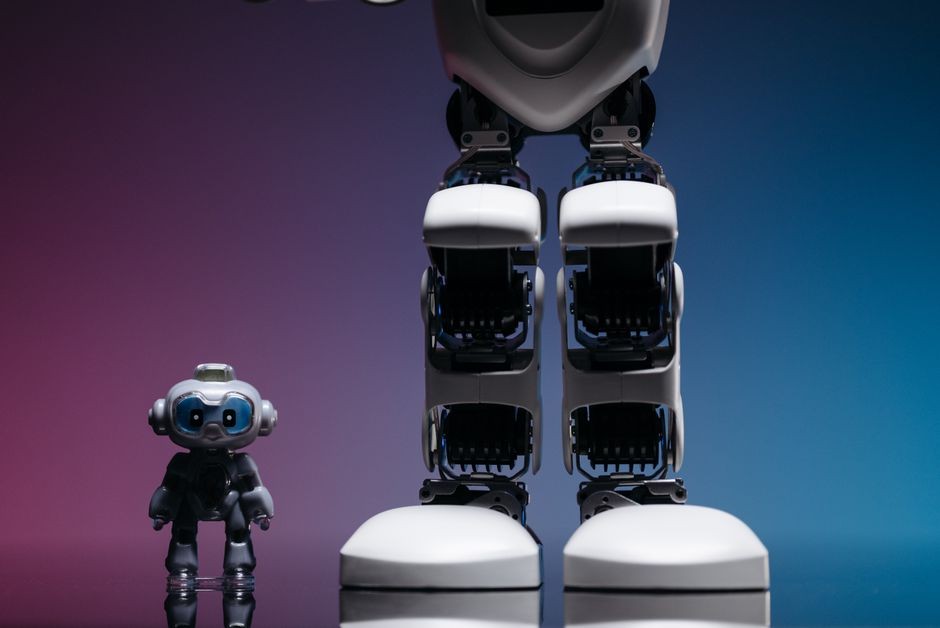
Agility Robotics, developer of the Digit humanoid robot, will go public via merger with Churchill Capital Corp. XI, securing over $620 million in gross proceeds and a $2.5 billion pre-money valuation. Digit v5 lifts 50 lb., operates 22 hours per charge, and reaches 7.2 ft. The robot has completed over 100,000 tote movements for GXO Logistics and earned the 2024 RBR50 Robot of the Year award. Agility’s RoboFab facility in Salem, Ore., targets 10,000 units/year, with 75% of parts sourced domestically. Management estimates the U.S. market opportunity at $1 trillion.
According to www.therobotreport.com, Agility Robotics Inc. has agreed to merge with Churchill Capital Corp. XI, a special purpose acquisition company, positioning itself as the only U.S.-based publicly listed pure-play humanoid robotics company with active commercial deployments.
SPAC merger secures $620M+ in gross proceeds
The transaction is expected to deliver more than $620 million in gross proceeds and assign Agility a $2.5 billion pre-money equity valuation. The Salem, Ore.-based company — founded in 2015 by Dr. Jonathan Hurst, Dr. Damion Shelton, and Mikhail Jones out of Oregon State University’s Dynamic Robotics Laboratory — will list on a major U.S. exchange following the close of the merger.
Agility’s executive team brings more than 80 years of combined commercial leadership experience and over 50 years of technical robotics expertise. CEO Peggy Johnson, formerly a veteran tech executive, emphasized that the company’s commercial traction validates its market timing: “Humanoid robots are a critical driver of American technology leadership and the future of global industry.”
Digit v5 advances physical AI and cooperative safety
Agility’s flagship robot, Digit, has evolved through five generations, with v5 engineered specifically for human-robot cohabitation. It lifts up to 50 lb. (22.7 kg) — a 40% increase over v4 — operates for about 22 hours on a single charge, and reaches up to 7.2 ft. (2.1 m). Its physical AI platform enables perception, contextual understanding, and safe interaction in unstructured, human-centric environments.
“We set out to build robots capable of performing useful physical work in environments designed for people,” said Jonathan Hurst, co-founder and chief robot officer. “We believe cooperative safety is the critical unlock for scaled humanoid adoption.” Agility’s safety-first approach led NVIDIA to select it as the launch partner for NVIDIA Halos, a full-stack safety system for physical AI, and the company also integrates NVIDIA IGX Thor into its stack.
Commercial deployments expand across logistics and manufacturing
Digit is now deployed at multiple commercial sites, including GXO Logistics and Amazon. In 2024, it earned Agility the inaugural RBR50 Robot of the Year award. Last year, Digit moved more than 100,000 totes for GXO — a milestone cited in its 2026 RBR50 honors. The robot is described as “a general-purpose, human-centric robot Made for Work” and targets chronic labor shortages in distribution, logistics, and manufacturing.
Agility’s cloud-based automation platform, Agility Arc, supports fleet orchestration, real-time robot status monitoring, and integration with warehouse management systems (WMS). According to Jonathan Hurst, the platform enables seamless deployment across facilities while maintaining interoperability with existing enterprise infrastructure.
U.S.-centric manufacturing and supply chain control
To support scale, Agility built RoboFab, a full-scale modular manufacturing facility in Salem, Ore., designed for annual production of up to 10,000 units. The company also maintains operations in Pittsburgh and Fremont, Calif. It owns many of Digit’s highest-value hardware systems and sources approximately 75% of the robot’s parts within the U.S.
“Companies don’t buy tech; they buy solutions,” said Peggy Johnson during an investor briefing. “At Agility, we’re doing just that. That’s missing from the headlines about AI — companies still have to solve real physical problems.” She added: “As adoption accelerates, we believe Agility is positioned to address a market opportunity across manufacturing, distribution, and logistics environments in the United States that is estimated by management to be approximately $1 trillion.”
Source: therobotreport.com
Compiled from international media by the SCI.AI editorial team.


