Skip to content

Latin America Supply Chain

USTR Proposes 25% Tariff on Brazil Imports — Supply Chain Dive

The U.S. Trade Representative has proposed a 25% tariff on imports from Brazil following a Section 301 investigation launched in July 2025. The USTR cites six areas of concern: digital trade and electronic payment services, preferential tariffs, anti-corruption enforcement, intellectual property protection, ethanol market access, and illegal deforestation. A public hearing is scheduled for July 6, with written comments due July 1 and a statutory deadline for final action set for July 15. The proposal follows intensified bilateral talks between USTR Jamieson Greer, President Donald Trump, and Brazilian President Luiz Inácio Lula da Silva — though the USTR states 'substantial differences' remain. The move occurs amid broader U.S. trade enforcement activity, including a new Section 301 probe into Vietnam.

Original source: supplychaindive.com

USTR Proposes 25% Tariff on Brazil Imports — Supply Chain Dive
📋 本文要点

The U.S. Trade Representative has proposed a 25% tariff on imports from Brazil following a Section 301 investigation launched in July 2025. The USTR cites six areas of concern: digital trade and electronic payment services, preferential tariffs, anti-corruption enforcement, intellectual property protection, ethanol market access, and illegal deforestation. A public hearing is scheduled for July 6, with written comments due July 1 and a statutory deadline for final action set for July 15. The proposal follows intensified bilateral talks between USTR Jamieson Greer, President Donald Trump, and Brazilian President Luiz Inácio Lula da Silva — though the USTR states 'substantial differences' remain. The move occurs amid broader U.S. trade enforcement activity, including a new Section 301 probe into Vietnam.

The U.S. Trade Representative is proposing a 25% tariff on imports from Brazil based on the findings of a Section 301 investigation into the country’s trade policies and practices, according to a Federal Register notice.

Section 301 Investigation and Legal Basis

Through the investigation, the agency found certain of Brazil’s acts, policies and practices are unreasonable and burden or restrict U.S. commerce, giving the Trump administration legal grounds to pursue penalties under Section 301 of the Trade Act of 1974, the agency said in a Monday press release.

As a result, the USTR proposed the 25% tariff and laid out a timeline for affected parties to submit written comments or attend a July hearing while the agency continues to negotiate with the country.

Negotiation Timeline and Public Input Deadlines

Over the last year, USTR Jamieson Greer and U.S. President Donald Trump have met with Brazil President Luiz Inácio Lula da Silva and his cabinet several times, and the negotiations have “accelerated in recent weeks,” Greer said.

“However, we continue to have substantial differences in resolving the issues identified in this investigation,” Greer said in the release. The countries are talking under a July 15 statutory deadline for the U.S. to take action against Brazil.

Organizations that want to attend a July 6 hearing on the proposed action have until June 22 to submit requests to appear, along with a summary of planned testimony. Written comments are due July 1.

Six Areas of Alleged Unfair Practices

The USTR said Brazil’s unreasonable or discriminatory actions that burden or restrict U.S. commerce cover six broad areas:

  • Digital trade and electronic payment services
  • Preferential tariffs
  • Anti-corruption enforcement
  • Intellectual property protection
  • Ethanol market access
  • Illegal deforestation

Specific Allegations and Historical Context

The U.S. officially initiated the Section 301 investigation of Brazil in July 2025. The USTR’s assertions against the country include preferential trade deals with Mexico and India that cover hundreds of goods across multiple sectors.

The agency also said Brazil abruptly discontinued its balanced tariff treatment of ethanol in 2017 and failed to provide reciprocal tariff treatment for U.S. ethanol exports, the USTR said. Other unfair practices by Brazil include insufficient enforcement of criminal laws and customs regulations to address counterfeit goods, per the agency.

Broader Trade Enforcement Context

As its Brazil probe moves forward, the U.S. has continued into certain sectors and trading partners following the Supreme Court’s February ruling striking down levies the president enacted under the International Emergency Economic Powers Act. Most recently, the USTR launched a Section 301 probe into Vietnam’s intellectual property protection and enforcement policies and practices.

Source: Supply Chain Dive

Compiled from international media by the SCI.AI editorial team.
Ask SCI.AI Finished reading? Continue with SCI.AI. Explore the related policy, route, company and historical context. Continue asking
UnionPay plugs Chinese apps into Brazil’s Pix after US tariffs
Latin America Supply Chain

UnionPay plugs Chinese apps into Brazil’s Pix after US tariffs

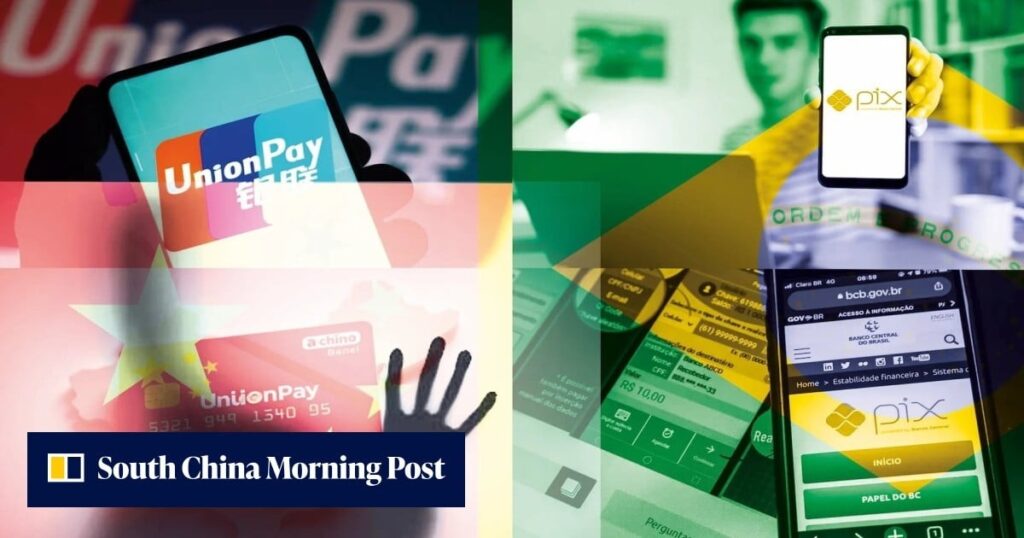
UnionPay International is connecting Chinese mobile payment apps—including the UnionPay app and bank-linked wallets—to Brazil’s Pix instant payment system, enabling Chinese tourists to scan QR codes and pay in real time. The pilot launches in Q3 2026 amid U.S. tariffs targeting Pix’s regulatory model. Pix, launched in November 2020, serves 15 million merchants and processes over 1.2 billion transactions monthly. The integration marks UnionPay’s first direct linkage with a non-Asian national real-time payment system and reflects growing financial infrastructure alignment between China and Latin America.

Walgreens opens Washington micro-fulfillment center, processes 7M prescriptions yearly
Latin America Supply Chain

Walgreens opens Washington micro-fulfillment center, processes 7M prescriptions yearly

Walgreens has launched an automated micro-fulfillment center in Kent, Washington, on July 22, 2026. The facility processes 7 million prescriptions annually and supports 196 stores — 122 of them in Washington state. Part of a resumed initiative paused in 2023, the center combines robotics with pharmacist oversight to improve prescription turnaround and patient care. Jon Joplin, Walgreens’ chief technology and operations officer of automated fulfillment, highlighted how the integration strengthens regional service capacity while freeing pharmacists for clinical work. The site exemplifies a broader shift toward compact, tech-enabled pharmacy logistics nodes.

Trump FCC bans Chinese humanoid robots, power inverters
Latin America Supply Chain

Trump FCC bans Chinese humanoid robots, power inverters

The Trump administration, via the FCC, banned U.S. imports of new Chinese humanoid and quadruped robots and grid-connected power inverters effective 28 July 2026. The move targets AI supply chain security, citing risks of data theft, cyberattacks like Volt Typhoon, and overreliance akin to China’s rare earth dominance. Unitree—holding under 20% of the global humanoid robot market—is directly affected, as are Chinese inverter leaders Sungrow (300274.SZ) and Huawei. The Chinese Embassy pledged countermeasures, while the FCC plans broad exemptions for non-Chinese suppliers.

Welcome Back!

Login to your account below

Create New Account!

Fill the forms below to register

Retrieve your password

Please enter your username or email address to reset your password.

Scan to share via WeChat

Open WeChat and scan the QR code to share

QR Code

Add New Playlist