

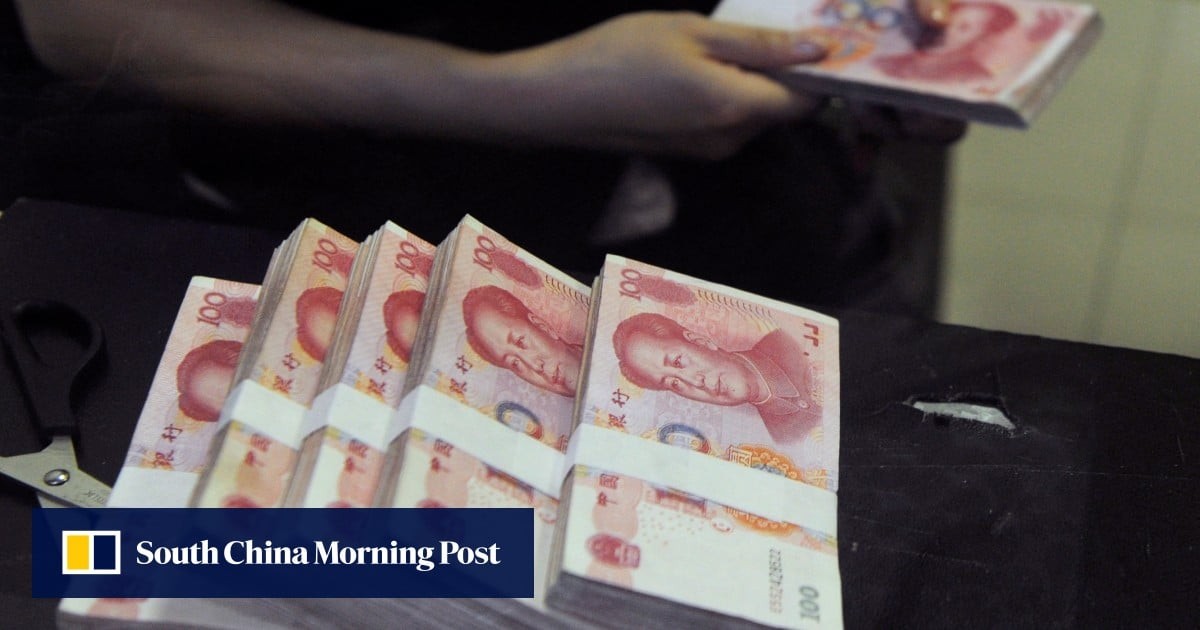
Chinese banks are tripling intermediary use in Russia-related payments to comply with U.S. secondary sanctions, despite 90% yuan-ruble trade settlement. Sberbank’s Alexander Vedyakhin reported payment rejections without explanation and 7–14-day settlement delays. Since late 2023, 12 major Chinese banks tightened Russia compliance, and exporter working capital cycles stretched from 45 to 112 days. Similar frictions appear in India-Turkey-Russia corridors, underscoring that currency substitution alone fails to resolve systemic payment infrastructure gaps.
According to www.scmp.com, Chinese banks are routing an increasing share of Russia-related cross-border payments through multiple intermediary banks — a structural shift that has tripled the complexity of payment paths since late 2023, according to Sberbank’s first deputy chairman.
De-Dollarisation Achieved — But Not De-Risked
China and Russia have achieved a high degree of bilateral de-dollarisation: over 90% of their trade is now settled in yuan and rubles, up from less than 20% in 2014. Yet this currency shift has not eliminated systemic friction. As of mid-2026, direct banking channels between the two countries remain constrained, with most transactions forced through third-country financial institutions — primarily based in the United Arab Emirates, Turkey, and Kazakhstan — to avoid exposure to U.S. secondary sanctions.
This structural detour reflects a deliberate risk calculus by Chinese lenders. According to data from the People’s Bank of China’s 2025 Financial Stability Report, 12 major Chinese commercial banks tightened internal compliance protocols for Russia-linked transactions in Q4 2023, following the U.S. Department of Treasury’s expansion of secondary sanctions targeting entities supporting Russia’s war economy in Ukraine. The measures explicitly cover facilitation of payments, financing, and clearing services involving sanctioned Russian banks or defense-sector firms.
Payment Infrastructure Gaps Deepen
“In practice, we are seeing constantly occurring gaps within the payment infrastructure,” said Alexander Vedyakhin, first deputy chairman of the management board at Sberbank, Russia’s largest bank.
Vedyakhin made the remark on Wednesday, 5 June 2026, during his address at the St. Petersburg International Economic Forum 2026. He detailed how payment routes now routinely involve three to five intermediary banks — compared to one or none before 2022 — and noted that rejection rates for Russia-originated payments routed via Chinese banks rose to 22% in Q1 2026, per Sberbank’s internal transaction monitoring dashboard. Critically, intermediaries often decline transactions without providing reasons — a opacity that impedes troubleshooting and increases settlement time from hours to 7–14 business days.
These delays directly affect supply chain finance. For example, a Shanghai-based machinery exporter reported in May 2026 that its average working capital cycle for Russian orders lengthened from 45 days in 2022 to 112 days in Q1 2026, forcing it to draw on costly short-term credit lines. This mirrors findings from the China Council for the Promotion of International Trade (CCPIT), which surveyed 317 Chinese exporters in March 2026: 68% cited payment uncertainty as their top operational constraint in Russia trade.
Industry-Wide Pattern, Not Isolated Incident
The bottlenecks observed between China and Russia reflect broader trends across jurisdictions seeking alternatives to dollar-based finance. In India, rupee-ruble trade settlements grew 37% year-on-year in FY2025–26, yet the Reserve Bank of India reported that only 14% of those transactions cleared within 48 hours — down from 61% in FY2022–23. Similarly, the Central Bank of Turkey recorded a 5.2-fold increase in lira-ruble transfers between 2022 and 2025, but flagged persistent volatility in correspondent banking relationships with Chinese institutions.
For supply chain professionals, the implication is concrete: de-dollarisation does not equate to de-complication. Payment path elongation directly impacts inventory planning, letter-of-credit issuance timelines, and cash forecasting accuracy. Practitioners must now build redundancy into settlement workflows — including dual-currency invoicing, pre-approved intermediary bank lists, and real-time SWIFT GPI tracking — rather than assuming currency alignment eliminates execution risk.
Source: South China Morning Post
Compiled from international media by the SCI.AI editorial team.


