India and Japan pledged to accelerate cooperation on energy and critical materials supply chains during Japanese Foreign Minister Toshimitsu Motegi’s May 25, 2026, visit to New Delhi — ahead of the Quad Foreign Ministers’ Meeting on May 26. Anchored in the Japan-India Joint Vision for the Next Decade (launched August 2025), the agreement targets public-private action to strengthen resilience across Southeast and South Asia. Both nations confirmed coordination on free navigation in the Strait of Hormuz and will leverage the 75th anniversary of bilateral diplomatic ties in 2027 to scale people-to-people exchanges. The Quad meeting follows the July 1, 2025, Washington gathering and focuses on maritime security, critical tech, and climate infrastructure.
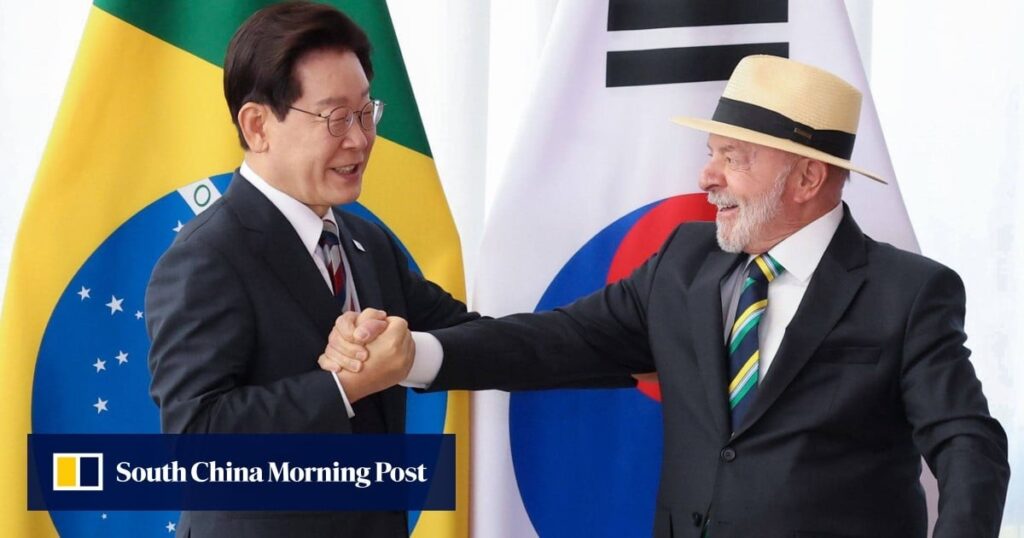
According to timesofoman.com, Japanese Foreign Minister Toshimitsu Motegi visited New Delhi on Monday, May 25, 2026, for bilateral delegation talks with India’s External Affairs Minister Dr S Jaishankar — ahead of the Quad Foreign Ministers’ Meeting in New Delhi on Tuesday, May 26, 2026. The discussions centered on deepening cooperation in economic security, with explicit emphasis on strengthening supply chain resilience for critical materials and ensuring stable energy supply across Southeast Asia and South Asia.
FOIP Alignment and Joint Vision Implementation
The two ministers reaffirmed commitment to the Japan-India Joint Vision for the Next Decade, launched during Prime Minister Narendra Modi’s visit to Japan in August 2025. According to Japan’s Ministry of Foreign Affairs statement, they agreed to accelerate public-private cooperation — particularly in economic security — to bolster supply chain resilience for critical materials. The framework also aims to promote economic growth through targeted investment and innovation. Motegi underscored that Japan and India must serve as the “driving force” behind the Free and Open Indo-Pacific (FOIP) initiative, coordinating closely within the Quad.
Energy and Critical Materials Cooperation
A key outcome was the mutual confirmation to cooperate on ensuring a stable supply of energy and critical materials in Southeast Asia and South Asia. This aligns with broader regional concerns, including maritime security in strategic chokepoints: the ministers confirmed ongoing coordination to ensure free and safe navigation in the Strait of Hormuz. The agreement directly addresses documented vulnerabilities — India imports over 85% of its crude oil, while Japan relies on imported energy for over 90% of its primary energy needs, according to the International Energy Agency’s 2025 Country Review.
Defense, People-to-People, and Institutional Timing
The ministers agreed to advance defense and security collaboration under the revised Joint Declaration on Security Cooperation (2025). They also pledged to expand people-to-people exchanges — a foundational element for sustained cooperation — leveraging the upcoming 75th anniversary of Japan-India diplomatic relations in 2027. This milestone provides a formalized timeline for implementing joint initiatives across education, science, and technical training programs already underway under the Japan-India Science Council and the JICA Partnership Program.
Quad Context and Strategic Convergence
The bilateral meeting built momentum for the Quad Foreign Ministers’ Meeting on May 26, 2026, hosted in New Delhi and attended by U.S. Secretary of State Marco Rubio, Australian Foreign Minister Penny Wong, and Motegi. The summit follows the prior Quad gathering in Washington, D.C., on July 1, 2025. Discussions are structured around three pillars: reaffirming maritime security and freedom of navigation; evaluating progress on critical technology and climate-resilient infrastructure delivery; and addressing emerging security challenges. As Motegi stated in a video message shared by Japan’s Ministry of Foreign Affairs on X:
“At this meeting, we will exchange views in-depth on the future of the Indo-Pacific in the face of structural changes in the international order.” — Toshimitsu Motegi, Japanese Foreign Minister
Source: timesofoman.com
Compiled from international media by the SCI.AI editorial team.