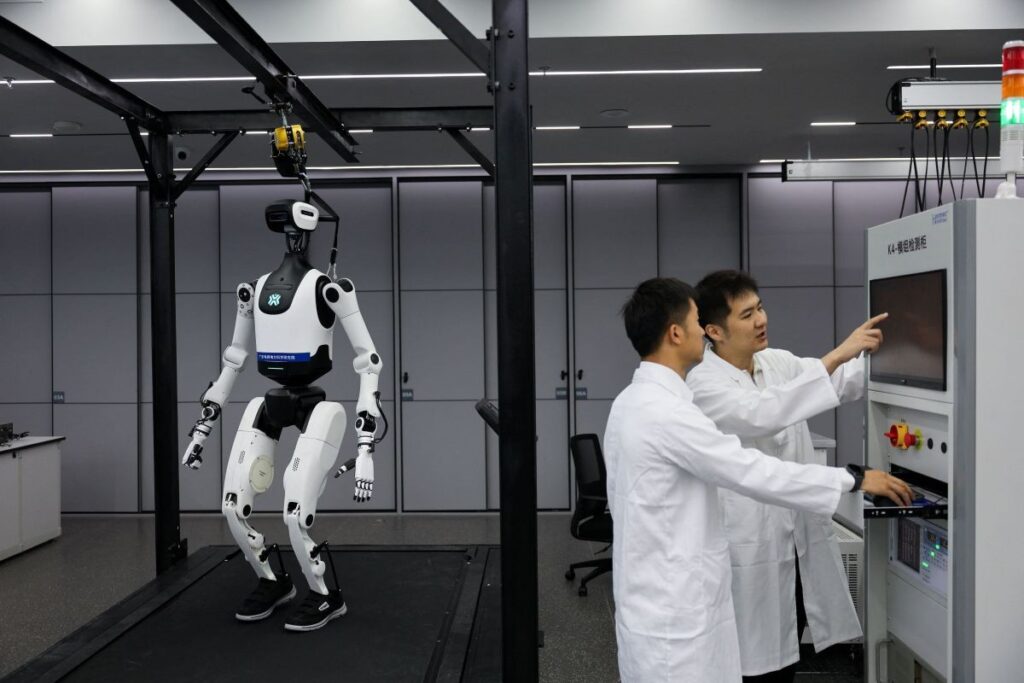
GreyOrange CRO Richard (Rik) Schrader warns that robotic automation systems introduce a 'single point of failure' risk often overlooked in supply chain diversification efforts. According to Inbound Logistics, deploying robots locks in SOPs, layouts, training, and integrations—making vendor swaps operationally costly. The article details four actionable steps toward 'swap-ability', including peak-season post-mortems and scenario modeling. It cites Gartner data showing 68% of large warehouses now use ≥2 robotics platforms, and ABI Research forecasting $8.7B in global warehouse robotics revenue by 2027. Resilience, the source states, hinges on hardware and software flexibility—not just supplier geography.
According to www.inboundlogistics.com, robotic automation systems—once embedded in warehouse operations—pose a critical, under-addressed supply chain risk: they can become a single point of failure. Richard (Rik) Schrader, Chief Revenue Officer at GreyOrange, stresses that supply chain diversification must extend beyond suppliers to include robotics vendors and technology stacks.
Robots as Risk Vectors
Unlike upstream disruptions—such as weather delays or cyberattacks on carriers—the risk from robotics is operational and proximate. As Schrader notes, deploying robotic automation is “sticky”: it requires rewriting standard operating procedures (SOPs), adjusting facility layouts, retraining staff, and integrating with existing automation layers. A failure by one vendor—or an incompatibility between systems—can halt throughput across zones. According to the report, “you don’t just buy a new ASRS, you rewrite SOPs”, underscoring the operational inertia baked into automation deployments.
Orchestration Is Non-Negotiable
Point-to-point integrations—such as a robotics vendor syncing only with a warehouse management system (WMS)—are insufficient for multi-vendor environments. The source states that as facilities add layer pickers, palletizers, and autonomous forklifts, operators face mounting questions about interoperability. Without a unified warehouse orchestration system, replacing one vendor can delay downstream tasks—including loading pallets onto trucks at dock doors—disrupting dispatch timelines. Schrader emphasizes that “someone has to own orchestration across the whole environment to make the warehouse hum”.
Four Practical Steps Toward Swap-ability
The article outlines concrete actions operators can take during the post-peak season window to improve technology adaptability:
- Conduct a peak season post-mortem to identify where handoffs between systems slowed operations or where unanticipated exceptions occurred;
- Leverage peer networks in the off-season—not vendor pitch cycles—to learn how other operators solved orchestration challenges;
- Run scenario modeling simulations to test how different automation configurations handle volume surges, SKU changes, or equipment downtime;
- Ask prospective vendors specific technical questions—including whether they support four or more forms of automation within a single site, provide real-world examples of cross-system integration, and articulate their product roadmap for the next 5 and 10 years.
Resilience Requires Hardware + Software Flexibility
The source ties robotics strategy directly to long-term resilience: “the ability to update, change, or scale hardware and software without disrupting ongoing operations will be the true marker of future-proofed fulfillment”. This reflects broader industry trends—Gartner reported in 2023 that 68% of warehouses with >500,000 sq ft deployed at least two distinct robotics platforms, up from 41% in 2021. Meanwhile, ABI Research estimates global warehouse robotics revenue will reach $8.7 billion by 2027, driven by demand for modular, interoperable systems. In contrast, reliance on monolithic, single-vendor stacks has led to documented cases of operational paralysis—including a 2024 Midwest e-commerce fulfillment center that experienced 17-hour downtime after its sole AMR vendor discontinued firmware updates for legacy units.
Source: www.inboundlogistics.com
Compiled from international media by the SCI.AI editorial team.