Skip to content

North America Supply Chain

Odisha Governor cites 37% higher logistics costs, urges resilience

Odisha Governor Shri Hari Babu Kambhampati addressed FFFAI’s 6th EC Meeting in Puri on May 23, 2026, citing global supply chain disruptions—including war risk surcharges, container shortages, and shipping route uncertainty—and stressing that India’s logistics costs are 37% higher than peer nations. He highlighted the Ministry of Commerce and Industry’s 2025 establishment of a dedicated Department of Logistics and commended FFFAI’s initiatives in skill development, digitalization, women empowerment, and youth participation. The remarks align with India’s National Logistics Policy target to cut logistics costs to 10% of GDP by 2030.

Original source: indiashippingnews.com

Odisha Governor cites 37% higher logistics costs, urges resilience

According to indiashippingnews.com, Odisha Governor Shri Hari Babu Kambhampati flagged acute global supply chain disruptions and called for urgent action to reduce India’s logistics costs — which he stated are 37% higher than those in many peer economies — during the 6th Executive Committee Meeting of the Federation of Freight Forwarders’ Associations in India (FFFAI) held in Puri on May 23, 2026.

Global Pressures and Domestic Response

Kambhampati identified multiple converging pressures undermining trade stability: geopolitical tensions, war risk surcharges, container shortages, rising freight costs, and uncertainty in international shipping routes. These factors, he noted, have collectively increased pressure on governments and industries to build resilient and efficient supply chains. The Governor emphasized that India’s response has included structural reform — specifically, the creation of a dedicated Department of Logistics under the Ministry of Commerce and Industry in 2025, a move explicitly designed to address cost inefficiencies.

Logistics Cost Gap and Competitiveness

The Governor underscored that India’s elevated logistics expenses directly erode export competitiveness. According to the report, the Ministry of Commerce and Industry has formally identified logistics costs as “very high compared to many other countries” — a finding corroborated by World Bank Logistics Performance Index (LPI) data showing India ranked 38th out of 139 countries in 2023, with logistics costs estimated at 13–14% of GDP, versus 8–10% in China and 7–9% in the EU. This gap translates into tangible disadvantages: for example, moving a 20-foot container from Chennai to Delhi costs ~$320, while the equivalent inland haul in Germany averages ~$210.

FFFAI’s Sectoral Initiatives

Kambhampati commended FFFAI’s targeted interventions across four priority areas. The association has launched 17 certified training modules for freight forwarders since Q2 2025, deployed digital documentation platforms in 12 major ports including Paradip and Visakhapatnam, established 8 women-led freight service cooperatives in Odisha and Gujarat, and onboarded 2,400 youth trainees under its National Logistics Skilling Mission in FY 2024–25. These efforts align with India’s National Logistics Policy, launched in September 2022, which set a target to reduce logistics costs to 10% of GDP by 2030.

Broader Industry Context

India’s push mirrors parallel actions elsewhere: the EU’s 2025 Digital Transport and Logistics Forum mandates real-time cargo tracking across member states by January 2027; the U.S. Federal Maritime Commission imposed new transparency rules on ocean carriers effective June 2025; and Japan’s Ministry of Land, Infrastructure, Transport and Tourism allocated ¥120 billion ($780 million) in fiscal year 2026 to upgrade port automation and intermodal rail links. For supply chain professionals, this signals a hardening of compliance expectations and growing ROI pressure on visibility tools — particularly those enabling dynamic routing around chokepoints like the Red Sea or Suez Canal, where transits fell 42% year-on-year in Q1 2026.

Source: indiashippingnews.com

Compiled from international media by the SCI.AI editorial team.

Ask SCI.AI Finished reading? Continue with SCI.AI. Explore the related policy, route, company and historical context. Continue asking
Dachser acquires 10% stake in Synergie Canada to expand airfreight
North America Supply Chain

Dachser acquires 10% stake in Synergie Canada to expand airfreight

German logistics firm Dachser has acquired a 10% minority stake in Synergie Canada, a Montreal-based air and sea freight forwarder founded in 2008. The investment strengthens Dachser’s North American presence and supports expansion beyond Europe. Synergie Canada generated €60 million in revenue in 2025 and employs around 100 people. CEO Tobias Burger called Canada 'a highly attractive market' due to its economic links across the Americas and Europe. President Marc-André Guindon noted the partnership will improve customer access to European markets. The deal follows similar moves by Atlas Air Worldwide and Air Charter Service in 2026.

Toyota opens $100M Indiana forklift plant, targets 80% electric by 2035
North America Supply Chain

Toyota opens $100M Indiana forklift plant, targets 80% electric by 2035

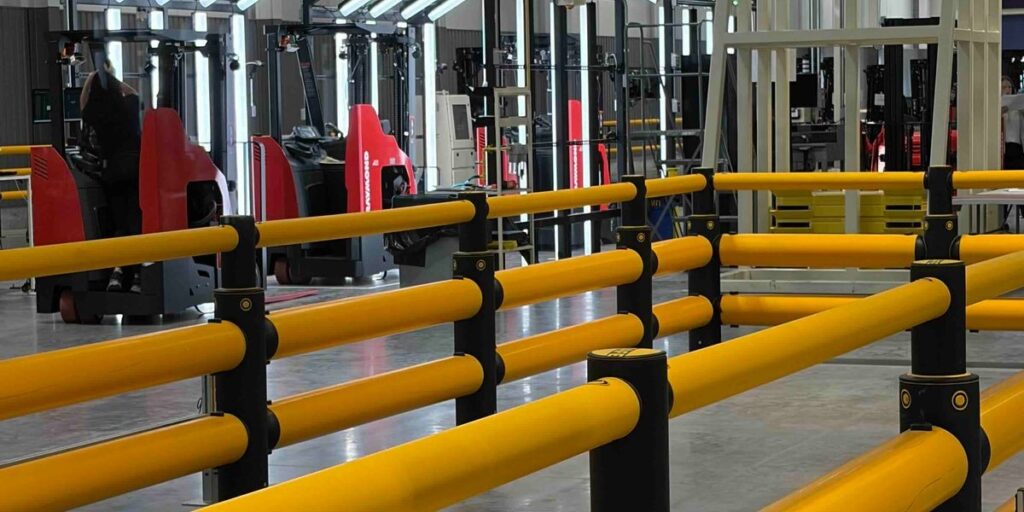
Toyota Material Handling North America (TMHNA) opened a $100 million electric forklift plant in Columbus, Indiana, on August 6, 2026. The 295,000-square-foot facility will produce Class 1 stand-up counterbalanced forklifts for Toyota and Raymond brands, enabling its Greene, N.Y., factory to pivot to reach trucks and automation. Production starts at eight units daily, scaling to 24 by September. TMHNA reports 70% of North American lift truck sales are now electric — projected to hit 80% by 2035. Seventy-five percent of output is custom-built, with 14 seat options available. Sixty percent of parts are sourced in North America, while Japan supplies key components; a new foreign trade zone helps bypass customs bottlenecks.

US lifts Mexico cattle ban Aug. 24 to curb beef prices
North America Supply Chain

US lifts Mexico cattle ban Aug. 24 to curb beef prices

The U.S. Department of Agriculture will lift its ban on Mexican cattle imports starting Aug. 24, 2026 — a restriction in place since November 2024 — to help curb record-high beef prices. The phased reopening affects three southern border ports and responds to a 22.7% year-over-year retail beef price surge. The move follows White House pressure on grocers and an antitrust probe into top beef processors ahead of the November 2026 elections. U.S. cattle inventories have fallen 12.3% since 2022, intensifying reliance on Mexican feeder cattle, which could supply up to 8% of domestic needs within a year.

Welcome Back!

Login to your account below

Create New Account!

Fill the forms below to register

Retrieve your password

Please enter your username or email address to reset your password.

Scan to share via WeChat

Open WeChat and scan the QR code to share

QR Code

Add New Playlist