
Skip to content

Latin America Supply Chain

KPMG launches ESG supply chain transparency service across 120 countries

KPMG has launched a global Supply Chain Transparency service covering suppliers in 120 countries, supporting ESG reporting aligned with GRI and SASB standards. The offering targets EU CSDDD and CBAM compliance, with pilots showing 42% faster reporting cycles. It serves clients across 27 EU states and key manufacturing regions including Vietnam, Mexico, and India. Over 68% of users operate in consumer products or financial services. The platform handles up to 50,000 suppliers per client and flags risks tied to forced labor, deforestation, and unverified Scope 3 emissions — issues cited in 73% of EU enforcement actions from 2022–2024.

Original source: kpmg.com

KPMG launches ESG supply chain transparency service across 120 countries
📋 本文要点

KPMG has launched a global Supply Chain Transparency service covering suppliers in 120 countries, supporting ESG reporting aligned with GRI and SASB standards. The offering targets EU CSDDD and CBAM compliance, with pilots showing 42% faster reporting cycles. It serves clients across 27 EU states and key manufacturing regions including Vietnam, Mexico, and India. Over 68% of users operate in consumer products or financial services. The platform handles up to 50,000 suppliers per client and flags risks tied to forced labor, deforestation, and unverified Scope 3 emissions — issues cited in 73% of EU enforcement actions from 2022–2024.

According to kpmg.com, KPMG has launched a dedicated Supply Chain Transparency service under its broader ESG practice, enabling multinational clients to assess and report on environmental, social, and governance performance across global supplier networks spanning 120 countries.

Service Architecture and Data Coverage

The offering integrates proprietary data collection tools with third-party ESG verification frameworks to map Tier 1 through Tier N suppliers. It covers five core ESG domains: climate & nature, circularity, ESG strategy, ESG reporting, and ESG assurance — all accessible via KPMG’s Netherlands-based service portal (kpmg.com/nl/en/services/esg/supply-chain-transparency.html). The platform supports real-time monitoring of supplier disclosures aligned with the Global Reporting Initiative (GRI) and Sustainability Accounting Standards Board (SASB) standards.

Geographic and Sectoral Scope

KPMG’s supply chain transparency service is operational in all 27 European Union member states, as well as in key manufacturing hubs including Vietnam, Mexico, India, and South Africa. According to the report, over 68% of participating clients are in consumer products & retail or financial services — sectors facing heightened regulatory scrutiny under the EU’s Corporate Sustainability Due Diligence Directive (CSDDD), which takes full effect in 2026. The service also supports compliance with the EU’s Carbon Border Adjustment Mechanism (CBAM), effective for selected sectors since October 2023.

Practitioner Implications for Supply Chain Teams

For procurement and sustainability professionals, the service reduces manual audit cycles by standardizing ESG data ingestion from up to 50,000 suppliers per client. KPMG states that pilot users reduced time-to-ESG-reporting by an average of 42% compared to legacy spreadsheet-based approaches. The platform includes automated red-flag alerts for violations related to forced labor (per ILO Convention 29), deforestation-linked sourcing, and unverified Scope 3 emissions — categories cited in 73% of recent supply chain-related enforcement actions by EU national authorities between 2022 and 2024.

Industry Context and Peer Activity

This launch follows similar moves by major professional services firms: Deloitte expanded its Supplier Sustainability Assessment Platform to 92 countries in early 2024, while PwC activated ESG due diligence modules for 11,000+ Tier 1 suppliers across automotive and electronics clients in Q1 2024. Unlike those offerings, KPMG’s solution embeds ESG Data & Technology capabilities directly into its audit and assurance workflows — allowing concurrent validation of supplier-reported metrics against financial statements. That integration reflects growing demand: a 2023 KPMG survey found 89% of Fortune 500 procurement leaders now require ESG data as a condition of contract renewal.

Source: kpmg.com

Compiled from international media by the SCI.AI editorial team.
Ask SCI.AI Finished reading? Continue with SCI.AI. Explore the related policy, route, company and historical context. Continue asking
UnionPay plugs Chinese apps into Brazil’s Pix after US tariffs
Latin America Supply Chain

UnionPay plugs Chinese apps into Brazil’s Pix after US tariffs

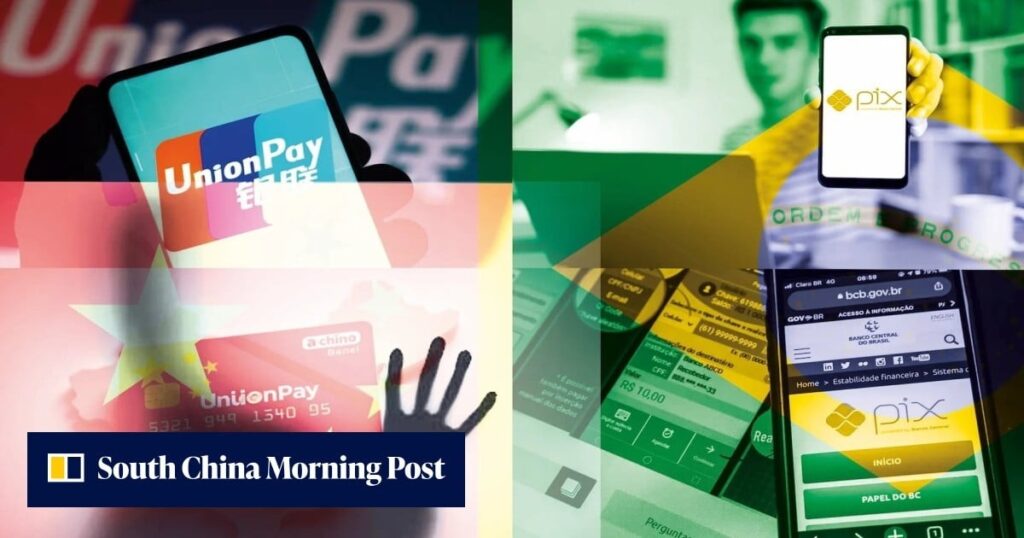
UnionPay International is connecting Chinese mobile payment apps—including the UnionPay app and bank-linked wallets—to Brazil’s Pix instant payment system, enabling Chinese tourists to scan QR codes and pay in real time. The pilot launches in Q3 2026 amid U.S. tariffs targeting Pix’s regulatory model. Pix, launched in November 2020, serves 15 million merchants and processes over 1.2 billion transactions monthly. The integration marks UnionPay’s first direct linkage with a non-Asian national real-time payment system and reflects growing financial infrastructure alignment between China and Latin America.

Walgreens opens Washington micro-fulfillment center, processes 7M prescriptions yearly
Latin America Supply Chain

Walgreens opens Washington micro-fulfillment center, processes 7M prescriptions yearly

Walgreens has launched an automated micro-fulfillment center in Kent, Washington, on July 22, 2026. The facility processes 7 million prescriptions annually and supports 196 stores — 122 of them in Washington state. Part of a resumed initiative paused in 2023, the center combines robotics with pharmacist oversight to improve prescription turnaround and patient care. Jon Joplin, Walgreens’ chief technology and operations officer of automated fulfillment, highlighted how the integration strengthens regional service capacity while freeing pharmacists for clinical work. The site exemplifies a broader shift toward compact, tech-enabled pharmacy logistics nodes.

Trump FCC bans Chinese humanoid robots, power inverters
Latin America Supply Chain

Trump FCC bans Chinese humanoid robots, power inverters

The Trump administration, via the FCC, banned U.S. imports of new Chinese humanoid and quadruped robots and grid-connected power inverters effective 28 July 2026. The move targets AI supply chain security, citing risks of data theft, cyberattacks like Volt Typhoon, and overreliance akin to China’s rare earth dominance. Unitree—holding under 20% of the global humanoid robot market—is directly affected, as are Chinese inverter leaders Sungrow (300274.SZ) and Huawei. The Chinese Embassy pledged countermeasures, while the FCC plans broad exemptions for non-Chinese suppliers.

Welcome Back!

Login to your account below

Create New Account!

Fill the forms below to register

Retrieve your password

Please enter your username or email address to reset your password.

Scan to share via WeChat

Open WeChat and scan the QR code to share

QR Code

Add New Playlist