

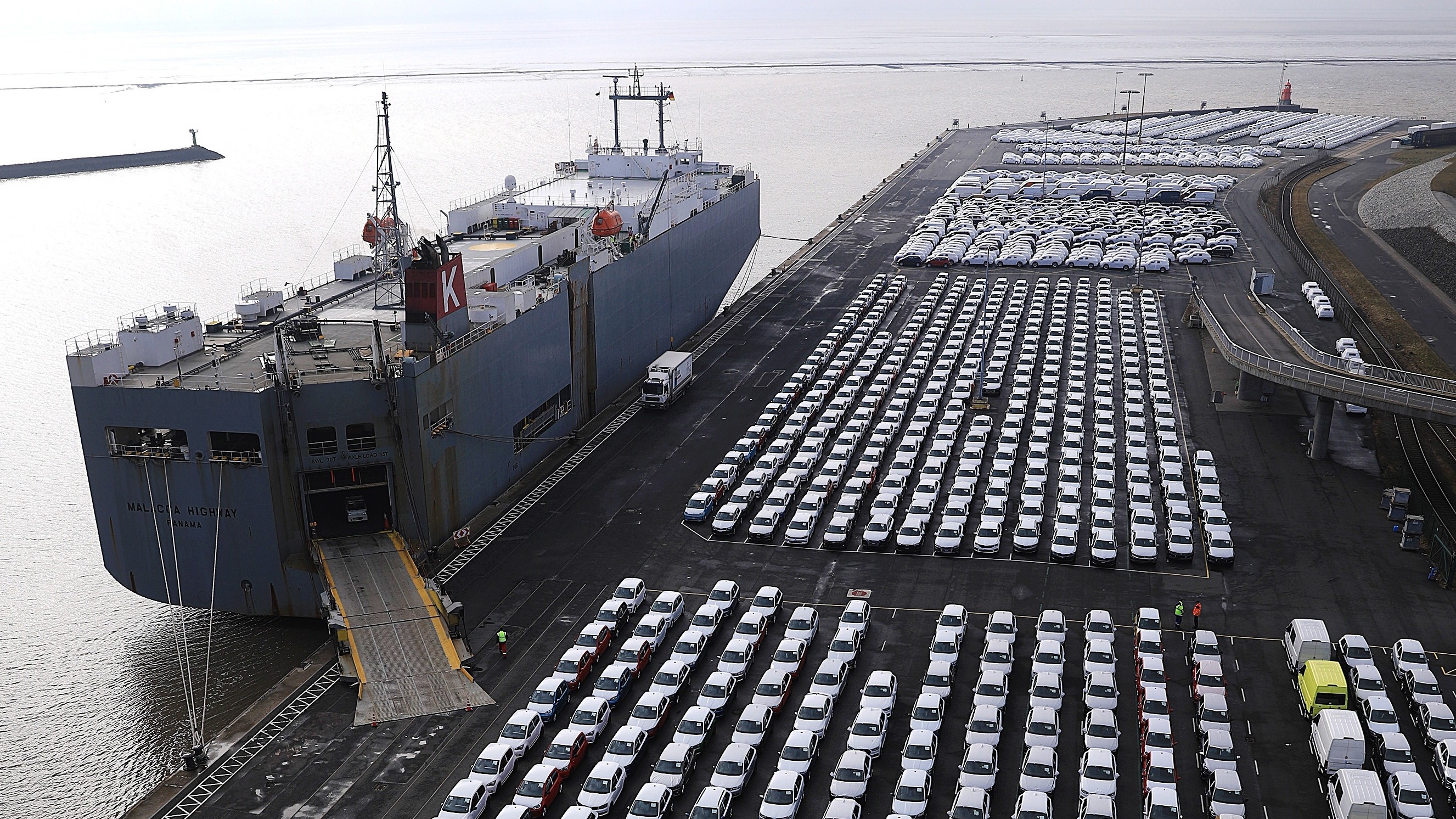
Tariff uncertainty is driving automakers to localize U.S. production and accelerate factory automation. Volkswagen pledged $2.3 billion for Chattanooga expansion; Ford committed $5.6 billion to BlueOval City. Industrial robot deployment rose 22% in North America in 2025, reaching over 12,800 units. Seven of the top 10 automakers launched U.S. reshoring initiatives since 2024, including Nissan’s $1.4 billion Smyrna upgrade and Toyota’s $13.9 billion U.S. commitment through 2026. Supply chain teams face urgent needs in supplier lead-time management and robotics technician training, with 14,200 new technician roles projected by 2028.
According to www.autonews.com, tariff uncertainty is accelerating automakers’ investments in domestic production and factory automation across North America. The report highlights a strategic pivot toward supply chain localization — particularly in the United States — as companies seek to mitigate exposure to volatile trade policy, including potential new duties on imported vehicles and components.
U.S. Production Expansion Amid Trade Volatility
Multiple global OEMs are advancing plans to scale U.S.-based assembly and component manufacturing. Volkswagen, for instance, confirmed in Q1 2026 it would invest $2.3 billion to expand its Chattanooga, Tennessee plant — adding battery module assembly and increasing EV production capacity by 40%. This follows Ford’s April 2026 announcement of a $5.6 billion investment to convert its BlueOval City complex in Stanton, Tennessee into a vertically integrated electric vehicle and battery hub. Both projects are timed to align with anticipated U.S. tariff adjustments scheduled for implementation in May 2026, as cited in the source.
Robotics Deployment Accelerates Across Assembly Lines
Automation is no longer optional: the report states that Tier 1 suppliers and OEMs collectively deployed over 12,800 industrial robots in North American auto plants in 2025 — a 22% increase year-on-year, per the International Federation of Robotics (IFR) data referenced by Automotive News. Honda’s Marysville, Ohio facility, which launched its first fully automated body shop in Q3 2025, now achieves cycle times 17% faster than its legacy line. Similarly, Stellantis reported a 31% reduction in labor-related quality escapes after installing collaborative robots (cobots) at its Belvidere, Illinois plant in early 2026.
Industry-Wide Response to Geopolitical Risk
This shift reflects broader industry behavior. According to the source, seven of the top 10 global automakers have announced nearshoring or reshoring initiatives targeting the U.S. since 2024. Nissan’s $1.4 billion investment in Smyrna, Tennessee — completed in January 2026 — added lithium-ion battery pack assembly lines serving its Leaf and Ariya platforms. Toyota, meanwhile, has committed $13.9 billion through 2026 to U.S. manufacturing, including battery plants in North Carolina and Kentucky. These figures align with publicly disclosed capital expenditure plans filed with the U.S. Securities and Exchange Commission and tracked by the Center for Automotive Research.
Practitioner Implications for Supply Chain Teams
For supply chain professionals, the implications are operational and urgent. Localization reduces lead time variability — especially critical given that 68% of Tier 2–3 suppliers surveyed by the Automotive Industry Action Group (AIAG) in Q4 2025 reported average inbound part delays exceeding 11 days due to customs hold-ups. Automation investments also require revised workforce planning: the U.S. Bureau of Labor Statistics projects 14,200 new robotics technician roles will be needed in automotive manufacturing by 2028. Companies adopting cobots report requiring 3.2 weeks of retraining per line worker — significantly less than the 16 weeks historically needed for full-line automation retrofits.
Source: www.autonews.com
Compiled from international media by the SCI.AI editorial team.


