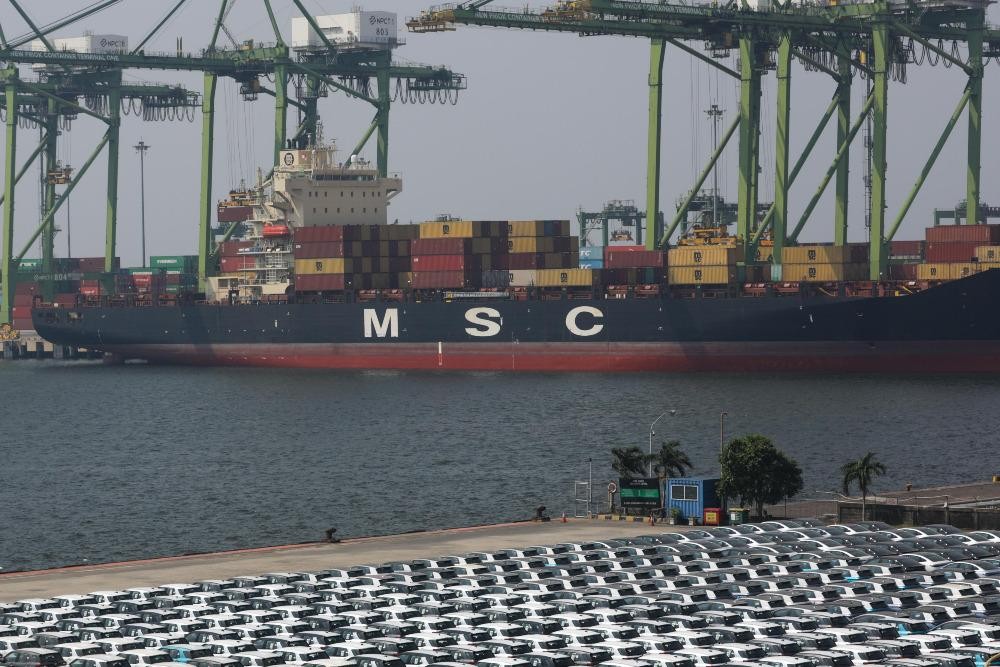
According to www.bloomberg.com, Vietnam surpassed China as the top U.S. supplier of laptops and game consoles in 2025 — the first time this has occurred — driven by tariff-driven supply chain relocations rather than domestic U.S. manufacturing growth.
Vietnam’s Export Surge Amid Trump’s Tariff Policy
On April 2, 2025, President Donald Trump declared a national emergency — dubbed “Liberation Day” — and imposed sweeping global tariffs aimed at reducing the U.S.’s $760 billion trade deficit with Asia. Consumer electronics assembled across Asia were exempted from reciprocal tariffs after lobbying by U.S. tech firms, but products made in China remained subject to fentanyl-related duties of up to 20%. One year later, Bloomberg’s analysis of shipment-level U.S. customs data revealed that Vietnam had become the leading source of laptops and game consoles for the U.S., overtaking China for the first time in 2025.
Crucially, the core production of these devices remains in China: Vietnamese factories primarily perform final assembly using imported components. In some cases, value added in Vietnam accounted for less than 8% of export value. While U.S. imports from China fell by $51 billion last year, that decline was nearly offset by a $49 billion rise in imports from Vietnam, India, and Mexico combined. Total U.S. imports of seven major electronics categories stood at $130 billion in 2025 — down just over 1% from 2024.
Foxconn and BYD Drive Assembly Shifts
Fukang Technology Co., a Foxconn subsidiary operating in Bac Ninh, Vietnam, exported $8.6 billion worth of MacBooks, iPads, motherboards, and servers in 2025 while importing $7.9 billion in components — mostly from China, South Korea, and Taiwan. This implies at most 7.8% of export value was generated in Vietnam. Similarly, BYD Co.’s Phu Tho factory — located 100 kilometers (62 miles) northwest of Hanoi — exported $5.1 billion in iPads and other electronics while importing $4.9 billion in parts; 61% of its inward shipments came from China, generating only 4.5% of export value locally.
Labor demand in Bac Ninh is so acute that recruiters bus new workers from remote villages to fill 1,000 jobs advertised since Lunar New Year. Nguyen Van Dai, standing outside a Foxconn factory during a TikTok livestream, stated:
“Last year, Foxconn had five hiring rounds in which it gave workers a bonus of 15 million dong ($570), the highest amount so far, to meet their orders and expansion plan.”
Tariff Evasion, Legal Reversals, and New Trade Actions
The Supreme Court struck down most of Trump’s tariffs earlier in 2026 — including the fentanyl-related duties on China — limiting their enforcement. In response, the White House launched new trade investigations into excess industrial capacity and labor rights abuses, targeting 16 economies and 60 economies respectively, including China and Vietnam. Universal tariffs are currently set at 10% until July 24, 2026, with threats to raise them to 15%.
Dan Wang, China director at Eurasia Group, explained the structural advantage:
“Chinese companies are simply much better at controlling costs. They are much more efficient because they have such large supply chains — from upstream, midstream, to downstream, so it’s easier to contain costs at each segment.”
He added:
“Vietnam, in particular, is a very strategic location for Chinese producers.”
Source: Bloomberg
Compiled from international media by the SCI.AI editorial team.