Skip to content

Latin America Supply Chain

Amazon Launches ASCS With 80,000 Trailers, 100 Aircraft — mexicobusiness.news

Amazon launched Amazon Supply Chain Services (ASCS) on May 7, 2026, offering enterprises integrated freight, warehousing, fulfillment, and last-mile delivery. The platform uses Amazon’s private logistics assets: 80,000+ trailers, 24,000 intermodal containers, and 100+ aircraft. Early clients include Procter & Gamble and 3M. Concurrently, Amazon pledged $25 billion to Anthropic, securing $100 billion in AWS spending over ten years. ASCS reflects Amazon’s infrastructure-monetization strategy — mirroring AWS — amid surging nearshoring and e-commerce demand in North America.

Original source: mexicobusiness.news

Amazon Launches ASCS With 80,000 Trailers, 100 Aircraft — mexicobusiness.news

According to mexicobusiness.news, Amazon launched Amazon Supply Chain Services (ASCS) on May 7, 2026, as a unified enterprise logistics platform integrating freight transportation, warehousing, fulfillment, and last-mile delivery for third-party businesses across retail, healthcare, automotive, and manufacturing sectors.

Integrated Multimodal Infrastructure

ASCS leverages Amazon’s privately operated logistics network, which includes more than 80,000 trailers, 24,000 intermodal containers, and over 100 aircraft. The platform supports multimodal transportation across ocean, air, rail, and ground freight — with integrated customs brokerage and real-time shipment visibility. Parcel delivery options span two- to five-day windows, operating seven days per week, using the same infrastructure that delivers billions of packages annually.

Enterprise Adoption and Operational Scope

Early adopters include Procter & Gamble, 3M, Lands’ End, and American Eagle Outfitters — all already using components of Amazon’s network for cross-border freight, inventory consolidation, and direct-to-consumer fulfillment. According to Todd Bairstow, founder of Finer Form,

“Amazon has added value at every stage of our supply chain, from cross-border logistics to warehousing and package shipping.”

Businesses using ASCS can import inventory, store products in bulk, position goods closer to end demand, and manage orders across websites, marketplaces, social media channels, and physical stores from one system — reducing fragmentation and improving inventory accuracy.

Strategic Monetization Model

The ASCS launch follows Amazon Web Services’ (AWS) proven path: commercializing internally built infrastructure for external enterprise customers. Peter Larsen, Vice President, Amazon Supply Chain Services, stated:

“Amazon is bringing the infrastructure, intelligence, and scale of our supply chain services to businesses around the world, similar to how Amazon Web Services did with cloud computing, and with the launch of ASCS we are confident we can offer any other company access to the same cost efficiency, reliability and speed we have built for customers.”

This model aligns with Amazon’s broader capital allocation strategy: the company expects to allocate approximately US$200 billion in capital expenditures during 2026, with most directed toward AI and logistics infrastructure expansion.

AI Infrastructure Investment Synergy

The ASCS rollout coincides with Amazon’s expanded AI infrastructure commitments. Amazon announced plans to invest up to US$25 billion in Anthropic, structured as US$5 billion immediately and US$20 billion tied to commercial milestones. In return, Anthropic committed to spend more than US$100 billion on AWS technologies over the next decade. Anthropic’s run-rate revenue reached US$30 billion in 2026, up from US$9 billion at the end of 2025. To address compute strain, the agreement secures up to 5GW of computing capacity for training and deploying advanced AI systems, including Trainium2, Trainium3, and Trainium4 chips.

Source: mexicobusiness.news

Compiled from international media by the SCI.AI editorial team.

Ask SCI.AI Finished reading? Continue with SCI.AI. Explore the related policy, route, company and historical context. Continue asking
UnionPay plugs Chinese apps into Brazil’s Pix after US tariffs
Latin America Supply Chain

UnionPay plugs Chinese apps into Brazil’s Pix after US tariffs

UnionPay International is connecting Chinese mobile payment apps—including the UnionPay app and bank-linked wallets—to Brazil’s Pix instant payment system, enabling Chinese tourists to scan QR codes and pay in real time. The pilot launches in Q3 2026 amid U.S. tariffs targeting Pix’s regulatory model. Pix, launched in November 2020, serves 15 million merchants and processes over 1.2 billion transactions monthly. The integration marks UnionPay’s first direct linkage with a non-Asian national real-time payment system and reflects growing financial infrastructure alignment between China and Latin America.

Walgreens opens Washington micro-fulfillment center, processes 7M prescriptions yearly
Latin America Supply Chain

Walgreens opens Washington micro-fulfillment center, processes 7M prescriptions yearly

Walgreens has launched an automated micro-fulfillment center in Kent, Washington, on July 22, 2026. The facility processes 7 million prescriptions annually and supports 196 stores — 122 of them in Washington state. Part of a resumed initiative paused in 2023, the center combines robotics with pharmacist oversight to improve prescription turnaround and patient care. Jon Joplin, Walgreens’ chief technology and operations officer of automated fulfillment, highlighted how the integration strengthens regional service capacity while freeing pharmacists for clinical work. The site exemplifies a broader shift toward compact, tech-enabled pharmacy logistics nodes.

Trump FCC bans Chinese humanoid robots, power inverters
Latin America Supply Chain

Trump FCC bans Chinese humanoid robots, power inverters

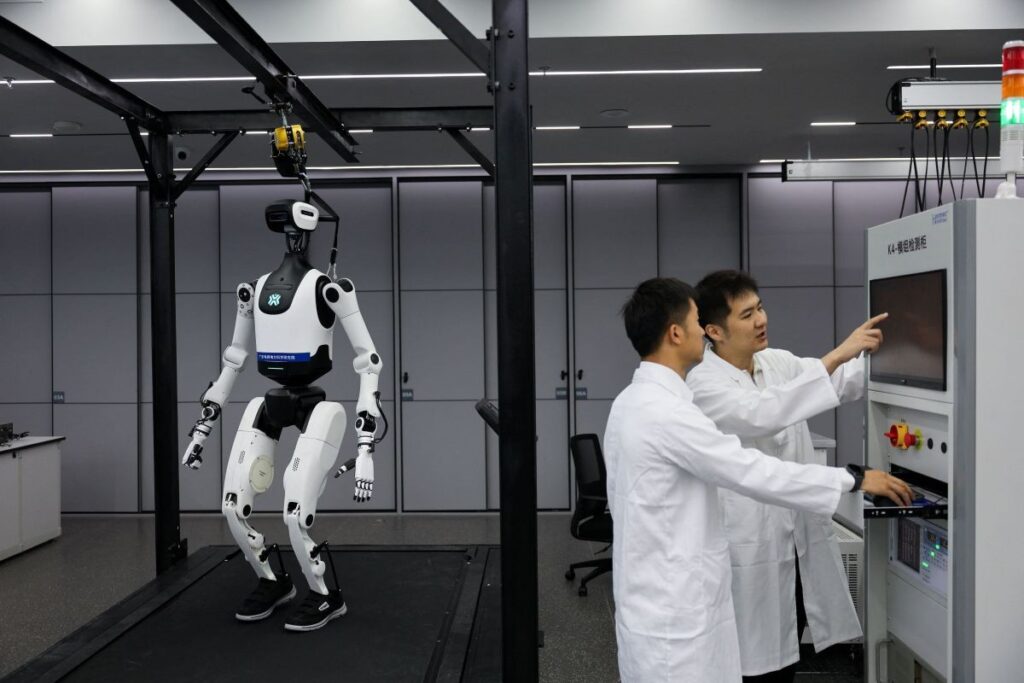
The Trump administration, via the FCC, banned U.S. imports of new Chinese humanoid and quadruped robots and grid-connected power inverters effective 28 July 2026. The move targets AI supply chain security, citing risks of data theft, cyberattacks like Volt Typhoon, and overreliance akin to China’s rare earth dominance. Unitree—holding under 20% of the global humanoid robot market—is directly affected, as are Chinese inverter leaders Sungrow (300274.SZ) and Huawei. The Chinese Embassy pledged countermeasures, while the FCC plans broad exemptions for non-Chinese suppliers.

Welcome Back!

Login to your account below

Create New Account!

Fill the forms below to register

Retrieve your password

Please enter your username or email address to reset your password.

Scan to share via WeChat

Open WeChat and scan the QR code to share

QR Code

Add New Playlist