Skip to content

North America Supply Chain

Georgia Ports’ $5B Investment Rewrites Supply Chain Logistics — www.freightwaves.com

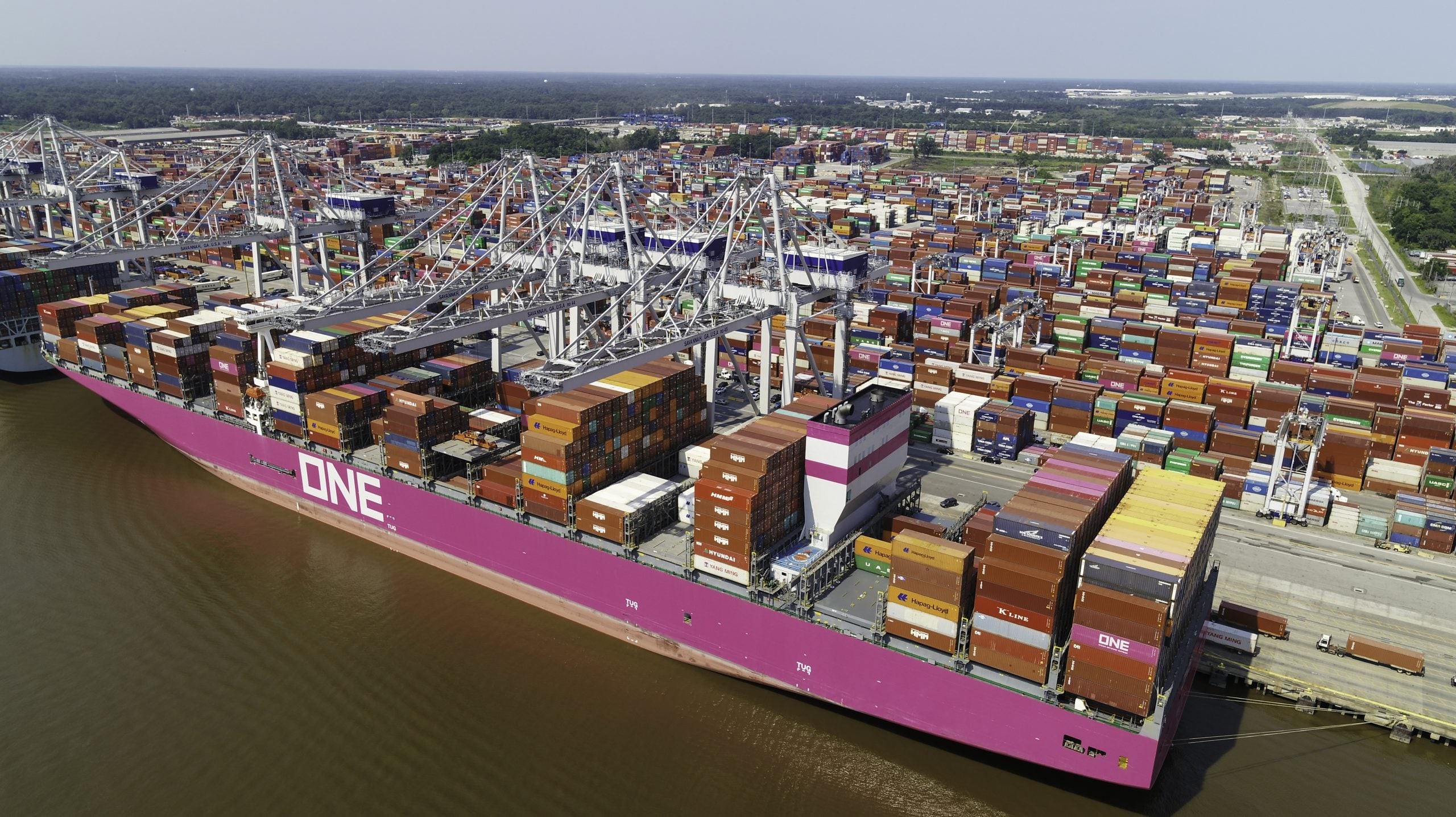
The Georgia Ports Authority is executing a $5 billion capital program to strengthen supply chain resilience, citing documented savings of over $1,000 per container for Atlanta, Memphis, and Nashville shipments versus West Coast alternatives. Research from Georgia Tech confirms Savannah’s advantages in transit predictability, rail dwell time (≤20 hours), and multimodal velocity—supported by 40 weekly vessel calls and 42 weekly doublestack trains. The May 4, 2026 opening of the Gainesville Inland Port extends GPA’s reach into north Georgia’s manufacturing hubs via Norfolk Southern rail service.

Original source: freightwaves.com

Georgia Ports’ $5B Investment Rewrites Supply Chain Logistics — www.freightwaves.com
📋 本文要点

The Georgia Ports Authority is executing a $5 billion capital program to strengthen supply chain resilience, citing documented savings of over $1,000 per container for Atlanta, Memphis, and Nashville shipments versus West Coast alternatives. Research from Georgia Tech confirms Savannah’s advantages in transit predictability, rail dwell time (≤20 hours), and multimodal velocity—supported by 40 weekly vessel calls and 42 weekly doublestack trains. The May 4, 2026 opening of the Gainesville Inland Port extends GPA’s reach into north Georgia’s manufacturing hubs via Norfolk Southern rail service.

According to www.freightwaves.com, the Georgia Ports Authority (GPA) is advancing a $5 billion capital investment program aimed at strengthening supply chain predictability and cost efficiency amid global trade volatility.

Strategic Context and Leadership Commitment

The GPA unveiled this strategy during its 57th annual Georgia International Trade Conference, held in late April 2026. Governor Brian Kemp addressed attendees, stating:

“Innovation and port investments by the Georgia Ports Authority are helping to keep our state No. 1 for business while also positioning us as a true leader in global trade.” — Gov. Brian Kemp, State of Georgia

The conference brought together shippers, carriers, rail providers, and logistics executives to assess how Southeastern U.S. infrastructure can offset persistent disruptions—including West Coast congestion, Panama Canal drought restrictions, and vessel schedule unreliability.

Cost and Reliability Advantages Documented by Georgia Tech

Research from Georgia Tech’s Supply Chain and Logistics Institute quantifies Savannah’s competitive edge. Routing cargo through the Port of Savannah saves shippers more than $1,000 per container when delivering to Atlanta, Memphis, and Nashville—compared to West Coast gateways. The study further found that Savannah delivers more predictable transit times, reduced congestion exposure, and superior end-to-end reliability. Chris Gaffney, managing director of the institute, affirmed:

“Our research shows that when shippers evaluate total landed cost and end-to-end reliability, routing cargo through Savannah provides a clear economic advantage compared with West Coast routes.” — Chris Gaffney, Managing Director, Georgia Tech Supply Chain and Logistics Institute

Operational Velocity and Modal Performance

Savannah’s infrastructure supports high-volume, low-dwell operations. The port handles 40 container ships weekly and processes 14,000–16,000 truck gate moves daily. Dual-container transactions (drop-off + pickup) are completed in under 50 minutes; single moves average 30 minutes. Rail accounts for 20% of inland cargo movement, supported by 42 doublestack trains departing weekly. The port maintains the lowest rail dwell time in the nation at 20 hours or less. In 2025, the Mason Mega Rail facility handled 591,000 containers—a record volume validating GPA’s rail-centric expansion.

Gainesville Inland Port Extends Network Reach

The GPA opened the Gainesville Inland Port on May 4, 2026, adding daily rail service operated by Norfolk Southern (NYSE: NSC). Located in north Georgia, the facility targets manufacturing and distribution corridors serving the I-85 and I-75 corridors. Its launch follows GPA’s 2023 announcement of a $2.5 billion investment plan focused on deepening the harbor, expanding rail capacity, and automating terminal operations—part of the broader $5 billion commitment spanning 2023–2030.

Source: FreightWaves

Compiled from international media by the SCI.AI editorial team.

Ask SCI.AI Finished reading? Continue with SCI.AI. Explore the related policy, route, company and historical context. Continue asking
Dachser acquires 10% stake in Synergie Canada to expand airfreight
North America Supply Chain

Dachser acquires 10% stake in Synergie Canada to expand airfreight

German logistics firm Dachser has acquired a 10% minority stake in Synergie Canada, a Montreal-based air and sea freight forwarder founded in 2008. The investment strengthens Dachser’s North American presence and supports expansion beyond Europe. Synergie Canada generated €60 million in revenue in 2025 and employs around 100 people. CEO Tobias Burger called Canada 'a highly attractive market' due to its economic links across the Americas and Europe. President Marc-André Guindon noted the partnership will improve customer access to European markets. The deal follows similar moves by Atlas Air Worldwide and Air Charter Service in 2026.

Toyota opens $100M Indiana forklift plant, targets 80% electric by 2035
North America Supply Chain

Toyota opens $100M Indiana forklift plant, targets 80% electric by 2035

Toyota Material Handling North America (TMHNA) opened a $100 million electric forklift plant in Columbus, Indiana, on August 6, 2026. The 295,000-square-foot facility will produce Class 1 stand-up counterbalanced forklifts for Toyota and Raymond brands, enabling its Greene, N.Y., factory to pivot to reach trucks and automation. Production starts at eight units daily, scaling to 24 by September. TMHNA reports 70% of North American lift truck sales are now electric — projected to hit 80% by 2035. Seventy-five percent of output is custom-built, with 14 seat options available. Sixty percent of parts are sourced in North America, while Japan supplies key components; a new foreign trade zone helps bypass customs bottlenecks.

US lifts Mexico cattle ban Aug. 24 to curb beef prices
North America Supply Chain

US lifts Mexico cattle ban Aug. 24 to curb beef prices

The U.S. Department of Agriculture will lift its ban on Mexican cattle imports starting Aug. 24, 2026 — a restriction in place since November 2024 — to help curb record-high beef prices. The phased reopening affects three southern border ports and responds to a 22.7% year-over-year retail beef price surge. The move follows White House pressure on grocers and an antitrust probe into top beef processors ahead of the November 2026 elections. U.S. cattle inventories have fallen 12.3% since 2022, intensifying reliance on Mexican feeder cattle, which could supply up to 8% of domestic needs within a year.

Welcome Back!

Login to your account below

Create New Account!

Fill the forms below to register

Retrieve your password

Please enter your username or email address to reset your password.

Scan to share via WeChat

Open WeChat and scan the QR code to share

QR Code

Add New Playlist