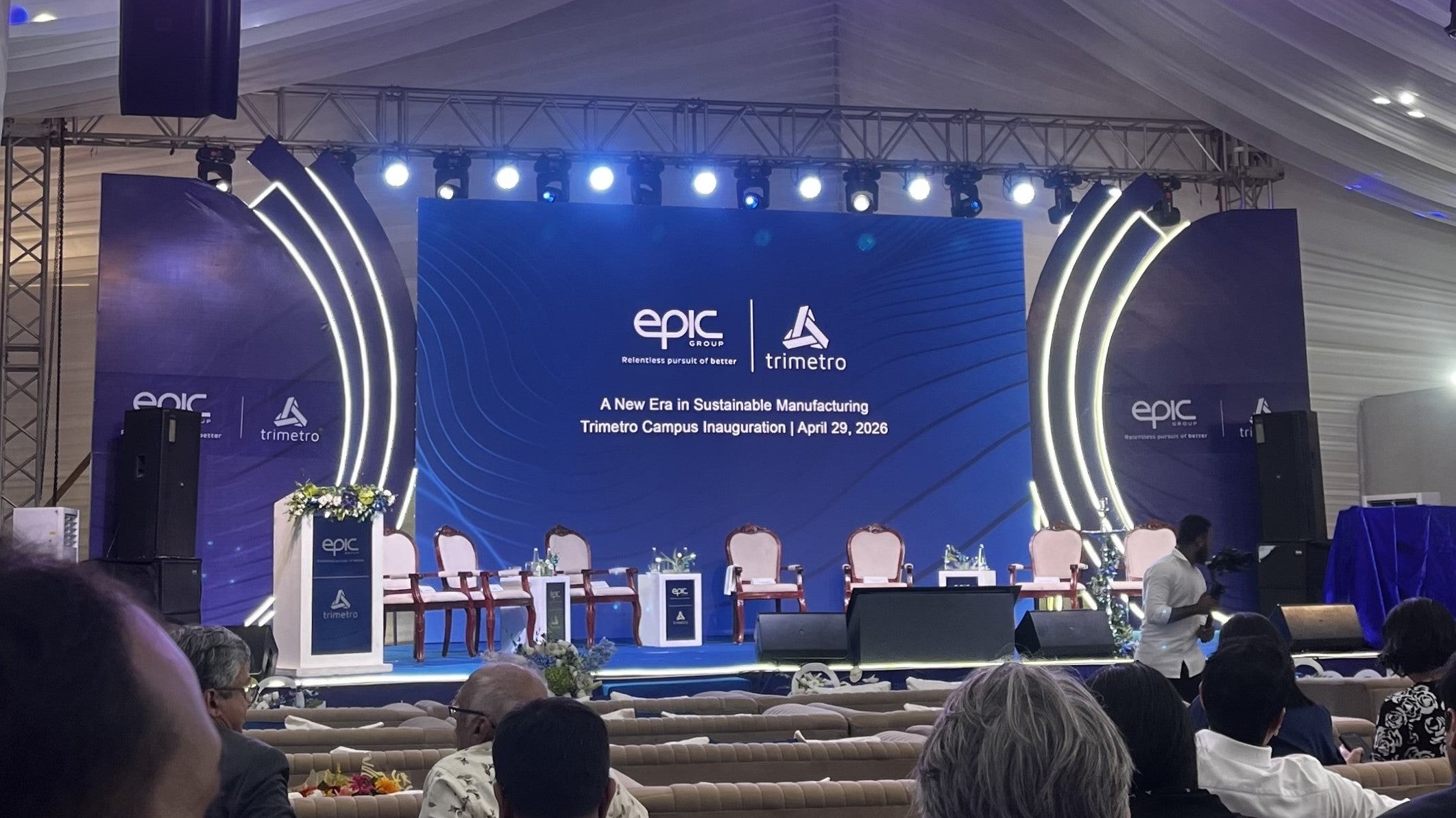
Epic Group opened its Trimetro net-zero apparel factory in Khordha, Odisha, on May 5, 2026 — India’s first such facility. It features a 12,800 m² solar array (4.2 MW), 95% water recycling, and 99.4% daytime energy independence. The campus employs 1,842 workers, 57% women and 41% from marginalized communities. Built to serve Hugo Boss and Marks & Spencer, it complies with EU CSDDD requirements effective 2026. Odisha’s textile FDI rose 23% YoY in FY2024.
According to www.just-style.com, Epic Group inaugurated its Trimetro campus in Khordha, Odisha — a net-zero operational facility designed for apparel manufacturing — on May 5, 2026.
Location and Cultural Integration
The factory is situated in Khordha district, adjacent to Bhubaneswar — the capital city of Odisha and widely recognized as India’s ‘temple city’ due to its concentration of historic Hindu temples, including the Lingaraja Temple (built c. 11th century) and the Rajarani Temple. The campus was launched with a traditional opening ceremony reflecting local customs and craftsmanship. Epic Group selected this location to anchor long-term investment in eastern India, where formal apparel manufacturing infrastructure has historically lagged behind Gujarat, Tamil Nadu, and Maharashtra. Odisha’s state government reported a 23% year-on-year increase in textile and apparel FDI inflows between FY2023–FY2024, according to its Department of Industries and Commerce.
Sustainability Architecture and Energy Systems
The Trimetro campus achieves net-zero operational emissions through three integrated systems: on-site solar generation, biomass-based thermal energy recovery, and rainwater harvesting with 95% water recycling efficiency. A rooftop photovoltaic array spans 12,800 square meters, supplying an estimated 4.2 megawatts of peak capacity — sufficient to power all production lines, administrative functions, and worker housing during daylight hours. Biomass boilers use agricultural residue sourced within 75 kilometers of the site, displacing fossil fuel consumption by 92% for steam generation. According to the report, the facility is certified under the U.S. Green Building Council’s LEED-ND v4.1 Platinum standard — the highest tier available for neighborhood development.
Workforce and Inclusion Metrics
Epic Group committed to hiring at least 65% of its initial workforce from within Odisha, with priority given to women and persons from Scheduled Castes and Scheduled Tribes. As of May 2026, the campus employed 1,842 workers, of whom 57% were women and 41% belonged to officially recognized marginalized communities. All staff receive on-site childcare, subsidized meals, and vocational upskilling through partnerships with the Odisha State Skill Development Authority. The source states that Epic Group allocated $2.1 million in its first-year budget specifically for inclusive workforce development programs.
Supply Chain Implications for Global Brands
The Trimetro campus serves as Epic Group’s primary production hub for European and North American clients including Hugo Boss, Hugo Boss, and Marks & Spencer — all of which require Tier 1 suppliers to disclose Scope 1 and 2 emissions by 2027 per their public ESG roadmaps. This aligns with growing regulatory pressure: the EU’s Corporate Sustainability Due Diligence Directive (CSDDD) mandates supply chain climate accountability for large companies operating in Europe starting in 2026. For supply chain professionals, the facility demonstrates how localized renewable energy procurement, regional raw material sourcing, and structured inclusion targets can simultaneously meet compliance thresholds and reduce audit overhead. Unlike typical Indian garment units averaging 38% energy self-sufficiency, Trimetro operates at 99.4% energy independence during daylight hours — cutting grid reliance and associated carbon intensity by 87% per unit output.
Source: Just Style
Compiled from international media by the SCI.AI editorial team.