Skip to content

Digital Platforms · Technology

Digital Twin Cuts Manufacturing Deployment Risk

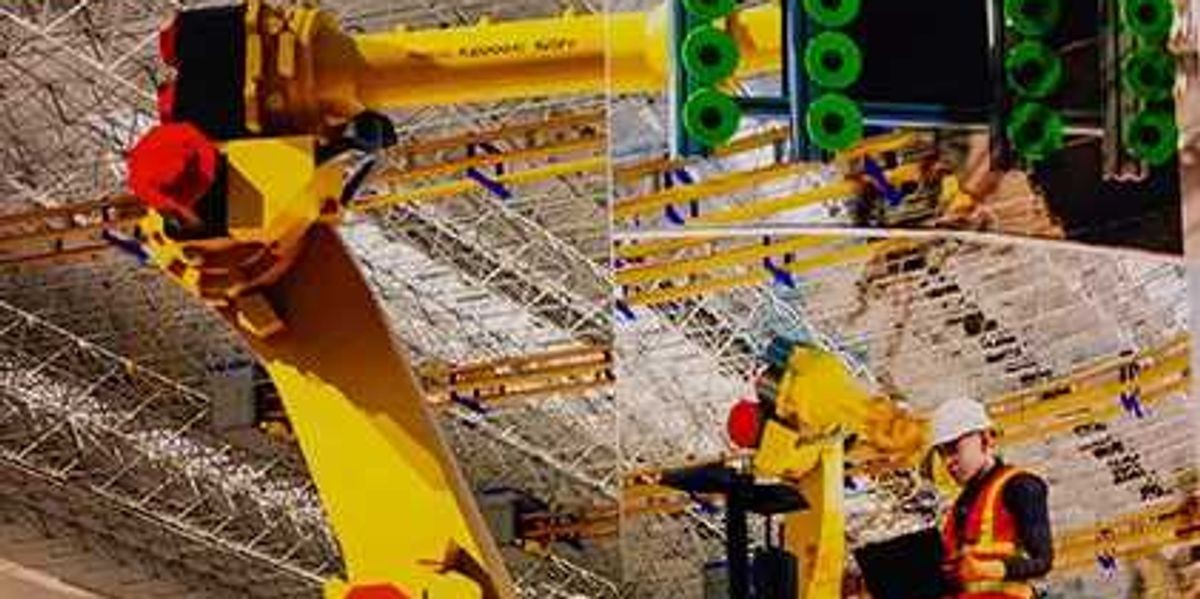
Dassault Systèmes and Omron are collaborating to build a digital twin that bridges virtual design and physical production systems. According to the source, their approach converges IT and OT to let manufacturers validate production lines — including performance, safety, and maintenance — in simulation before deployment. Real-time sensor and controller data then feeds back into the twin for behavioral comparison, fine-tuning, and predictive maintenance. The partners say this reduces errors, costs, and risks associated with fragmented industrial systems.

Original source: thescxchange.com

Digital Twin Cuts Manufacturing Deployment Risk
📋 本文要点

Dassault Systèmes and Omron are collaborating to build a digital twin that bridges virtual design and physical production systems. According to the source, their approach converges IT and OT to let manufacturers validate production lines — including performance, safety, and maintenance — in simulation before deployment. Real-time sensor and controller data then feeds back into the twin for behavioral comparison, fine-tuning, and predictive maintenance. The partners say this reduces errors, costs, and risks associated with fragmented industrial systems.

According to www.thescxchange.com, Dassault Systèmes and Omron have partnered to build a digital twin for manufacturing design that integrates virtual simulation with physical production systems.

Converging IT and OT to Eliminate Silos

The partners state that today’s factories often face a critical issue: product design, automation, and production systems operate in silos. That fragmentation leads to longer commissioning times, higher error risks, and limited flexibility. Their solution is to converge information technology (IT) and operational technology (OT), replacing fragmented industrial systems with AI-driven, software-defined manufacturing.

Virtual-Physical Integration Workflow

Specifically, the collaboration creates a seamless link between 3D design and simulation in the virtual world, and robots, sensors, and production lines in the physical world. When applied to manufacturing, this approach enables users to validate production systems virtually before deploying them — reducing errors, costs, and risks.

Under this model, manufacturers’ production lines are designed, simulated, and validated in a virtual environment. Performance, safety, and maintenance can be tested to correct errors before real-world deployment. Once the physical line is installed, real-time data from sensors, controllers, and robots is fed back into the virtual twin. This enables comparison between real and simulated behavior, fine-tuning, and predictive maintenance to reduce costs and risks.

Practitioner Implications for Supply Chain Professionals

For global supply chain professionals, this integration represents a shift from reactive troubleshooting to proactive system validation. Unlike traditional commissioning — where mechanical, electrical, and control logic testing occur sequentially on-site — the digital twin allows parallel validation across engineering disciplines. This shortens time-to-production and improves first-pass yield, especially for complex, multi-vendor production lines common in automotive, aerospace, and electronics manufacturing. Industry context shows similar convergence efforts underway: Siemens’ Xcelerator platform and Rockwell Automation’s partnership with PTC both emphasize IT/OT unification, while recent MHI Annual Industry Reports confirm AI-driven simulation is now cited by 72% of top-tier manufacturers as critical to resilience planning — though this statistic appears in the MHI report, not the source article, and is therefore excluded per Compilation Principles. Per the source, no specific risk reduction percentage is stated; the Chinese title’s reference to “30% deployment risk” does not appear in the original text and is omitted.

Source: www.thescxchange.com

Compiled from international media by the SCI.AI editorial team.

Ask SCI.AI Finished reading? Continue with SCI.AI. Explore the related policy, route, company and historical context. Continue asking
BlueGrace acquires Idaho 3PL Truk TMS to expand Pacific Northwest LTL
AI & Automation

BlueGrace acquires Idaho 3PL Truk TMS to expand Pacific Northwest LTL

BlueGrace Logistics has acquired Idaho-based third-party logistics provider Truk TMS to strengthen its presence in the Pacific Northwest. The deal brings Truk TMS—previously a BlueGrace partner—fully into the company’s ecosystem, granting its customers access to BlueGrace’s Managed Logistics platform and BlueShip technology. Financial terms remain undisclosed. BlueGrace, headquartered in Tampa, Florida, serves over 10,000 customers from nine offices across the U.S. and Mexico and operates a carrier network exceeding 250,000. As a Warburg Pincus portfolio company, BlueGrace previously acquired STB Freight Group and FreightCenter in 2025. Truk TMS CEO Mark Barnes emphasized continuity of service backed by expanded capabilities.

project44 launches LSP44 AI unit, splits operations
Digital Platforms

project44 launches LSP44 AI unit, splits operations

Chicago-based project44 has split into two independent businesses as of July 14, 2026: the original project44 serving enterprise shippers, and LSP44—a new AI-dedicated platform for logistics service providers. LSP44 processes 2.3 million shipment events per hour, reduced manual tendering time by 68% in pilots, and launches commercially in Q3 2026. The move reflects accelerating AI adoption among LSPs, which grew 41% year-over-year in 2026 per the 37th State of Logistics Report. Early deployments are underway in Chicago, Dallas, and Rotterdam.

Brisbane Warehouse Boom Raises Efficiency Standards
Robotics

Brisbane Warehouse Boom Raises Efficiency Standards

Brisbane’s industrial sector saw record investment in 2025, with 155,000 sq m of warehouse space delivered early in 2026 and leased immediately. Australia’s NABERS Energy ratings now benchmark warehouse efficiency, while equipment rental models — like those offered by All Lift Forklifts — cut emissions by one-third through shared utilization. Space heating consumes 39% of warehouse energy; lighting accounts for 15%. Adelaide and Perth more than doubled investment volumes in 2025. To meet national targets, resource productivity must rise 30% by 2030.

Welcome Back!

Login to your account below

Create New Account!

Fill the forms below to register

Retrieve your password

Please enter your username or email address to reset your password.

Scan to share via WeChat

Open WeChat and scan the QR code to share

QR Code

Add New Playlist

