Skip to content

South Asia Supply Chain

India 2026 Budget Boosts Logistics: Waterway Cargo Target to 12%

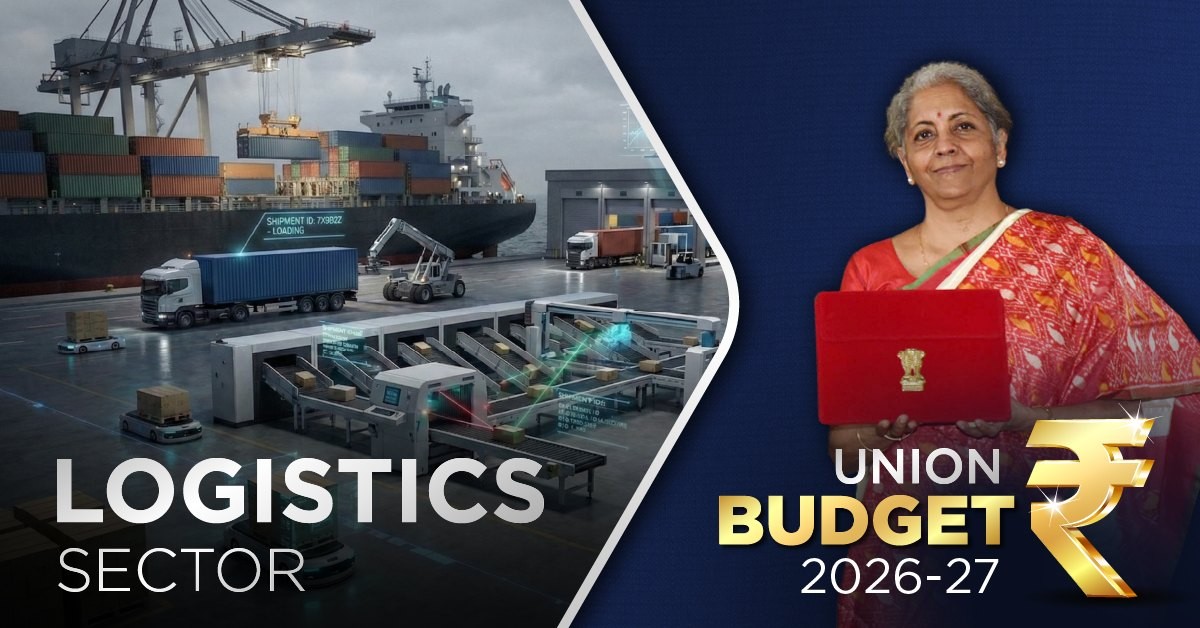
According to insights.dsij.in, India’s Union Budget 2026–27 allocates Rs 5,98,520 crore to transport and targets a doubling of inland waterways and coastal shipping’s cargo share—from 6% to 12% by 2047. Key measures include new Dedicated Freight Corridors (Dankuni–Surat), 20 new National Waterways starting with NW-5 in Odisha, AI-enhanced port scanning, a single digital customs window by April 2026, and tax incentives for bonded-zone manufacturing logistics. The Budget also launches a Rs 10,000 crore container manufacturing scheme and offers a 2% margin safe-harbour for component warehousing.

Original source: insights.dsij.in

India 2026 Budget Boosts Logistics: Waterway Cargo Target to 12%
📋 本文要点

According to insights.dsij.in, India’s Union Budget 2026–27 allocates Rs 5,98,520 crore to transport and targets a doubling of inland waterways and coastal shipping’s cargo share—from 6% to 12% by 2047. Key measures include new Dedicated Freight Corridors (Dankuni–Surat), 20 new National Waterways starting with NW-5 in Odisha, AI-enhanced port scanning, a single digital customs window by April 2026, and tax incentives for bonded-zone manufacturing logistics. The Budget also launches a Rs 10,000 crore container manufacturing scheme and offers a 2% margin safe-harbour for component warehousing.

According to insights.dsij.in, the Union Budget 2026–27 introduces targeted fiscal and infrastructural measures aimed squarely at strengthening India’s logistics and supply chain capabilities — with explicit goals to accelerate cargo movement, reduce emissions, and align logistics more closely with manufacturing and export ambitions.

Greener Freight and New Corridors

The Budget advances sustainable cargo movement through expanded infrastructure and modal shift incentives. It proposes new Dedicated Freight Corridors connecting Dankuni in the East to Surat in the West. Additionally, plans are outlined to operationalise 20 new National Waterways over the next five years, beginning with NW-5 in Odisha, which will link mineral-rich zones like Talcher and Angul to the ports of Paradeep and Dhamra. To support inland shipping, a ship repair ecosystem is planned at Varanasi and Patna. A Coastal Cargo Promotion Scheme aims to raise the share of cargo moved via inland waterways and coastal shipping from 6 per cent to 12 per cent by 2047.

Faster Borders and Lower Friction

On trade facilitation, the Budget targets “minimal intervention” customs. Cargo clearances are proposed to move through a single interconnected digital window, with processes for food, drugs, and animal products — frequently cited as major causes of cargo interdictions — scheduled to be operational by April 2026. Port efficiency improvements include expanded non-intrusive scanning using advanced imaging and AI-led risk assessment, with the goal of scanning every container across major ports in phases. Customs warehousing will shift to a warehouse operator-centric framework based on self-declarations and electronic tracking to cut delays and costs.

Manufacturing-Linked Logistics

To reinforce electronics supply chains, the Budget introduces a safe-harbour for component warehousing in bonded warehouses at a 2 per cent margin, and a five-year income tax exemption for non-residents providing capital goods or tooling to toll manufacturers in bonded zones. A Rs 10,000 crore container manufacturing scheme over five years adds an industrial layer to the logistics push. Overall, the transport sector has been allocated Rs 5,98,520 crore in Budget Estimates for 2026–27.

Strategic Industry Focus

The source identifies specific companies likely to benefit from these initiatives:

  • Container Corporation Of India Ltd
  • Delhivery Ltd
  • Blue Dart Express Ltd

Source: insights.dsij.in

Compiled from international media by the SCI.AI editorial team.
Ask SCI.AI Finished reading? Continue with SCI.AI. Explore the related policy, route, company and historical context. Continue asking
India launches polysilicon incentive scheme targeting 10 GW capacity
South Asia Supply Chain

India launches polysilicon incentive scheme targeting 10 GW capacity

India is launching a new production-linked incentive scheme targeting more than 10 GW of domestic polysilicon capacity to break its 100% reliance on Chinese imports. The move extends ₹240 billion ($2.52 billion) in existing solar manufacturing incentives upstream, complementing over 200 GW of module capacity and a June 2028 target of 80 GW for ingots and wafers. With polysilicon also vital for semiconductors, the policy supports dual industrial goals. However, capital intensity and Chinese scale dominance pose major competitiveness hurdles.

Japan’s 7.1-magnitude quake halts Toyota, Renesas, TSMC plants in Kumamoto
South Asia Supply Chain

Japan’s 7.1-magnitude quake halts Toyota, Renesas, TSMC plants in Kumamoto

A 7.1-magnitude earthquake hit Kumamoto Prefecture in Japan on July 28, 2026, forcing Toyota to halt production at three Kyushu plants — Miyata, Kanda, and Kokura — through July 31. The Miyata plant alone produces 430,000 vehicles annually. Renesas suspended operations at two Kumamoto fabs due to structural damage, while TSMC evacuated staff at its JASM facility before confirming structural safety and beginning gradual restart. Honda extended its Kumamoto motorcycle plant suspension to July 31; Sony halted semiconductor operations in Kumamoto but found no major damage in Nagasaki, Oita, or Kagoshima. Nissan kept its Fukuoka plant running but is closely monitoring supplier networks. Kyushu accounts for ~12% of Japan’s auto component output and >30% of domestic semiconductor wafer production.

India-US ink $20B critical minerals pact amid China dominance concerns
South Asia Supply Chain

India-US ink $20B critical minerals pact amid China dominance concerns

India and the U.S. signed a critical minerals framework on May 26, 2026, paving the way for a $20 billion Quad-led investment initiative. While India holds vast reserves—including the world’s third-largest ilmenite deposits—it processes less than 5% of its rare earth output domestically. Analysts stress India is unlikely to challenge China’s dominance—accounting for over 60% of global rare earth processing—anytime soon due to infrastructure gaps and regulatory delays averaging 7–10 years for new mining approvals.

Welcome Back!

Login to your account below

Create New Account!

Fill the forms below to register

Retrieve your password

Please enter your username or email address to reset your password.

Scan to share via WeChat

Open WeChat and scan the QR code to share

QR Code

Add New Playlist