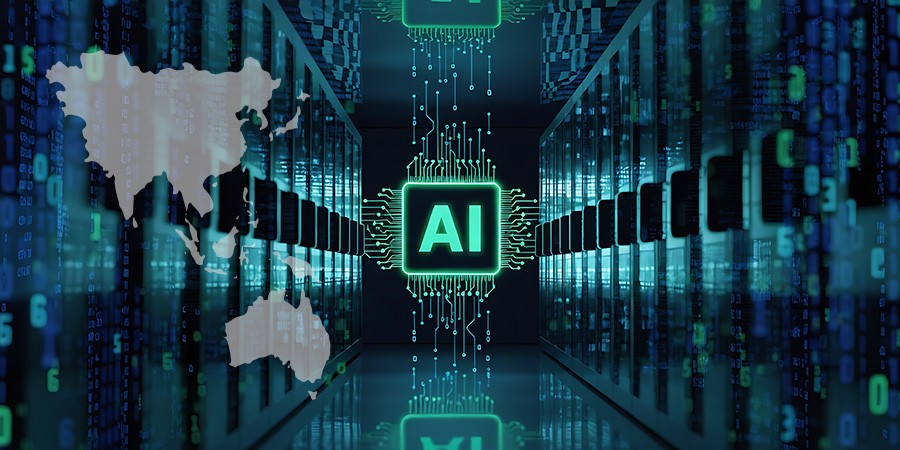
Asia-Pacific data center capacity is set to grow from 32 GW to 57 GW by 2030, fueled by 12% CAGR in AI and hyperscale demand. Yet supply chain fragility — especially >1-year lead times for HBM and advanced packaging — is delaying AI server deployments. Concentrated production in Taiwan and South Korea, U.S.–China tech restrictions, and regional infrastructure gaps (e.g., Singapore’s power limits, India’s cooling shortages) compound risks. Over half of operators reported recent site outages, per the Uptime Institute 2023 survey. Memory, not GPUs, is now NVIDIA’s cited primary bottleneck.
According to www.telecomreviewasia.com, Asia-Pacific data center capacity is projected to grow from 32 GW to 57 GW by 2030, driven by a 12% CAGR in hyperscale cloud and AI demand. Yet this expansion is critically constrained by deep-rooted supply chain vulnerabilities — particularly hardware procurement delays exceeding one year for high-bandwidth memory (HBM) and advanced packaging capacity.
Hardware Dependency and AI Infrastructure Bottlenecks
The region’s data centers rely on a globally concentrated hardware ecosystem. Advanced chip manufacturing is heavily centered in Taiwan and South Korea, creating structural dependencies for operators in Singapore, Japan, and Australia. High-performance computing infrastructure — especially AI training clusters — depends on chips with long lead times and allocation constraints. Executives from NVIDIA report that memory availability, rather than compute processors, is now the main bottleneck for AI server shipments.
High-bandwidth memory (HBM) and advanced DRAM are in acute global demand across technology hubs including South Korea, Taiwan, Singapore, and Japan. Leading manufacturers such as Samsung, SK hynix, and Micron state that most advanced HBM production through 2025 and 2026 is already allocated via multi-year agreements — reflecting a structural tightening of the global memory ecosystem, not a short-term shortage.
Geopolitical and Logistical Disruptions
U.S.–China technology restrictions on semiconductor exports and advanced manufacturing equipment have created ripple effects across the Asia-Pacific. These policies have tightened access to advanced chips and extended procurement cycles for hyperscalers in China and Southeast Asia. According to CBRE, the Asia-Pacific data center market continues to attract strong investor interest despite economic challenges, with demand fueled by hyperscalers, increased colocation, and rising AI requirements since late 2023.
Regional Imbalance and Operational Fragility
Growth is uneven: mature hubs like Singapore face strict land, energy, and cooling constraints, while emerging markets such as Indonesia, Vietnam, and India struggle with inconsistent access to advanced electrical and cooling systems. According to the Uptime Institute Global Data Center Survey 2023, over half of operators have experienced site outages in recent years — underscoring how supply chain fragility directly impacts reliability and project timelines.
- Singapore operators must import specialized, high-density equipment under tight regulatory and timing constraints
- India and Indonesia face infrastructure bottlenecks — including regulatory, efficiency, and staffing pressures
- Large hyperscalers secure priority allocation through multi-year contracts; smaller buyers face delays and increased procurement uncertainty
Cascading Risks
When critical components — such as backup generators, UPS systems, or networking switches — are delayed, operators may resort to suboptimal workarounds, increasing downtime risk and compromising service reliability. Rising construction costs, increasing project complexity, and long lead times for grid connections compound these challenges. The capital-intensive nature of expanding HBM production — requiring investment in advanced semiconductor nodes, 3D stacking, and specialized packaging infrastructure — reinforces constraints, all with long lead times and concentrated in Asia.
Source: www.telecomreviewasia.com
Compiled from international media by the SCI.AI editorial team.