Skip to content

Latin America Supply Chain

Latin America Nearshoring: $78B Export Boost by 2026

According to mismo.team, nearshoring in Latin America could boost regional exports by $78 billion annually by 2026. Mexico leads as the top destination — overtaking China as the U.S.’s largest import source in 2023 with $475 billion in imports — supported by USMCA and projected $35 billion in nearshoring-driven export gains. Other key hubs include Brazil, Argentina, and Colombia. Benefits cited include 60%+ talent cost savings, real-time collaboration, skilled engineering pipelines, cultural alignment, and enhanced supply chain resilience through shorter lead times.

Original source: mismo.team

Latin America Nearshoring: $78B Export Boost by 2026

According to mismo.team, nearshoring in Latin America is projected to boost the region’s exports by $78 billion annually, driven by North American companies relocating operations closer to home for resilience, cost efficiency, and talent access.

Drivers of the Nearshoring Surge

The shift reflects a strategic response to global supply chain vulnerabilities exposed by the pandemic and geopolitical tensions. In 2023, Mexico overtook China as the United States’ top source of imported goods for the first time in over two decades — with U.S. imports from Mexico reaching over $475 billion, while imports from China fell by 20%. Foreign direct investment (FDI) into Latin America surged by over 50% in 2022, hitting a record high of about $225 billion.

Nearshoring vs Reshoring vs Friendshoring

The source clarifies key terminology: nearshoring means moving operations to a nearby country — e.g., a U.S. company partnering with teams in Mexico, Colombia, or Costa Rica. Reshoring (or onshoring) refers to bringing operations fully back to the home country, such as relocating a factory from China to Ohio. Friendshoring involves relocating to allied nations to reduce geopolitical risk — a strategy that aligns closely with nearshoring in Latin America due to its proximity, cost advantages, and political compatibility with North America.

Top Nearshoring Destinations

  • Mexico: Top destination, leveraging its shared U.S. border and the USMCA trade agreement; estimated to gain $35 billion in annual exports from nearshoring alone (Inter-American Development Bank).
  • Brazil: Largest economy in Latin America; leader in IT services and software development, offering scale and deep technical expertise.
  • Argentina: High English proficiency and highly educated workforce; top choice for software development.
  • Colombia: Rapidly growing outsourcing industry with strong government support; excels in business process outsourcing (BPO) and IT services.
  • Other key players include Costa Rica, Chile, Uruguay, Peru, Panama, and the Dominican Republic, each noted for strengths in high-value services, tech, finance, logistics, or bilingual talent.

Tangible Benefits for Supply Chain Professionals

According to the report, nearshoring delivers measurable advantages:

  • Significant cost savings: Companies can save 60% or more on talent acquisition and salaries versus U.S. hiring — without compromising quality.
  • Real-time collaboration: Shared or adjacent time zones enable faster problem solving, agile development, and stronger team cohesion.
  • Access to skilled talent: Brazil and Mexico graduate tens of thousands of engineers and IT specialists annually.
  • Cultural and language alignment: High familiarity with U.S. business culture and strong English proficiency across major tech hubs improve communication and integration.
  • Supply chain resilience: Shorter distances mean goods from Mexico reach the U.S. in days — not months — enabling rapid response to demand shifts.

Strategic Infrastructure Needs

The source emphasizes that realizing nearshoring’s full potential requires robust infrastructure — including roads, rail, and digital connectivity — particularly critical for manufacturing and logistics scalability. While the article cuts off mid-sentence on physical infrastructure, it underscores that success extends far beyond labor arbitrage and hinges on systemic enablers.

Source: mismo.team

Compiled from international media by the SCI.AI editorial team.

Ask SCI.AI Finished reading? Continue with SCI.AI. Explore the related policy, route, company and historical context. Continue asking
UnionPay plugs Chinese apps into Brazil’s Pix after US tariffs
Latin America Supply Chain

UnionPay plugs Chinese apps into Brazil’s Pix after US tariffs

UnionPay International is connecting Chinese mobile payment apps—including the UnionPay app and bank-linked wallets—to Brazil’s Pix instant payment system, enabling Chinese tourists to scan QR codes and pay in real time. The pilot launches in Q3 2026 amid U.S. tariffs targeting Pix’s regulatory model. Pix, launched in November 2020, serves 15 million merchants and processes over 1.2 billion transactions monthly. The integration marks UnionPay’s first direct linkage with a non-Asian national real-time payment system and reflects growing financial infrastructure alignment between China and Latin America.

Walgreens opens Washington micro-fulfillment center, processes 7M prescriptions yearly
Latin America Supply Chain

Walgreens opens Washington micro-fulfillment center, processes 7M prescriptions yearly

Walgreens has launched an automated micro-fulfillment center in Kent, Washington, on July 22, 2026. The facility processes 7 million prescriptions annually and supports 196 stores — 122 of them in Washington state. Part of a resumed initiative paused in 2023, the center combines robotics with pharmacist oversight to improve prescription turnaround and patient care. Jon Joplin, Walgreens’ chief technology and operations officer of automated fulfillment, highlighted how the integration strengthens regional service capacity while freeing pharmacists for clinical work. The site exemplifies a broader shift toward compact, tech-enabled pharmacy logistics nodes.

Trump FCC bans Chinese humanoid robots, power inverters
Latin America Supply Chain

Trump FCC bans Chinese humanoid robots, power inverters

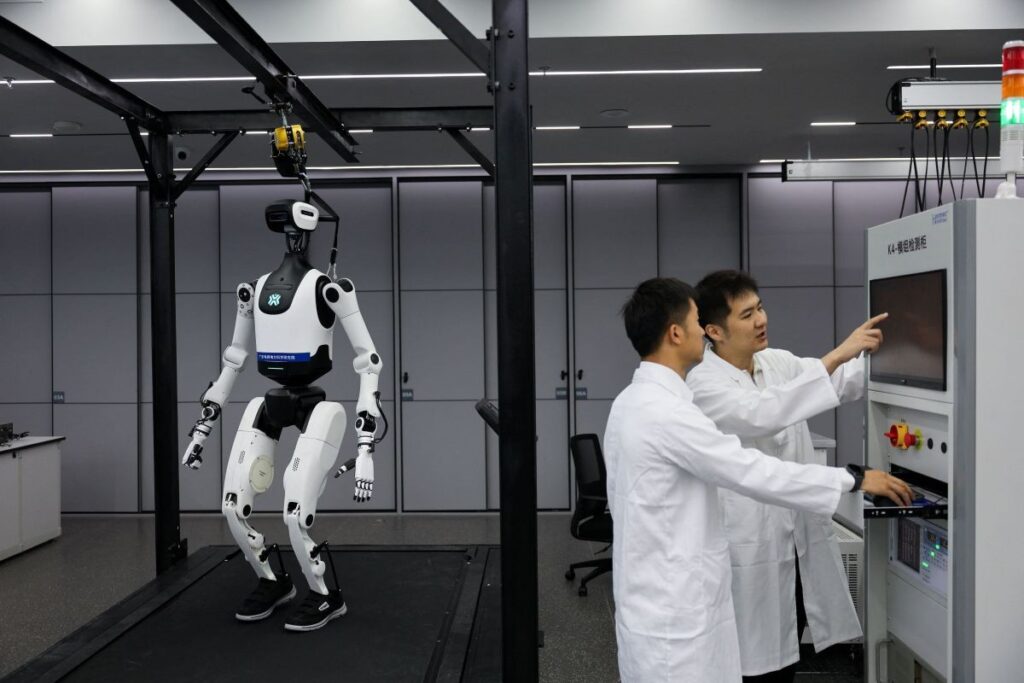
The Trump administration, via the FCC, banned U.S. imports of new Chinese humanoid and quadruped robots and grid-connected power inverters effective 28 July 2026. The move targets AI supply chain security, citing risks of data theft, cyberattacks like Volt Typhoon, and overreliance akin to China’s rare earth dominance. Unitree—holding under 20% of the global humanoid robot market—is directly affected, as are Chinese inverter leaders Sungrow (300274.SZ) and Huawei. The Chinese Embassy pledged countermeasures, while the FCC plans broad exemptions for non-Chinese suppliers.

Welcome Back!

Login to your account below

Create New Account!

Fill the forms below to register

Retrieve your password

Please enter your username or email address to reset your password.

Scan to share via WeChat

Open WeChat and scan the QR code to share

QR Code

Add New Playlist