

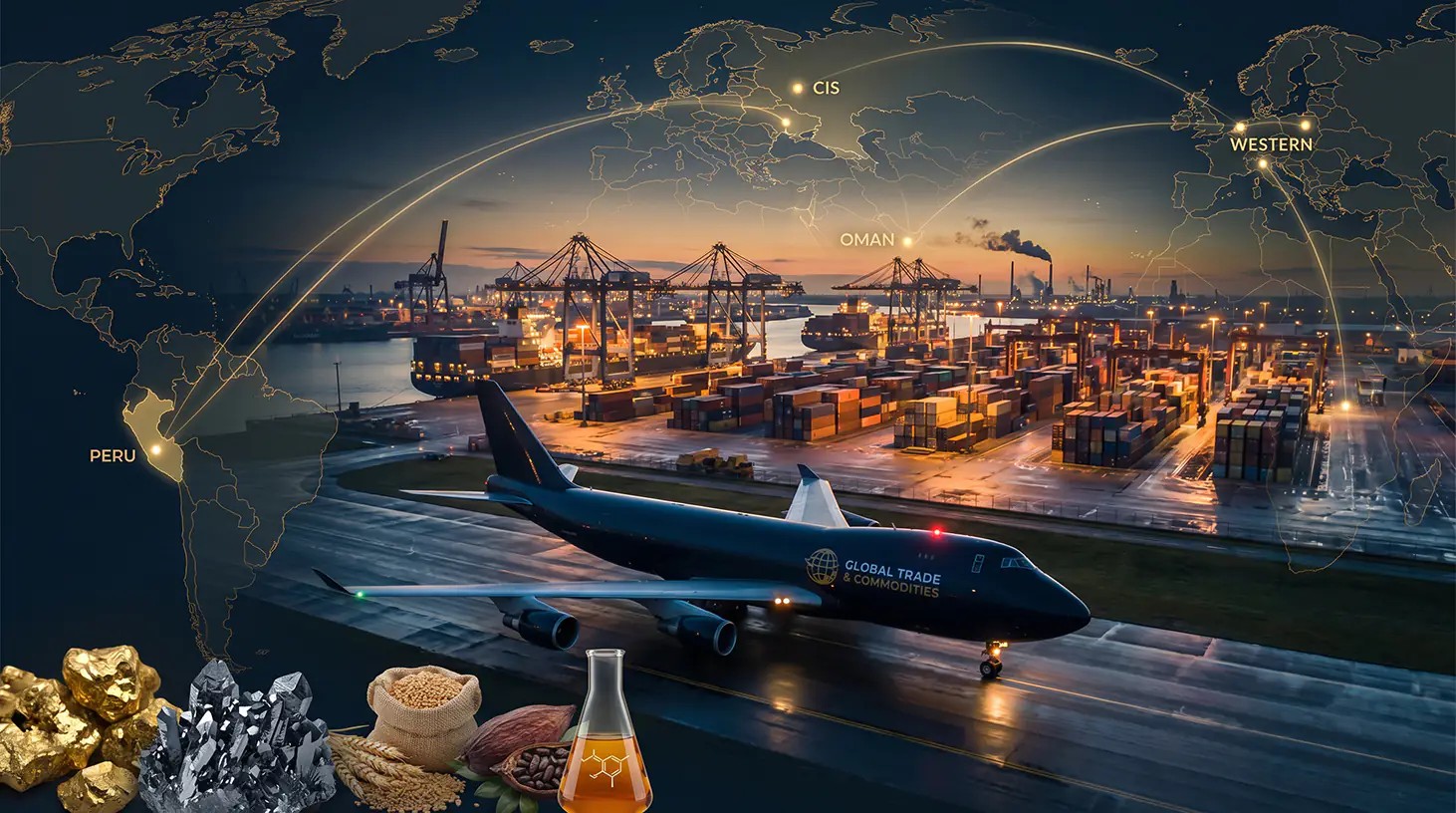
According to xpert.digital, antimony prices have surged more than gold over the past three years amid tightening Chinese export controls. The Mercosur-EU free trade agreement—effective January 2026—has unlocked new South American supply corridors, while Russia’s fertilizer policy is pressuring European agriculture to seek alternatives in Poland and Oman. Peru emerges as a dual hub for gold and antimony, and the multi-billion dollar air freight market is critical for moving high-value strategic metals. Xpert Global Sourcing’s three-pillar model—commodity sourcing, logistics engineering, and strategic metals trading—addresses growing demand for supply security in a fragmented world.
According to xpert.digital, global supply chains are undergoing a permanent structural reorganization driven by geopolitical upheavals from 2022 to 2026—including the war in Ukraine, US-China tensions, and pandemic aftershocks—shifting corporate procurement priorities from cost optimization to absolute security of supply.
The Three-Pillar Response to Fragmentation
Xpert Global Sourcing positions itself as a specialized procurement, logistics, and trading service provider built on three mutually reinforcing pillars: regionally focused commodity sourcing (South America and CIS countries), highly specialized logistics engineering with emphasis on premium air freight, and strategic trading of critical metals such as antimony and gold. This integrated model addresses gaps left by traditional providers across customer segments including agricultural and industrial firms, energy suppliers, institutional investors, and sovereign wealth funds.
Geopolitical Drivers Reshaping Procurement
Four developments underscore the strategic relevance of this approach:
- The Mercosur-EU free trade agreement entered into force at the beginning of 2026, after more than two decades of negotiations—unlocking tariff reductions for agricultural products, timber, and industrial raw materials and creating new trade corridors previously blocked by prohibitive duties.
- Russia’s targeted export policy for nitrogen fertilizers is exerting considerable pressure on the European agricultural market, prompting the European Commission to increase tariffs on Russian and Belarusian urea; alternative suppliers now include Poland and Oman.
- Antimony has experienced price growth over the past three years that significantly surpasses that of gold and silver—a revaluation described by the source as ‘particularly dramatic’ and rooted in its status as a critical mineral amid tightening Chinese export restrictions.
- Ongoing commodity volatility and supply uncertainties are driving industry and energy buyers to establish multiple parallel supply relationships—a structural shift that favors reliable intermediaries with diversified portfolios.
South America’s Strategic Rise
Latin America is no longer viewed merely as a source of bananas and coffee. According to the report, Peru is among the world’s top five gold producers—and gold production has recently increased significantly. Crucially, Peru is also one of the most important antimony producers outside of China, a fact whose strategic importance is amplified by Chinese export restrictions. The source states that this dual role in gold and antimony positions Peru as a pivotal node in the emerging raw materials landscape.
Logistics Engineering Meets Critical Air Freight Demand
The report highlights the multi-billion dollar air freight market as the conduit for the world’s most valuable goods—underscoring the centrality of speed, reliability, and regulatory navigation in moving high-value, time-sensitive commodities like antimony and specialty metals. Xpert Global Sourcing’s logistics engineering focus targets precisely these premium requirements, distinguishing it from conventional freight forwarders.
Source: xpert.digital
Compiled from international media by the SCI.AI editorial team.


