According to blog.conquerornetwork.com, the global manufacturing map is being quietly redrawn as manufacturers shift production from China to Southeast Asia—not in an exodus, but via the China Plus One strategy, where core production remains in China while capacity expands across Vietnam, Thailand, Indonesia, Malaysia, Cambodia, and the Philippines.
Core Differences in Manufacturing Models
China offers scale, speed, and deeply integrated supply chains, ideal for high-volume, complex production. In contrast, Southeast Asia emphasizes cost efficiency and risk diversification, with manufacturing fragmented across multiple countries—creating more flexible but less standardized production networks.
ASEAN Is Not a Monolith
Forwarders must recognize that ASEAN manufacturing hubs are highly specialized and non-interchangeable:
- Vietnam: Electronics, garments, footwear, furniture
- Thailand: Automotive, machinery, food processing
- Malaysia: Semiconductors, medical devices
- Indonesia: Heavy industry, batteries, raw materials
- Cambodia & Laos: Labor-intensive manufacturing
This specialization fragments freight flows—replacing one mega-export corridor with multiple mid-sized origins feeding global trade lanes.
Operational Impacts on Forwarders
The manufacturing shift drives tangible daily changes for freight forwarders:
- More cross-border trucking within ASEAN
- Smaller but more frequent shipments
- Less standardized processes
- Greater reliance on local partners
Transit times vary more, cost predictability declines, and planning margins shrink—especially amid seasonal issues, labor shortages, and uneven customs digitization.
China Factory Relocation Logistics Implications
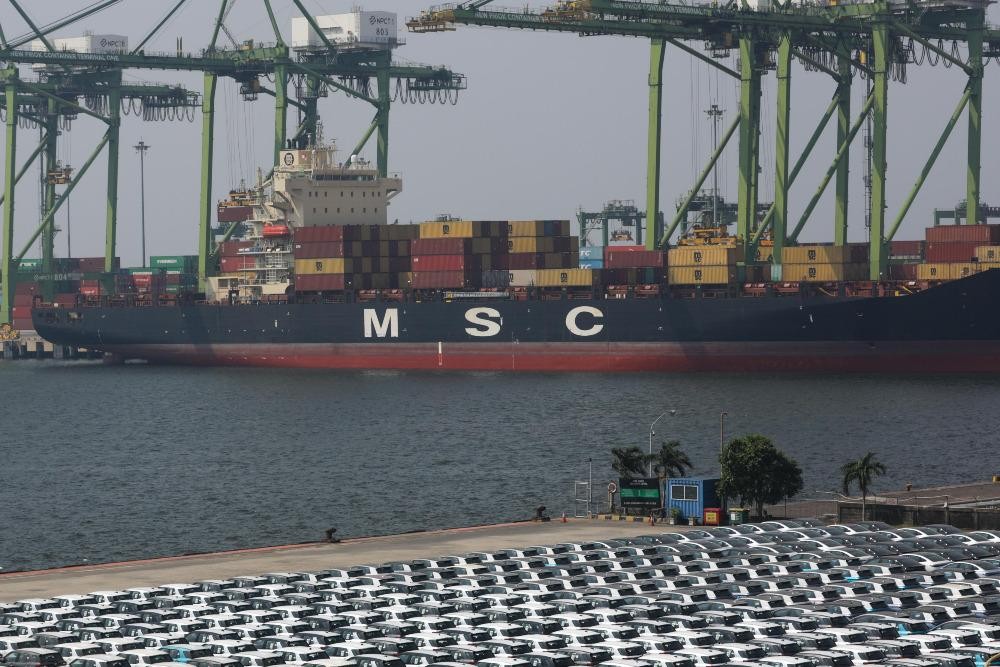
Partial relocations create hybrid supply chains: components may still originate in China, be assembled in Vietnam, and ship out from Singapore or Laem Chabang. This generates specific challenges:
- Increased intra-Asia movements
- More transshipment dependence
- Complex rules of origin compliance
- Higher documentation sensitivity
Forwarders evolve from transport providers into coordinators managing timing between suppliers across borders.
Growth Opportunities Amid Complexity
Freight forwarding opportunities in ASEAN countries are expanding for forwarders who invest in regional capability. Key growth areas include:
- Cross-border road freight within ASEAN
- Multimodal consolidation services
- Vendor-managed logistics for dispersed suppliers
- Trade compliance and origin advisory
Manufacturers entering Southeast Asia often lack local logistics experience—making forwarders who design end-to-end solutions long-term strategic partners.
Infrastructure and Risk Realities
Southeast Asia logistics infrastructure readiness remains uneven compared to China’s mature system. Challenges include limited hinterland connectivity, equipment imbalances, port congestion risks during export surges, and capacity pressure during peak seasons. Regulatory inconsistency between ASEAN states further complicates cross-border logistics—what clears smoothly in Singapore may stall in Myanmar or Laos.
When comparing China and ASEAN supply chain risks, neither is risk-free—the nature of risk simply changes. China risks include policy shifts, geopolitical pressure, and cost inflation; ASEAN risks center on infrastructure bottlenecks, regulatory variation, and operational inconsistency. Smart shippers—and smart forwarders—balance both.
The logistics impact of China Plus One is long-term: freight patterns will remain multi-origin, multi-port, and multi-modal. Success depends on regional expertise, strong local agents across ASEAN, flexibility in routing and capacity planning, and advisory capability—not just execution.
“Manufacturing is no longer concentrated. Logistics cannot be either.” — blog.conquerornetwork.com
Source: blog.conquerornetwork.com
Compiled from international media by the SCI.AI editorial team.