Skip to content

South Asia Supply Chain

Korea-India Strategic Partnership to Bolster Supply Chain Resilience

South Korean President Lee Jae Myung declared Korea and India will become each other's "most important strategic partners" amid global supply chain instability tied to Middle East tensions. Speaking in New Delhi on April 19, 2026, Lee highlighted India's status as the world's fourth-largest economy and its 1.5 billion population, while noting bilateral cooperation remains underdeveloped — with only 12,000 Korean residents in India. The visit included talks with Indian External Affairs Minister Jaishankar and a planned summit with PM Modi focused on supply chain stabilization and strategic resource collaboration.

Original source: koreajoongangdaily.joins.com

Korea-India Strategic Partnership to Bolster Supply Chain Resilience

According to koreajoongangdaily.joins.com, South Korean President Lee Jae Myung declared during his April 19, 2026 state visit to India that Korea and India will become each other’s “most important strategic partners” amid persistent global supply chain instability and economic crises linked to ongoing Middle East tensions.

Strategic Shift Amid Geopolitical Uncertainty

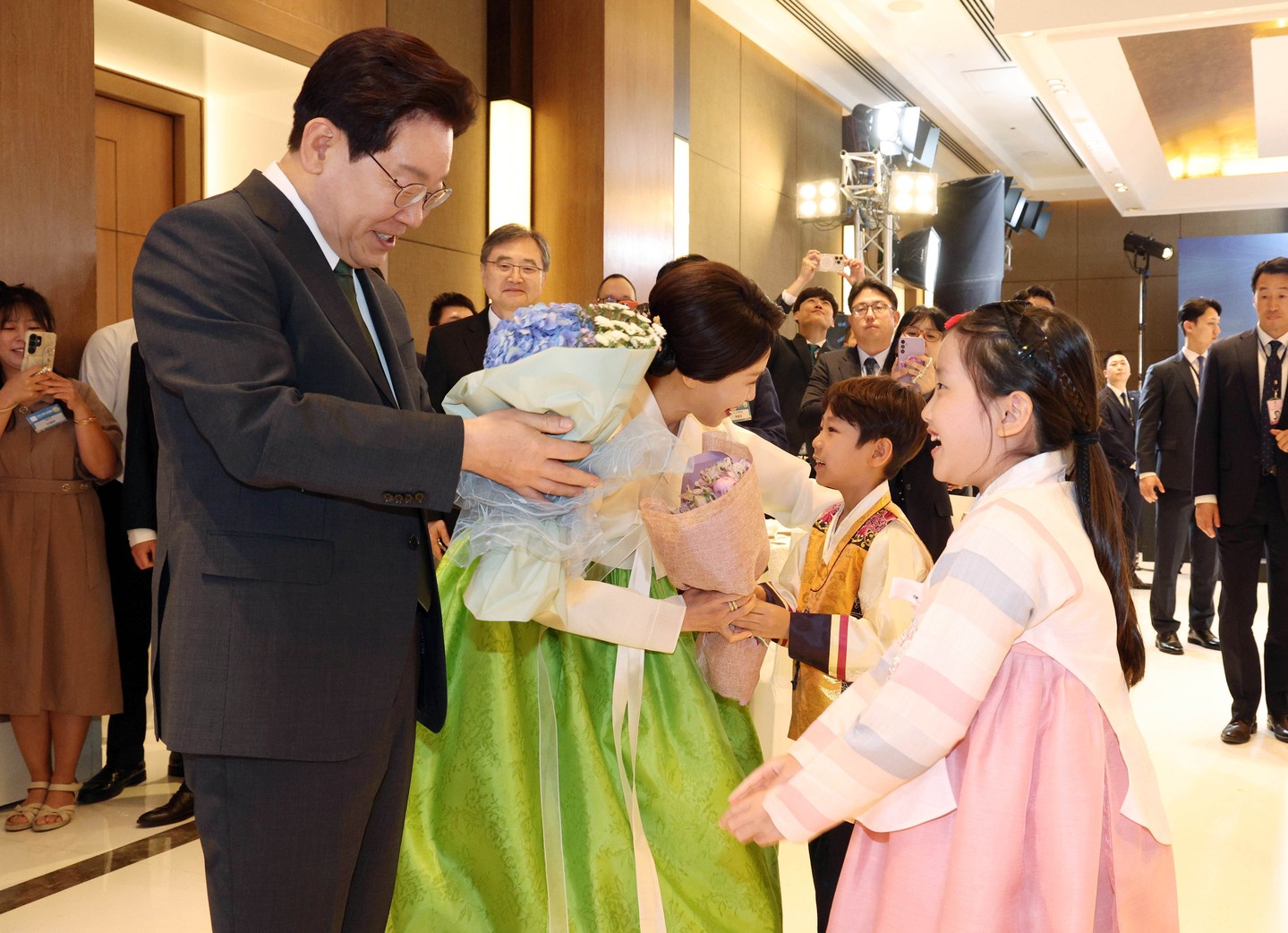
Speaking at a dinner for the Korean diaspora in New Delhi, President Lee emphasized that India is no longer merely a consumer market but a key nation leading global production and supply chains. He cited India’s demographic and economic scale: having surpassed China’s population and ranking as the world’s fourth-largest economy, with expectations to rise to third place soon. Yet he underscored a critical gap — bilateral economic cooperation remains underdeveloped relative to this potential.

Foundations and Gaps in Bilateral Ties

Korea and India established diplomatic relations in 1973 and elevated ties to a special strategic partnership in 2015. Despite this framework, Lee noted that only 12,000 Korean residents live in India — a figure he described as disproportionately low. He added that Indian authorities also agree the level of cooperation is considerably low compared to India’s immense potential.

Trade volume and Korean corporate presence in India remain limited. Lee stressed that both countries rely heavily on overseas sources for raw materials and energy, creating strong complementary grounds for collaboration in strategic sourcing and resource security.

Diplomatic Engagement and Concrete Priorities

During the three-day visit, President Lee held talks with Indian Minister of External Affairs Subrahmanyam Jaishankar and was scheduled to hold a bilateral summit with Prime Minister Narendra Modi on April 20. According to presidential secretary Lee Kyu-youn, discussions focused on stabilizing supply chains, expanding economic cooperation, and deepening the special strategic partnership.

Jaishankar affirmed that the prolonged unstable international situation, including the Middle East war, is an opportunity to further solidify bilateral relations, and pledged active Indian government support for Korean companies expanding their presence in India.

Practitioner Perspective: Implications for Global Supply Chain Professionals

For supply chain professionals, this high-level alignment signals tangible opportunities — and urgency — in diversifying manufacturing footprints, co-developing resilient raw material pathways, and accelerating localization strategies across South Asia. With India’s 1.5 billion population and growing role as a global production hub, Korean firms’ current underrepresentation (only ~12,000 residents and relatively few operational entities) suggests significant headroom for investment in joint ventures, supplier development, and infrastructure-linked logistics partnerships. The explicit linkage between Middle East conflict-driven instability and supply chain recalibration underscores how geopolitical risk assessments must now routinely inform nearshoring, friend-shoring, and dual-sourcing decisions — especially in critical sectors like electronics, batteries, and pharmaceuticals where both nations hold strategic interests.

“India — with its population of 1.5 billion and its potential as a key production hub for global supply chains — will be recognized as a category of economic territory that Korea must expand.” — Cho Sang-hyun, president of the Korean Community Association in India

Source: koreajoongangdaily.joins.com

Compiled from international media by the SCI.AI editorial team.
Ask SCI.AI Finished reading? Continue with SCI.AI. Explore the related policy, route, company and historical context. Continue asking
India launches polysilicon incentive scheme targeting 10 GW capacity
South Asia Supply Chain

India launches polysilicon incentive scheme targeting 10 GW capacity

India is launching a new production-linked incentive scheme targeting more than 10 GW of domestic polysilicon capacity to break its 100% reliance on Chinese imports. The move extends ₹240 billion ($2.52 billion) in existing solar manufacturing incentives upstream, complementing over 200 GW of module capacity and a June 2028 target of 80 GW for ingots and wafers. With polysilicon also vital for semiconductors, the policy supports dual industrial goals. However, capital intensity and Chinese scale dominance pose major competitiveness hurdles.

Japan’s 7.1-magnitude quake halts Toyota, Renesas, TSMC plants in Kumamoto
South Asia Supply Chain

Japan’s 7.1-magnitude quake halts Toyota, Renesas, TSMC plants in Kumamoto

A 7.1-magnitude earthquake hit Kumamoto Prefecture in Japan on July 28, 2026, forcing Toyota to halt production at three Kyushu plants — Miyata, Kanda, and Kokura — through July 31. The Miyata plant alone produces 430,000 vehicles annually. Renesas suspended operations at two Kumamoto fabs due to structural damage, while TSMC evacuated staff at its JASM facility before confirming structural safety and beginning gradual restart. Honda extended its Kumamoto motorcycle plant suspension to July 31; Sony halted semiconductor operations in Kumamoto but found no major damage in Nagasaki, Oita, or Kagoshima. Nissan kept its Fukuoka plant running but is closely monitoring supplier networks. Kyushu accounts for ~12% of Japan’s auto component output and >30% of domestic semiconductor wafer production.

India-US ink $20B critical minerals pact amid China dominance concerns
South Asia Supply Chain

India-US ink $20B critical minerals pact amid China dominance concerns

India and the U.S. signed a critical minerals framework on May 26, 2026, paving the way for a $20 billion Quad-led investment initiative. While India holds vast reserves—including the world’s third-largest ilmenite deposits—it processes less than 5% of its rare earth output domestically. Analysts stress India is unlikely to challenge China’s dominance—accounting for over 60% of global rare earth processing—anytime soon due to infrastructure gaps and regulatory delays averaging 7–10 years for new mining approvals.

Welcome Back!

Login to your account below

Create New Account!

Fill the forms below to register

Retrieve your password

Please enter your username or email address to reset your password.

Scan to share via WeChat

Open WeChat and scan the QR code to share

QR Code

Add New Playlist