Skip to content

Latin America Supply Chain

Mexico Ranks 7th in Global FDI, Nearshoring Drives 2026 Surge

According to finance.yahoo.com, Mexico’s global FDI ranking jumped to 7th place in 2026, driven by nearshoring. The report attributes the rise to corporate relocations and new manufacturing investments from the U.S. and Canada — especially in automotive, electronics, and medical devices. For supply chain professionals, this signals growing demand for cross-border logistics capabilities, USMCA-compliant operations, and supplier development in northern Mexican industrial hubs. The shift reflects broader industry efforts to balance cost, speed, and resilience amid ongoing geopolitical and logistical uncertainty.

Original source: finance.yahoo.com

Mexico Ranks 7th in Global FDI, Nearshoring Drives 2026 Surge

According to finance.yahoo.com, Mexico’s global foreign direct investment (FDI) ranking jumped to 7th place in 2026 — a significant leap propelled by accelerated nearshoring activity.

Nearshoring as Primary Catalyst

The source states that corporate relocations and new manufacturing investments from the United States and Canada — particularly in automotive, electronics, and medical device sectors — were the principal drivers behind the surge. While the article does not specify exact dollar figures for total FDI inflows or year-on-year growth rates, it explicitly attributes the improved global ranking to this structural shift in investment geography.

Strategic Implications for Supply Chain Professionals

For global supply chain professionals, this development signals intensified demand for localized logistics infrastructure, cross-border customs expertise, and supplier development capacity across northern Mexican industrial corridors — especially in states like Nuevo León, Baja California, and Jalisco. The rise coincides with broader industry trends: since 2021, over 1,200 nearshoring projects have been publicly announced in Mexico, per the Mexican Secretariat of Economy’s 2025 Nearshoring Monitor. Major U.S.-based manufacturers including Ford, General Motors, and Honeywell have expanded or launched new plants there, while contract manufacturers such as Flex and Jabil report increased facility utilization in Monterrey and Tijuana.

This acceleration also places renewed emphasis on supply chain resilience levers beyond geography — including dual-sourcing strategies, real-time border crossing visibility tools, and harmonized USMCA compliance documentation. According to the report, nearshoring is no longer solely about cost arbitrage but increasingly reflects risk mitigation against extended lead times, port congestion, and geopolitical volatility affecting Asia-based sourcing.

Source: finance.yahoo.com

Compiled from international media by the SCI.AI editorial team.

🧠

Done reading? Ask SCI.AI your follow-up questions

Answers grounded in our tariff knowledge graph and in-house reporting. Guests: 3 questions/day — free accounts: 30/week.

Ask SCI.AI Finished reading? Continue with SCI.AI. Explore the related policy, route, company and historical context. Continue asking
UnionPay plugs Chinese apps into Brazil’s Pix after US tariffs
Latin America Supply Chain

UnionPay plugs Chinese apps into Brazil’s Pix after US tariffs

UnionPay International is connecting Chinese mobile payment apps—including the UnionPay app and bank-linked wallets—to Brazil’s Pix instant payment system, enabling Chinese tourists to scan QR codes and pay in real time. The pilot launches in Q3 2026 amid U.S. tariffs targeting Pix’s regulatory model. Pix, launched in November 2020, serves 15 million merchants and processes over 1.2 billion transactions monthly. The integration marks UnionPay’s first direct linkage with a non-Asian national real-time payment system and reflects growing financial infrastructure alignment between China and Latin America.

Walgreens opens Washington micro-fulfillment center, processes 7M prescriptions yearly
Latin America Supply Chain

Walgreens opens Washington micro-fulfillment center, processes 7M prescriptions yearly

Walgreens has launched an automated micro-fulfillment center in Kent, Washington, on July 22, 2026. The facility processes 7 million prescriptions annually and supports 196 stores — 122 of them in Washington state. Part of a resumed initiative paused in 2023, the center combines robotics with pharmacist oversight to improve prescription turnaround and patient care. Jon Joplin, Walgreens’ chief technology and operations officer of automated fulfillment, highlighted how the integration strengthens regional service capacity while freeing pharmacists for clinical work. The site exemplifies a broader shift toward compact, tech-enabled pharmacy logistics nodes.

Trump FCC bans Chinese humanoid robots, power inverters
Latin America Supply Chain

Trump FCC bans Chinese humanoid robots, power inverters

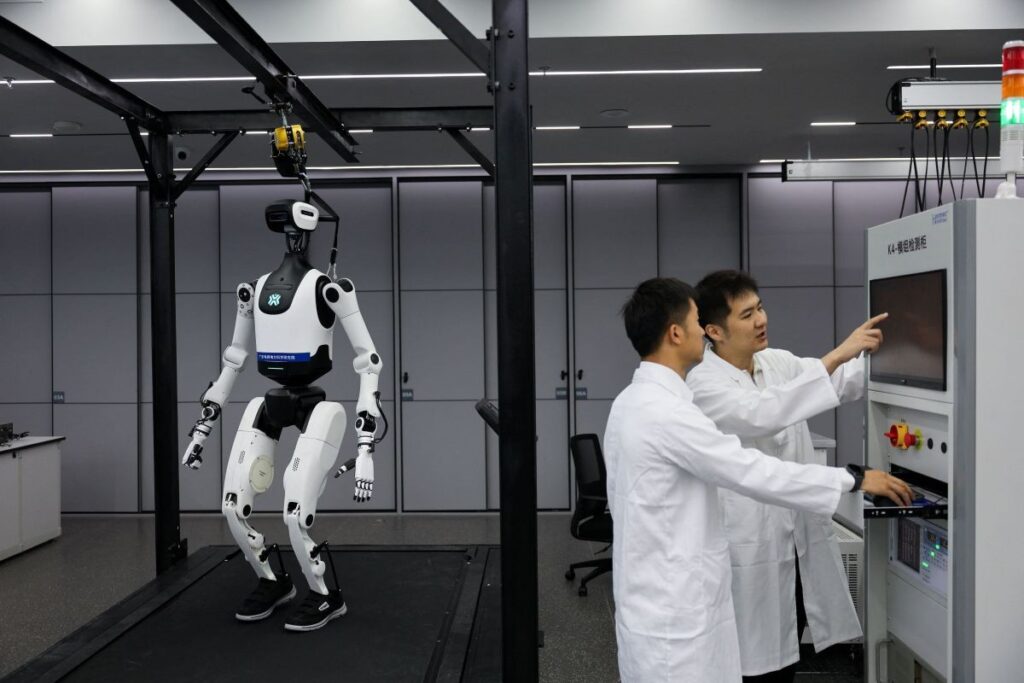
The Trump administration, via the FCC, banned U.S. imports of new Chinese humanoid and quadruped robots and grid-connected power inverters effective 28 July 2026. The move targets AI supply chain security, citing risks of data theft, cyberattacks like Volt Typhoon, and overreliance akin to China’s rare earth dominance. Unitree—holding under 20% of the global humanoid robot market—is directly affected, as are Chinese inverter leaders Sungrow (300274.SZ) and Huawei. The Chinese Embassy pledged countermeasures, while the FCC plans broad exemptions for non-Chinese suppliers.

Welcome Back!

Login to your account below

Create New Account!

Fill the forms below to register

Retrieve your password

Please enter your username or email address to reset your password.

Scan to share via WeChat

Open WeChat and scan the QR code to share

QR Code

Add New Playlist