FreightAmigo reports a projected nearshoring-driven trade boom for Mexico in 2026, positioning it as Latin America’s key manufacturing hub for the US market. Growth brings risks—including complex customs procedures and tariff management—requiring digital tools for visibility, rate comparison, and duty estimation. Supply chain professionals must prepare for increased volume, multimodal coordination, and strict compliance under USMCA and Mexican regulatory frameworks.
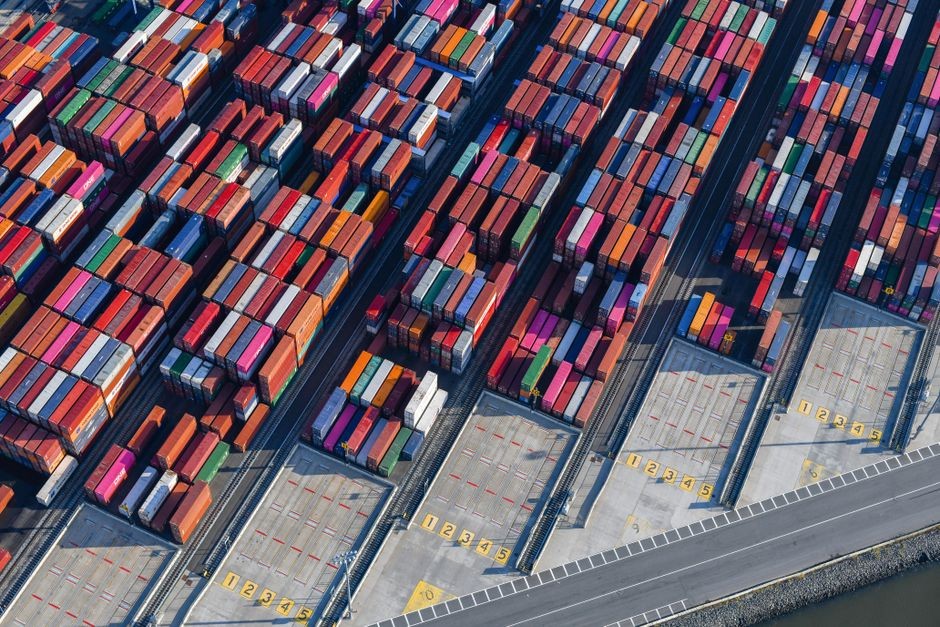
According to www.freightamigo.com, nearshoring—the strategic relocation of manufacturing facilities closer to the US market—is driving a projected boom in Mexico’s international trade volumes by 2026. The source identifies Latin America nearshoring as positioning Mexico as a regional hub, strengthening US-Mexico supply chains year-on-year. However, this growth brings operational risks demanding careful planning, particularly amid complex regulatory procedures for restricted items and tariff arrangements.
Nearshoring Dynamics and Trade Risks
The article underscores that while nearshoring is accelerating, it introduces dual pressures: surging demand and heightened compliance complexity. FreightAmigo notes that balancing the ‘boom and risks’ requires proactive adaptation—especially for companies managing cross-border shipments involving customs clearance, duties estimation, and documentation accuracy. As supply chain professionals know, delays at Mexican ports or misclassified HS codes can cascade into inventory shortages, landed-cost miscalculations, and working capital strain.
Digital Logistics Enablement
FreightAmigo positions its digital logistics platform as a response to these challenges. Key features highlighted include:
- Instant Quote functionality to compare freight rates across air, sea, rail, courier, and trucking options
- Dynamic estimation of arrival and real-time Track & Trace for end-to-end visibility
- A qualified customs agent service and Duties & Taxes Calculator for rapid, accurate duty forecasting
- PO to POD process streamlining and Sailing Schedule access for ocean freight planning
- AmiGo Green, a certified carbon offset solution aligned with growing ESG compliance expectations
These tools support practitioners in mitigating execution risk—notably in time-sensitive sectors like electronics logistics and e-commerce logistics, where just-in-time replenishment depends on predictable transit times and seamless customs handoffs.
Industry Context and Practitioner Implications
Mexico’s nearshoring acceleration reflects broader regional shifts. According to publicly reported data from the U.S. Bureau of Economic Analysis and Mexico’s National Institute of Statistics and Geography (INEGI), US foreign direct investment in Mexican manufacturing rose 37% between 2021 and 2023, with automotive, medical devices, and electronics leading inflows. Similar trends are visible elsewhere: Vietnam’s export value to the US grew $4.2 billion in 2023 (U.S. Census Bureau), while India’s production-linked incentive (PLI) scheme has attracted over $12 billion in electronics manufacturing commitments since 2020 (Ministry of Commerce and Industry, India). Yet unlike Asia-based alternatives, Mexico offers USMCA-aligned tariff treatment, land-border adjacency, and established industrial clusters—making it uniquely positioned for high-frequency, lower-latency supply chains.
For supply chain professionals, this means revisiting sourcing maps, stress-testing port-of-entry capacity (e.g., Lázaro Cárdenas, Manzanillo, and Nuevo Laredo), validating Incoterms alignment (particularly DAP and DPU), and ensuring digital readiness for Mexican customs’ mandatory electronic manifest system (SIICEX). It also means evaluating multimodal integration: rail freight from Monterrey to US border hubs, last-mile trucking coordination under NOM-012-SCT-2-2022 weight regulations, and air freight for urgent spares—all supported by FreightAmigo’s listed transportation services.
Source: www.freightamigo.com
Compiled from international media by the SCI.AI editorial team.